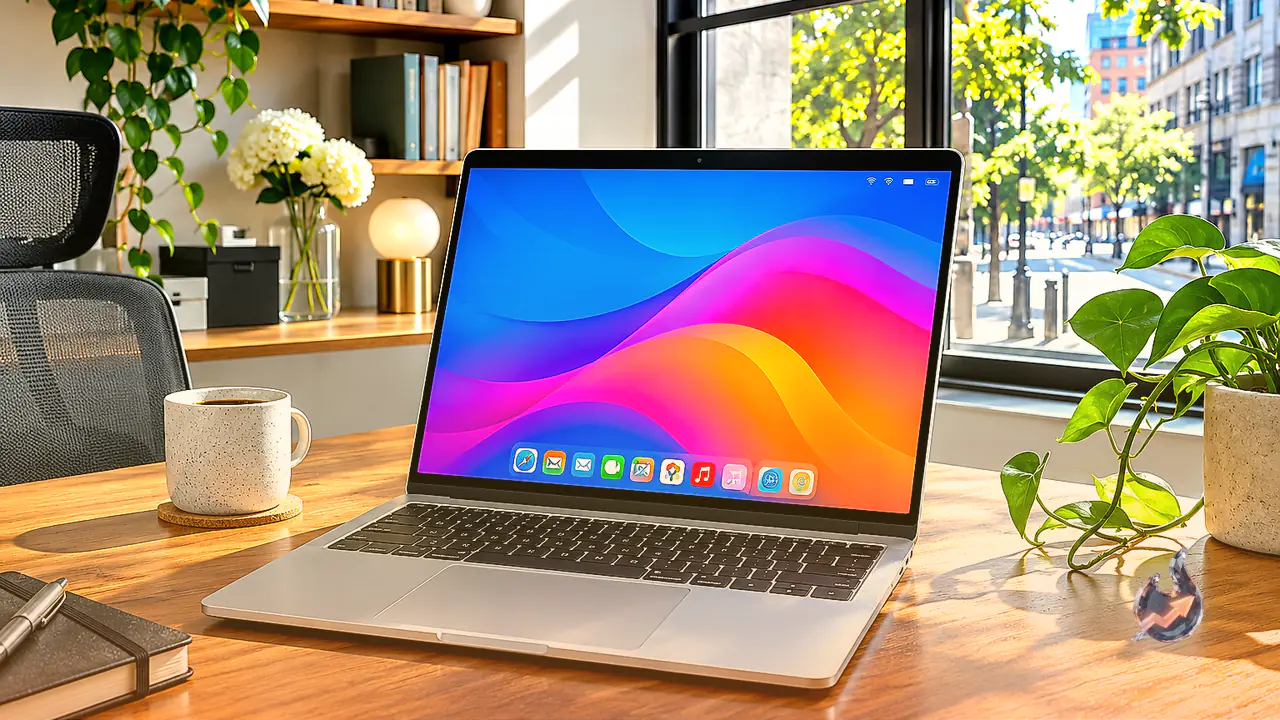

The Dell XPS Googlebook 13 (2026) marks Dell's debut in the Googlebook category, positioning itself as a premium, high-end offering. It serves as the first XPS device in the lineup that foregoes Windows in favor of Googlebook OS. Since the operating system is essentially an adapted version of Android tailored for laptops, software compatibility remains a notable consideration if your workflow depends on traditional programs lacking native Android equivalents. Googlebooks are primarily crafted for users deeply embedded within the Android ecosystem who desire a portable machine capable of bridging smoothly with their Android smartphones. The hardware comes with limited configuration choices, offering either 512GB or 1TB of SSD storage alongside 16GB or 32GB of RAM. It features a crisp 2.5k display running at 120Hz and is powered by the Snapdragon X Elite, an ARM-based chip originating from 2024.
Gaming Capabilities and Limitations
Gaming is not a strong suit for the Dell XPS Googlebook 13, though the hardware was never engineered for heavy gaming tasks. Operating on Googlebook OS means the device is strictly limited to Android-based games. On the positive side, the chassis does not get excessively warm under heavy system loads, and the integrated graphics solution is fully equipped to handle even the most demanding mobile games available on the platform without breaking a sweat.
Productivity and Office Performance
For school and professional productivity, the Dell XPS Googlebook 13 proves to be highly capable. Its compact, lightweight footprint ensures exceptional portability for daily commuters and students alike. Battery endurance stretches close to 12 hours under standard daily usage, easily surviving a full academic or work shift on a single charge. Audio output from the built-in speakers is impressive, the screen remains vibrant and sharp, and both the keyboard and touchpad offer a tactile, satisfying experience. The primary caveat remains the operating system ecosystem, which restricts software to Android apps and shuts out legacy Windows or Mac applications.
Media Consumption and Display Quality
Media playback is a major highlight of the Dell XPS Googlebook 13. The 2.5k panel delivers sharp resolution and strong brightness levels, complemented by punchy audio from the speakers. Black levels exhibit a slight gray tint in darker viewing conditions, which is common for IPS panels, but overall contrast is solid. Video playback drains the battery slowly, stretching nearly 12 hours so users can binge multiple movies without reaching for the power adapter.
Battery Life, Charging, and Build Quality
Battery endurance is outstanding, reaching nearly 12 hours during continuous web browsing and video playback sessions. The device supports fast charging and can draw power conveniently from the USB-C port located on either side of the chassis. Craftsmanship is top-tier, featuring an all-aluminum body that achieves a lightweight yet luxurious feel. The mechanical hinge is exceptionally smooth, allowing the lid to be lifted effortlessly with a single finger.
Processing Power and Performance Constraints
Heavy workloads will overwhelm the system, as the CPU and GPU architecture are tailored for lightweight computing tasks, compounded by software restrictions to Android applications. On the bright side, the display delivers sharp and accurate color reproduction straight out of the box without requiring manual calibration. Graphics performance reflects its status as an ARM ultraportable rather than a gaming rig, meaning it lacks the muscle for high-end rendering. While the processor scores strongly in single-core and multi-core benchmarks, the real bottleneck is the software ecosystem, which prevents users from running demanding native workloads that could truly test the limits of the silicon.