






















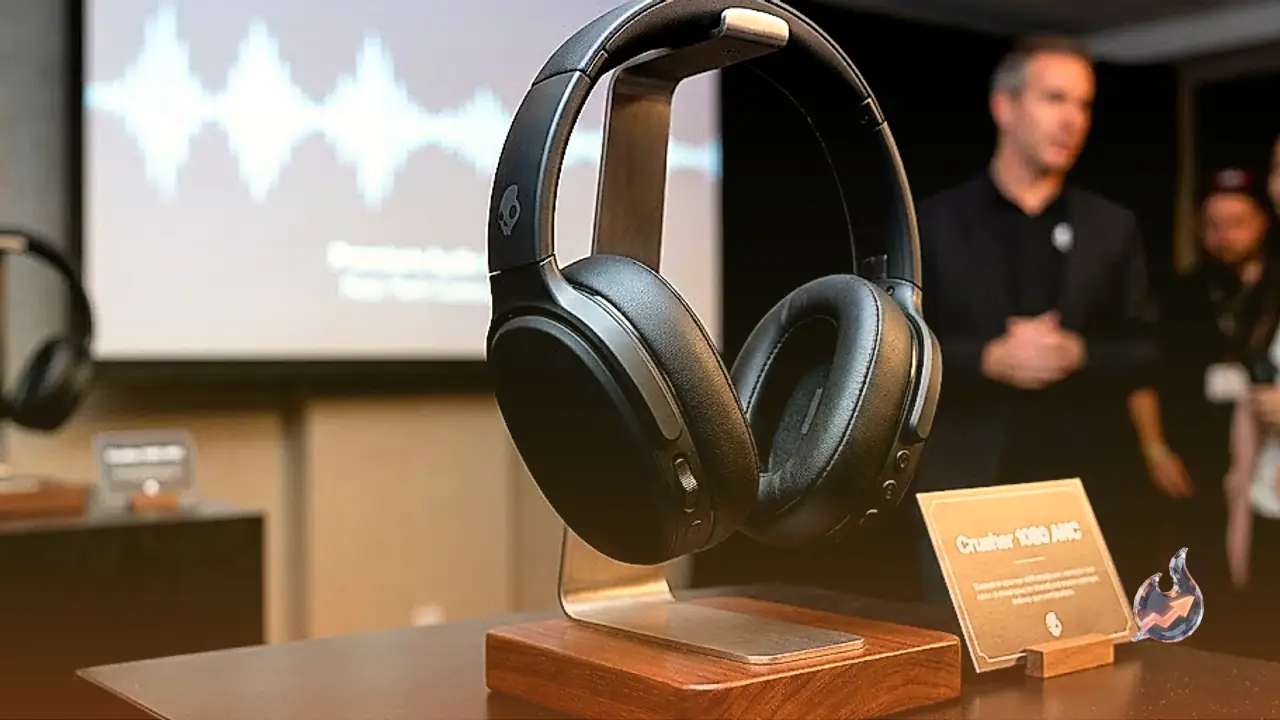

Skullcandy is doubling down on a partnership with Bose in an attempt to convince listeners that its headphones deserve to be judged on sound quality, not just price, and its newest bass-heavy headphones, the Crusher 1080 ANC, unveiled Wednesday evening at an event in New York City, are the clearest sign yet of that ambition.
A partnership that began with earbuds
The push toward better audio actually began in 2025, when Skullcandy teamed up with Bose to build the Method 360 ANC, a $130 pair of wireless earbuds that impressed listeners with noise cancellation and audio quality that punched well above their price tag. That release was effectively a test run for a much bigger project: bringing the same kind of engineering rigor to Skullcandy's most recognizable, and most divisive, product line.
The Crusher legacy
For more than a decade, Skullcandy's Crusher headphones have built a following around one unusual feature: a physical thumb wheel built into the ear cup that lets wearers dial up bass vibrations until the headphones physically rumble against the skull. The effect comes from a specialized driver design built specifically to shake as much as it plays sound, mimicking the feeling of standing in front of a subwoofer at a concert. The tradeoff has always been that cranking the bass tends to swallow the mids and highs, leaving vocals and detail sounding muddy.
Meet the Crusher 1080 ANC
The newly announced Crusher 1080 ANC headphones are Skullcandy's attempt to fix that tradeoff, and they are on sale now for $280. Skullcandy says the headphones deliver 60 hours of battery life with active noise cancellation switched off, and 50 hours with it switched on. A Rapid Charge feature means just 10 minutes plugged in buys 4 hours of playtime. The headphones also include everyday conveniences such as automatically pausing music when they are taken off and resuming playback when they are put back on, a customizable equalizer inside the companion app, multipoint pairing over Bluetooth 5.3, and support for Auracast broadcast audio.
From a ski chairlift to a private equity portfolio
Skullcandy has long leaned on its origin story, that its first product was dreamed up on a ski chairlift in 2003 near the company's headquarters in Park City, Utah, and it has built its identity around the board sports community ever since. "From snowboarders for snowboarders," is how Skullcandy CEO Brian Garofalow describes it. The company is now owned by private equity firm Mill Road Capital, but Garofalow acknowledges that Skullcandy is still widely regarded as a lifestyle brand rather than a serious audio company. "We've been really, really great at community building and nurturing and helping push cultures forward, not the greatest at the engineering part of innovation with products," Garofalow said. "So we've really been honing our chops in the last few years."
Solving the bass-versus-clarity problem
Garofalow describes pairing Skullcandy's proprietary Crusher bass-boosting technology with active noise cancellation as a genuine engineering challenge. He said the team worked directly with Bose's engineers to decouple the Crusher bass effect from the rest of the headphones' acoustic tuning profile, so the low end operates independently of the rest of the sound. In theory, that means cranking the bass dial no longer drags down the rest of the mix. "Mids and highs are still way, way sharp, versus in the past, when they tended to get muddy," Garofalow said.
What Bose actually brought to the table
Beyond the bass fix, the Sound by Bose program adds three further upgrades to the Crusher 1080 ANC. The first is Bose's noise-cancellation technology, which is designed to keep working effectively even with the bass dial turned all the way up. The second is Bose's spatial audio profile, meant to create a surround-sound-like listening experience. The third is a six-microphone array intended to deliver the call quality Bose's headphones are known for.
Still playing the value card
Even with the Bose collaboration, Skullcandy is sticking to the strategy that has defined it for years: undercutting the competition on price. At $280, the Crusher 1080 ANC sits well below flagship headphones from Sony, Bose, and Apple, as well as newer entrants like Daisy. Skullcandy appears to be betting that better sound plus a lower price tag is a combination none of its bigger rivals can easily match.
Early signs the strategy is working
Garofalow points to the Method 360 ANC as evidence that the approach is paying off. "With the rise of true wireless and essentially AirPods, we were a little bit behind the curve, didn't have the best quality, and we lost a little bit of share," he said. "The vision I brought to the business was, let's go back to what we're best at, and that is being a really unique brand, and then check every part of the business that's going to help impact that." The Method 360 ANC, which launched at an introductory price of $100, has reportedly captured 20 percent of the market for earbuds priced between $75 and $100 since its release, according to a third-party market report commissioned by the company.
An old promise, made again
This is not the first time Skullcandy has tried to shed its budget-bin reputation, and the company's own history of headphone reviews from over a decade ago reads almost identically to the story being told today. The real test is whether the new Crusher headphones, and the Bose partnership behind them, can finally change the minds of listeners who care about sound quality and have written off Skullcandy in the past.
What comes next for headphones
The broader headphone category is currently a hotbed of experimentation. Apple is rumored to be developing AirPods with built-in cameras that would feed visual information to its Siri assistant, and Razer showed off a concept along similar lines at this year's CES. Some upcoming headphones are even being built with brain-scanning technology designed to monitor a wearer's focus levels. Asked whether Skullcandy's new emphasis on technology means fans should expect similarly ambitious gadgets from the brand, Garofalow was coy but confident. "When we're talking about future-facing technology, I'm not going to share any of that, but I will say yes to all," he said. "You'll see some very cool stuff coming out from us."