





















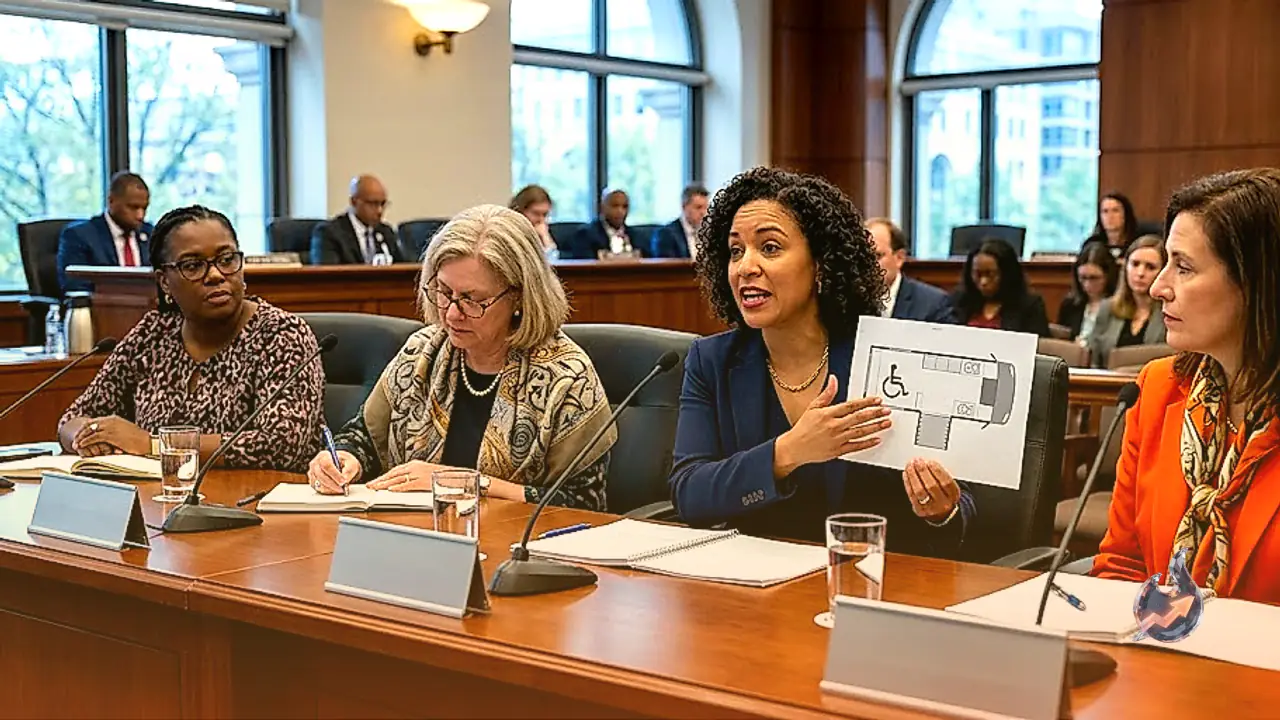

During a Monday hearing before the DC City Council over a contested bill that would open the door to robotaxi operations in the District, Tesla senior policy advisor India Herdman told council members that Tesla is developing a wheelchair-accessible robotaxi, unlike anything currently in its fleet.
A Direct Answer From Tesla's Policy Team
"We are in development for a purpose-built, wheelchair-accessible autonomous vehicle," Herdman said during the hearing, adding that "paratransit can be very difficult, and people who are confined to wheelchairs permanently should still be able to move around freely." She said the vehicle is "an active product being built by Tesla in Texas." Herdman did not offer a timeline for when the vehicle might be ready.
Few Details, No Comment From Tesla
Tesla did not respond to a request for comment on Herdman's testimony, and the company has a track record of taking years to bring announced products to market, so the timing behind the new accessible vehicle remains an open question.
A Fleet Built Around One Car
Right now, Tesla's autonomous vehicles operate in a handful of Texas cities, Austin, Dallas and Houston, and, since this month, in Miami, Florida. In the San Francisco Bay Area, the company runs a robotaxi-style service, but with human drivers behind the wheel rather than autonomous software. Every vehicle in the driverless fleet is a Tesla Model Y, a compact SUV that offers no wheelchair access.
The Cybercab Isn't the Answer Either
Tesla has begun manufacturing and testing its purpose-built Cybercab, a vehicle designed exclusively for autonomous driving that has no steering wheel and no pedals. The Cybercab is also not wheelchair accessible. Still, in a post on X this month, Tesla pointed to accessibility touches built into the vehicle, including braille lettering on its controls and wheelchair-height seating meant to make transfers easier for riders.
Musk Has Hinted at This Before
This isn't the first sign that an accessible Tesla robotaxi could be coming. The company added an accessibility tab to its Robotaxi app last fall, though today it simply points users toward other wheelchair-accessible ride providers in the area rather than to a Tesla vehicle. "We are working on accessible rides," the app tells users. When an X user asked last fall whether Tesla was working on accessible rides, CEO Elon Musk replied with a single word: "Absolutely."
No Robotaxi Company Has Solved This Yet
Herdman's testimony highlighted a gap that runs across the entire robotaxi industry: no US robotaxi company, including market leader Waymo, currently offers fleetwide, driverless, wheelchair-accessible rides. At the same DC hearing, Waymo's regional head of state and local policy, Matt Walsh, acknowledged as much. "To date, it's my understanding that we haven't been able to identify a platform that is fully wheelchair-accessible while also meeting the unique specifications to retrofit that vehicle with our technology," he said, adding, "Now, I don't want that to sound like a cop-out. We are trying to find that vehicle." Waymo has promoted accessibility features on its newest vehicle, the Zeekr-built Ojai, such as a flat floor, a low step-in height and grab bars, but the Ojai itself is not wheelchair accessible. One smaller player, Ann Arbor, Michigan-based May Mobility, does offer rides in wheelchair-accessible vehicles in some of its markets, though those rides still require a human operator on board to deploy the necessary ramps.
The Law Requires Equal Access
The Americans With Disabilities Act bars discrimination against people with disabilities in transportation services and requires companies to make reasonable modifications so riders have equal access. Not every US city requires ride-hailing companies to provide wheelchair-accessible rides, but those that do often see companies meet the requirement by partnering with specialized fleets of wheelchair-accessible vehicles rather than retrofitting their own cars. The stakes of falling short were on display in September 2025, when the US Department of Justice sued Uber for "refusing to reasonably modify its policies, practices, or procedures where necessary to avoid discriminating against riders with disabilities." That case is still being litigated.
A Cautionary Tale From Cruise
The industry has already seen one high-profile attempt at a wheelchair-accessible driverless taxi fall apart. General Motors' Cruise unveiled a prototype in 2023 and said it planned to add the vehicle to its self-driving service in 2024. But after a Cruise vehicle collided with a pedestrian, the company all but halted its national service before the end of 2023. The following year, General Motors stopped funding its self-driving unit altogether, ending the Cruise accessible-taxi effort along with it.