




















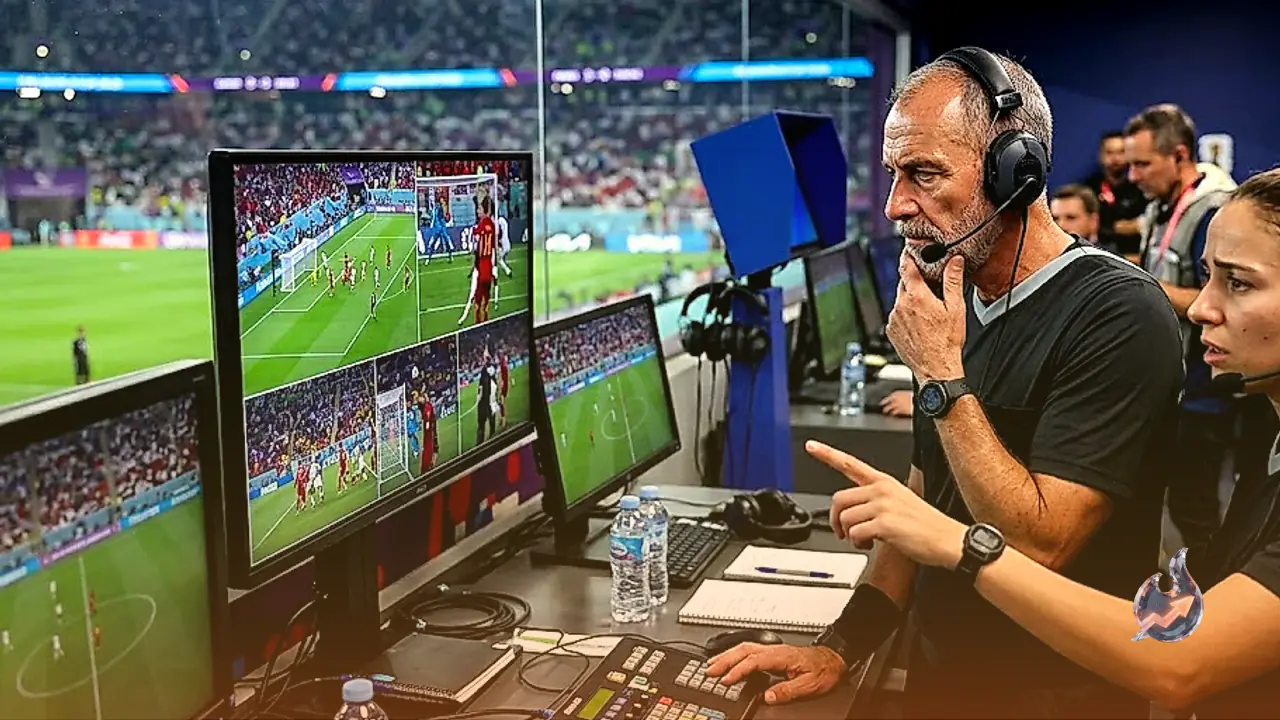

The 2026 FIFA World Cup has been marked by significant frustration as Egypt was eliminated from the tournament following a 3-2 defeat to Argentina, despite initially holding a two-goal lead. The Egyptian Football Association has formally protested, claiming that the improper application of VAR skewed several critical officiating decisions. They are demanding a thorough investigation by FIFA into these perceived inconsistencies.
Disputes Over Refereeing Integrity
The governing body of Egyptian soccer released a strong statement on social media, emphasizing that it cannot remain silent regarding the refereeing standards witnessed during the Argentina clash. Analysts and experts, both locally and internationally, have highlighted several controversial moments that altered the match's trajectory. This incident has reignited the debate about the necessity of maintaining fairness and transparency in refereeing during a stage as critical as the 2026 FIFA World Cup.
Persistent complaints about offside calls and disallowed goals have become a hallmark of this year’s tournament. Critics argue that despite the advanced technology, these plays are often adjudicated with an apparent bias that favors certain national teams. Others maintain that VAR acts as a disruptive force, serving as a tool that can be manipulated to swing match outcomes rather than ensuring objective justice.
The Limits of VAR
These controversies prompt fundamental questions about the role of technology in sports. Can a digital system truly guarantee fairness? Do the recurring errors stem from the inherent limitations of the system, or from its misuse? Most importantly, are all referees participating in the 2026 World Cup sufficiently trained to handle such powerful assistive tools?
VAR made its World Cup debut in 2018 as a support mechanism for the officiating team. Since its inception, FIFA has integrated the system into over 100 global competitions, including the 2022 World Cup in Qatar. It was intended to reduce human error, yet the recent incidents suggest that the gap between technology and human application remains wide.
Infrastructure and Implementation
The technological backbone of VAR is sophisticated, utilizing 42 broadcast cameras. This includes eight super-slow-motion cameras and four ultra-slow-motion feeds. Furthermore, the system integrates semi-automated offside detection technology and access to all cameras from the FIFA host network. This massive amount of data is funneled to a dedicated video assistant referee and three deputies, who review specific infractions and relay information to the head referee on the pitch.
While the previous World Cups used VAR primarily for goals, penalty kicks, red cards, and mistaken identity, this edition features expanded criteria. FIFA has enabled intervention for incorrect second yellow cards and offensive fouls occurring before set-piece situations. Former Mexican World Cup referee Armando Archundia notes that these features were also implemented to monitor the 'Prestianni-Vinícius Rule,' which punishes players for covering their mouths to hide dissent, and to resolve confusion between goal kicks and corner kicks.
The Subjective Nature of Officiating
Sports analyst Fernando Galván observes that historically, officiating evolution has struggled to keep pace with the sport itself. He recalls a time when only a center referee and linesmen handled matches, later augmented by a fourth official and goal-line referees. While VAR was introduced to solve the challenge of managing multiple viewpoints, Galván suggests it created a new problem: over-reliance. Many referees now delegate the entirety of their judgment to the system, effectively stripping themselves of the authority the game requires.
Both Galván and Archundia agree that soccer remains a fundamentally subjective sport. No amount of high-definition footage can eliminate the human element, as the interpretation of a foul remains the referee's prerogative. Archundia is blunt: the system can provide information, but it cannot make the final judgment on behalf of the official.
Bridging the Technological Gap
The core challenge is the disparity in training. While FIFA selects 100 potential referees and puts them through rigorous annual meetings, the reality of global soccer is uneven. Archundia points out that only about 20 percent of participating countries use VAR in their own domestic leagues. This creates a significant experience gap where some officials are far more accustomed to the technology than others.
While there is speculation regarding the future implementation of AI-driven robots to replace human referees, such an outcome is not yet a reality. For now, soccer must adapt to its tools while recognizing that the game will continue to be officiated by humans. As Archundia concludes, unless the sport itself undergoes a fundamental transformation, the human element—with all its inherent imperfections and debates—will remain central to the experience.