




















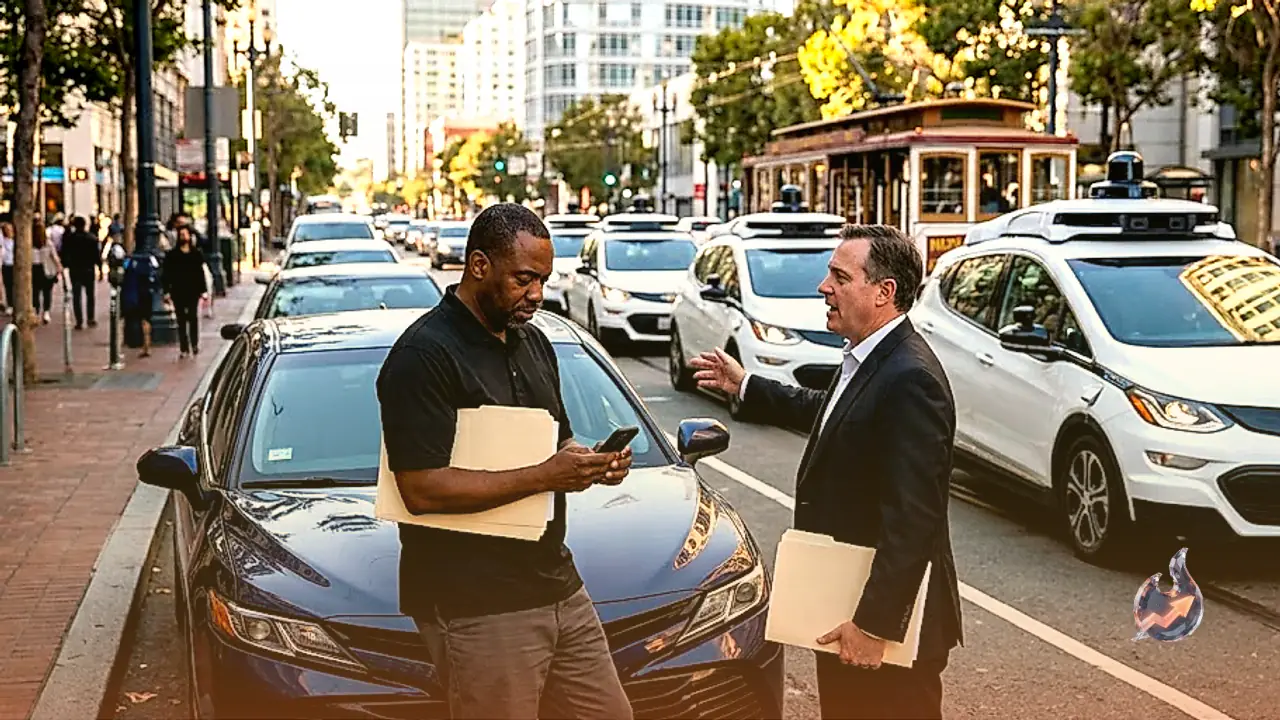

The leadership at Uber long ago realized that if the company failed to adapt to the burgeoning future of autonomous vehicle (AV) technology, it risked becoming obsolete. After years of experimentation, Uber has settled on a firm strategy: rather than developing its own self-driving cars, it aims to become the essential commercial hub where riders connect to any type of transportation, whether human-driven or robot-operated. CEO Dara Khosrowshahi has told investors that Uber intends to be the go-to commercial platform for all global AV players. To date, the company has secured agreements with more than 25 major robotaxi entities, including Waymo, Nuro, Baidu, and Volkswagen’s MOIA, with their driverless vehicles either currently available or slated to launch on the Uber app in numerous global cities.
Legislating the Hybrid Model
Uber is now aggressively pushing to formalize this strategy into law. Through lobbying efforts, representatives are urging lawmakers to institutionalize what the company terms “hybrid networks,” where human drivers and robotic vehicles operate in tandem. In New Jersey, an Uber lobbyist circulated proposed legislative language that would require any ride-hailing platform offering driverless services to ensure that 85 percent of its total rides are still fulfilled by human drivers for a period of three years.
Limiting Competitive Entrants
The implications of this move are significant. It would essentially prevent AV developers such as Tesla, Zoox, and Waymo from operating their own independent ride-hail apps in the state, effectively forcing them to integrate into Uber’s existing platform to access the market. This would not only limit competition but also cement Uber’s status as the dominant ride-hail leader. This language was pitched to New Jersey state senator Andrew Zwicker, who is sponsoring a bill to establish the state’s first set of regulations for public road autonomous vehicles. While the specific anti-standalone-app language is not currently in the bill, it remains a point of contention for a potential vote this fall.
Technical and Safety Hurdles
The New Jersey proposal is notable as the first in the U.S. to impose restrictions that would specifically hamper Tesla’s robotaxis. By mandating that AV developers utilize multiple sensor types beyond just cameras and requiring vehicles to have physical steering wheels and brake pedals for emergencies, the bill creates compliance hurdles that purpose-built robotaxis, such as those from Zoox, cannot currently meet. A similar effort is underway in Washington, DC, where council member Charles Allen introduced legislation in April to allow driverless operations. Uber lobbyist LaVita Gardner thanked Allen’s staff for their commitment to allowing ride-hail companies like Uber to participate in the district’s program, emphasizing that hybrid networks are critical for a smooth transition that supports both technology and human drivers.
Uber’s Stance on Industry Challenges
Uber spokesperson Noah Edwardsen stated that while the company supports the expansion of AV technology, existing industry policy proposals are largely unworkable and often attempt to create monopolies by locking out competitors. Edwardsen pointed to the failure of AV regulations in states like Maryland and New York as evidence that a new approach is necessary. He characterized the New Jersey proposal as a compromise designed to facilitate the passage of legislation amid strong opposition from labor unions. He reiterated that Uber is actively fighting to ensure that established ride-hail platforms remain integrated alongside companies that operate their own standalone AV apps.
The Strained Partnership with Waymo
Despite being business partners in markets like Austin and Atlanta, the relationship between Uber and Waymo has shown signs of friction. Uber’s CTO, Praveen Neppalli, recently shared a video on X highlighting a potentially dangerous encounter between a Waymo vehicle and a public bus. Furthermore, the two companies ended their limited pilot partnership in Phoenix last month. Waymo remains the clear leader in the U.S. driverless vehicle race, reporting 500,000 rides per week across eleven metropolitan areas, with plans for further expansion.
A Shift from Past Aggression
This lobbying pivot marks a dramatic shift in Uber’s operational ethos. In its early years, the company was notorious for exploiting regulatory gray areas and occasionally misleading officials to gain market footholds. This aggressive expansion led to significant conflicts with labor unions and drivers over employment classifications and benefits. Uber’s initial foray into autonomous tech culminated in the 2020 shutdown of its program following a series of controversies, including the theft of trade secrets by former program head Anthony Levandowski and a fatal testing accident in Arizona. In a recent LinkedIn post, Uber president and COO Andrew Macdonald acknowledged the irony of their current regulatory positioning, admitting that the company failed to consider the societal implications of its growth in the past, a failure that resulted in regulatory battles and a loss of public trust that lasted for years.