






















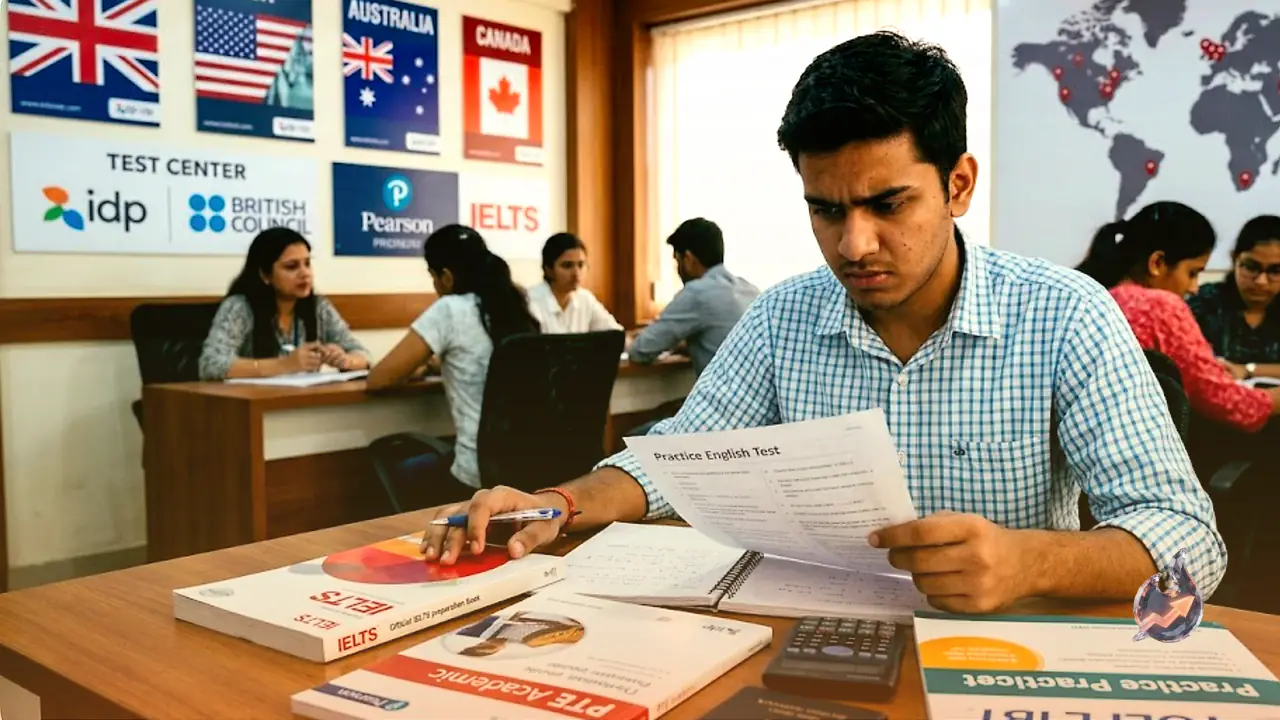

When Indian students begin planning their overseas education journey, one decision often receives less attention than it deserves: which English proficiency test to sit. Picking the wrong exam, even with an excellent score, can result in visa rejection or disqualification from the target university. Three tests dominate this space: IELTS (International English Language Testing System), TOEFL (Test of English as a Foreign Language) and PTE (Pearson Test of English). Knowing where each is accepted, how much each costs, and how the formats differ can save months of wasted effort.
Country Preferences and Visa Office Requirements
The United Kingdom operates the strictest system of all popular study destinations: its government's approved secure list covers IELTS exclusively. Students applying for a UK student visa cannot substitute TOEFL or PTE, regardless of whether the university itself accepts those scores. In the United States, most universities welcome both IELTS and TOEFL, but elite institutions lean toward TOEFL because its listening and comprehension sections mirror the demands of a real American lecture hall. Australia is the most PTE-friendly country, with most institutions accepting it due to the speed and objectivity of its computer-calculated results. Canada recently expanded its Student Direct Stream (SDS) to recognise PTE scores, opening a new fast-track route for Indian applicants and giving them greater flexibility throughout the application process.
Fees, Validity and Primary Destinations
The three exams are priced within a narrow range of each other, and all scores remain valid for two years. IELTS costs approximately ₹17,000 and is the primary choice for students heading to the UK or Canada. TOEFL is priced at around ₹16,900 and is most commonly used for US university applications. PTE costs ₹17,030 and is the dominant option for Australian admissions. Before booking any exam, students should confirm that their specific institution accepts the format they intend to sit, particularly the online version, since some universities and visa offices will only recognise in-person test centre scores.
Format Differences That Affect Preparation and Performance
PTE is entirely computer-based from start to finish. Candidates type their responses and speak into a microphone rather than facing a human examiner, making it well suited to students comfortable with technology who prefer a machine-scored, objective process. IELTS includes a face-to-face speaking interview conducted by a live examiner, which many test-takers find more natural and conversational than speaking to a screen. TOEFL sets the highest bar for listening endurance: the exam requires candidates to follow lengthy, complex academic lectures and then summarise or answer questions about them, closely replicating the pace and content density of a real university classroom.
PTE's global standing is expanding, with European universities increasingly listing it as an accepted qualification. IELTS, however, holds an unmatched position in one specific field: medical licensing boards around the world continue to require it above any other test. Students planning careers in healthcare or medicine should weigh this carefully before registering for any exam.
Online Tests Versus Physical Test Centres
All three exams introduced home-based online formats during recent health crises, and many universities adjusted their policies to accept remote scores. Visa offices, however, have been far slower to follow. Canada's immigration authority specifically clarified that home-based test results do not qualify for the SDS fast-track category. Across multiple countries, visa officers accept only scores earned at in-person, supervised test centre sittings, partly to guard against fraud. For Indian students racing against scholarship deadlines in cities such as Sydney or London, the physical test centre is the safer and more reliable choice. These centres provide stable internet connectivity and a standardised environment, ensuring the result carries full weight with both the university and the visa office.
How to Make the Final Decision
Three factors ultimately determine the right choice: the target country's visa requirements, the chosen university's specific admissions policy, and the student's own comfort with the exam format. For the broadest possible global acceptance, IELTS Academic remains the most reliable default for Indian students. Those applying specifically to Australian universities can choose PTE with confidence and benefit from faster results. Students targeting top US programmes will find that TOEFL's focus on academic listening aligns well with what those institutions value. Whatever the choice, booking a slot at a physical test centre well ahead of the application deadline is strongly advisable, since seats fill quickly around competitive scholarship submission periods.