























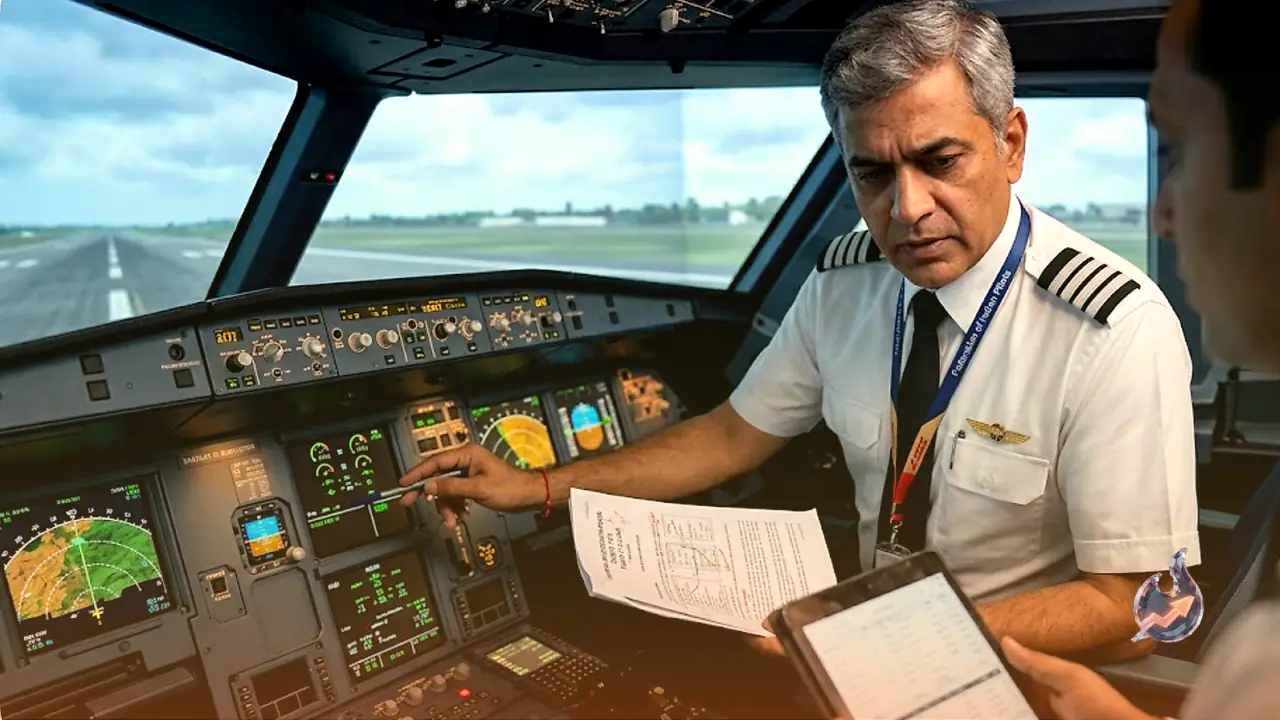

A major dispute has emerged over the preliminary investigation findings of the Air India Flight 171 crash. The Federation of Indian Pilots (FIP), one of the country's premier pilot bodies, has raised serious objections to the interim report published by the Aircraft Accident Investigation Bureau (AAIB). Generally, an interim report outlines the trajectory of an ongoing investigation, but concerns raised by seasoned professionals have placed the official findings under intense scrutiny. FIP contends that key technical details, which could pinpoint the exact cause of the crash, have been omitted from the report. Specifically, they claim that full disclosures regarding electrical failure alerts could have painted a completely different picture of the accident.
With both operating pilots having tragically lost their lives in the crash, they are unable to defend their actions. FIP emphasizes that a thorough, multi-dimensional investigation is imperative before drawing any final conclusions. According to reports by TrendKia, FIP has written a letter to the government, demanding that the AAIB conduct official Boeing 787 simulator tests before compiling the final investigation report. This demand follows independent trials conducted by the association, which produced findings that contradict the interim report.
The Critical 14-Second Gap in Emergency Systems
During a press conference, FIP President Captain C. Randhawa asserted that if the aircraft suffered an electrical failure, several warning messages and audio alerts must have triggered in the cockpit. This critical data should be preserved in the Cockpit Voice Recorder (CVR). He pointed out that the interim report fails to document the complete sequence of these warnings, raising doubts about the investigation's thoroughness.
Further doubts were raised regarding the condition of the Flight Data Recorder (FDR) located in the tail section. Although the tail of the aircraft was recovered in a relatively stable condition, the FDR was found severely damaged. Because the FDR relies entirely on electrical power, its heavily damaged state could indicate a severe malfunction within the aircraft's electrical circuitry.
FIP revealed that despite multiple requests, the AAIB declined to perform simulator trials. Consequently, the association took the initiative to run 10 independent test sessions on a Boeing 787 simulator. The simulator results demonstrated that after an engine shutdown, the emergency power system known as the Ram Air Turbine (RAT) requires approximately 18 seconds to deploy and successfully restore hydraulic pressure. Conversely, the AAIB interim report claims the RAT became operational just 4 seconds after the fuel supply was cut. FIP stresses that this 14-second discrepancy is highly significant and fundamentally alters the timeline of the entire incident.
Precedent of the 'Miracle on the Hudson'
To support their demand for simulator testing, Captain C. Randhawa cited the iconic 2009 'Miracle on the Hudson' crash in the United States. Initially, American investigators questioned the split-second decisions made by pilot Captain Chesley 'Sully' Sullenberger. It was only after conducting over 30 simulator tests that investigators proved it was impossible to return the plane safely to a runway, which ultimately vindicated the pilot.
The Five Critical Questions Raised by FIP
- If a major electrical failure occurred, why does the interim report lack the complete sequence of cockpit warning messages?
- Why have the potential audio alerts recorded on the Cockpit Voice Recorder not been made public?
- How did the Flight Data Recorder suffer such extensive damage when the aircraft's tail section was found mostly intact?
- What explains the massive discrepancy in RAT activation time between the interim report (4 seconds) and independent simulator tests (18 seconds)?
- Why is the AAIB refusing to conduct independent simulator tests before issuing the final crash report?
The pilot association has urged the government to ensure a comprehensive re-evaluation of all technical indicators, including simulator logs and electrical diagnostics, before concluding the investigation. The AAIB has yet to issue a detailed response to the queries raised by FIP.