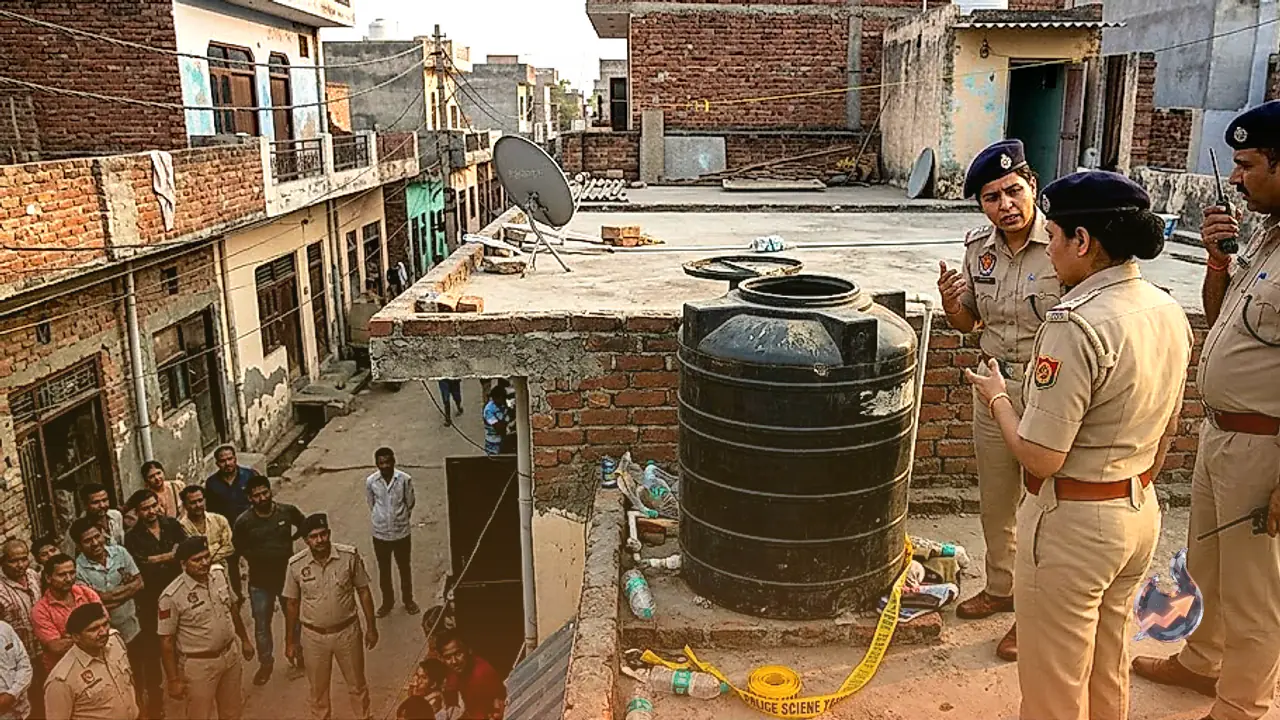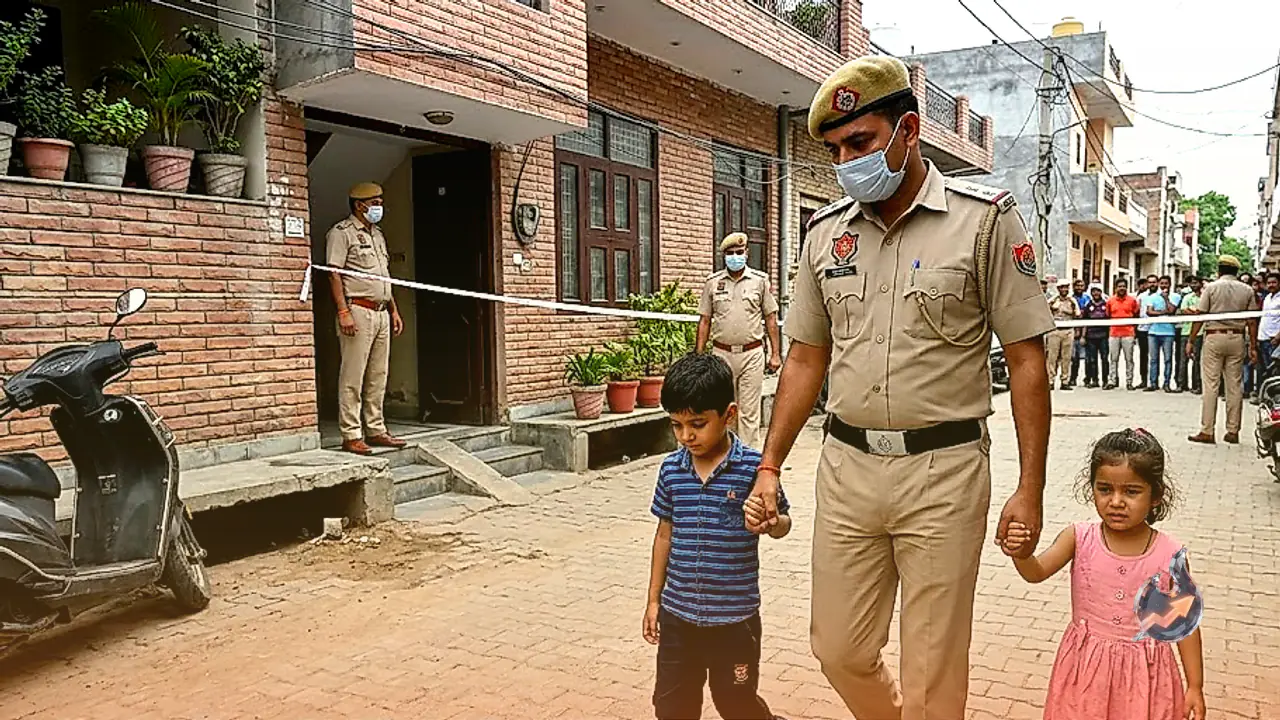





















An intense confrontation unfolded in Faridabad's Sector-65, where an administrative squad backed by a heavy police contingent descended upon Khillu Colony in Sahupura village. The joint team, which included both male and female police officers, initiated a controversial drive to permanently block a residential street by erecting a concrete wall. This particular lane serves as the primary and only access route for several houses constructed along its stretch, leaving the local residents facing sudden confinement within their own properties.
Erecting Walls in Front of Residential Gates
The physical execution of the blockade has sparked immense panic and anger among the local community. Heavy machinery, including a JCB excavator, was brought to the spot to assist in the process. Workers began laying bricks and mortar directly in front of the main entrances of several homes. For the families living here, this administrative action represents a literal locking of their front doors, as the newly built barrier completely cuts off their connection to the main road. The sight of police guarding the construction site prevented residents from physically stopping the work, though it did not stop them from loudly voicing their grievances.
The Conflict of Claims: HUDA Versus Local Deeds
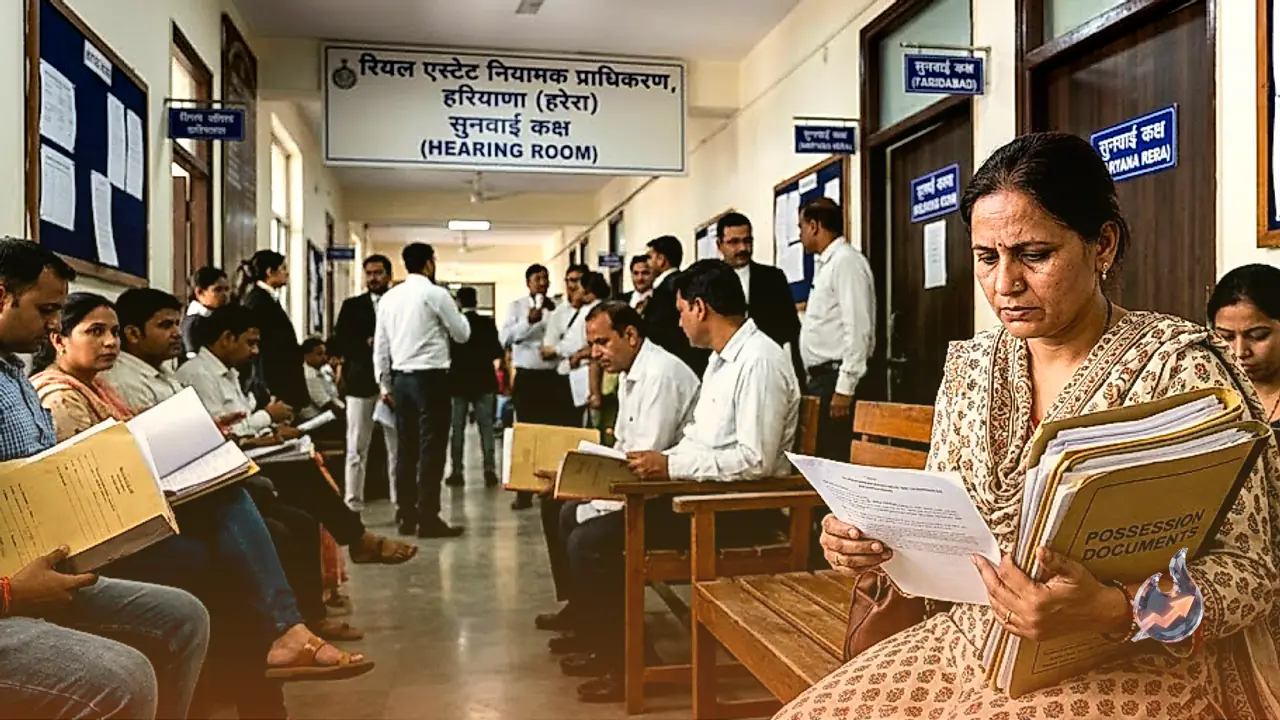
At the heart of this dispute is a fundamental disagreement over land ownership. The local administration asserts that the narrow strip of land functioning as a passage is actually the property of HUDA. According to the authorities, the land was acquired for public development, making any private usage or transit route over it an illegal encroachment. Conversely, the residents of Khillu Colony argue that their rights are secure and legally documented. They possess formal registration papers, claiming that this pathway has been recognized as a public transit corridor for generations, long before any modern urban development plans were drawn up.
Residents Challenge Demolition Without Prior Notice
Several elderly residents have come forward with historic property deeds to challenge the sudden administrative action. Sohan Lal, a local elder, expressed his shock and highlighted his long history in the area. He stated, "I have been living in this colony since 1974." Sohan Lal explained that when he purchased his property half a century ago, the path was a permanent fixture included in the layout, and his house is situated right on the road. He argued that his property registration documents are between 60 to 70 years old, demanding that the administration perform a proper land measurement and verify all historical land records before taking such extreme measures.
Another resident, Jai Singh, pointed out a severe procedural failure by the authorities, stating that they received absolutely no official warning or notice prior to the arrival of the demolition crew. Jai Singh, who holds a property registry that is approximately 65 years old, noted that his legal papers explicitly outline the passage as part of his accessible boundary. He argued that sealing off a road based on unverified complaints, without conducting a thorough investigation or allowing the affected families to present their documents, is a violation of basic administrative fairness.
Generational Heritage and Social Injustice
The emotional toll on the families is evident as they face the prospect of being entirely cut off from the outside world. Sandhya, another local resident, shared that her family’s connection to the land spans multiple generations. She explained that her grandfather and great-grandfather lived in the exact same spot, and this specific path has been the sole means of movement for her family since the beginning. She emphasized that there is no alternative route available for them to exit their homes, meaning the wall will leave them completely stranded.
The systemic nature of the action has also drawn criticism from the community. Ravi, a resident of the colony, expressed deep resentment over how the state treats its poorer citizens. He pointed out that the underprivileged are often the ones who elect governments in the hope of securing a better future, yet they are the first to be targeted by administrative drives. He lamented that instead of protecting their homes and livelihoods, the authorities are actively destroying the basic infrastructure they rely on daily.
The Official Stance: Buyers Must Seek Remedies from Sellers
Defending the action, the administrative in-charge, Ramesh, clarified that the boundary line being established directly aligns with the official borders of HUDA's property. He maintained that the street in question is built entirely on government-owned land and must be reclaimed. Addressing the plight of the residents, Ramesh suggested that the fault lies with the private developers and colonizers who sold the plots. He remarked, "Those who sold the plots have sold them in the wrong place." He explained that the buyers should hold the original sellers accountable and demand that they provide alternative access routes, rather than expecting HUDA to surrender its land. He illustrated this by asking how anyone would react if an outsider built a house inside their private property, concluding that residents must find their own solutions with the help of the property dealers who misled them.
No Resolution as Construction Proceeds
Despite the intense protests, the administration has proceeded with the closure of the path. The JCB remains active on the site, and the construction of the boundary wall continues under heavy police surveillance. The residents find themselves caught in a difficult battle, caught between historical land registries and modern urban planning maps, with no clear path forward as their only exit is slowly bricked over.