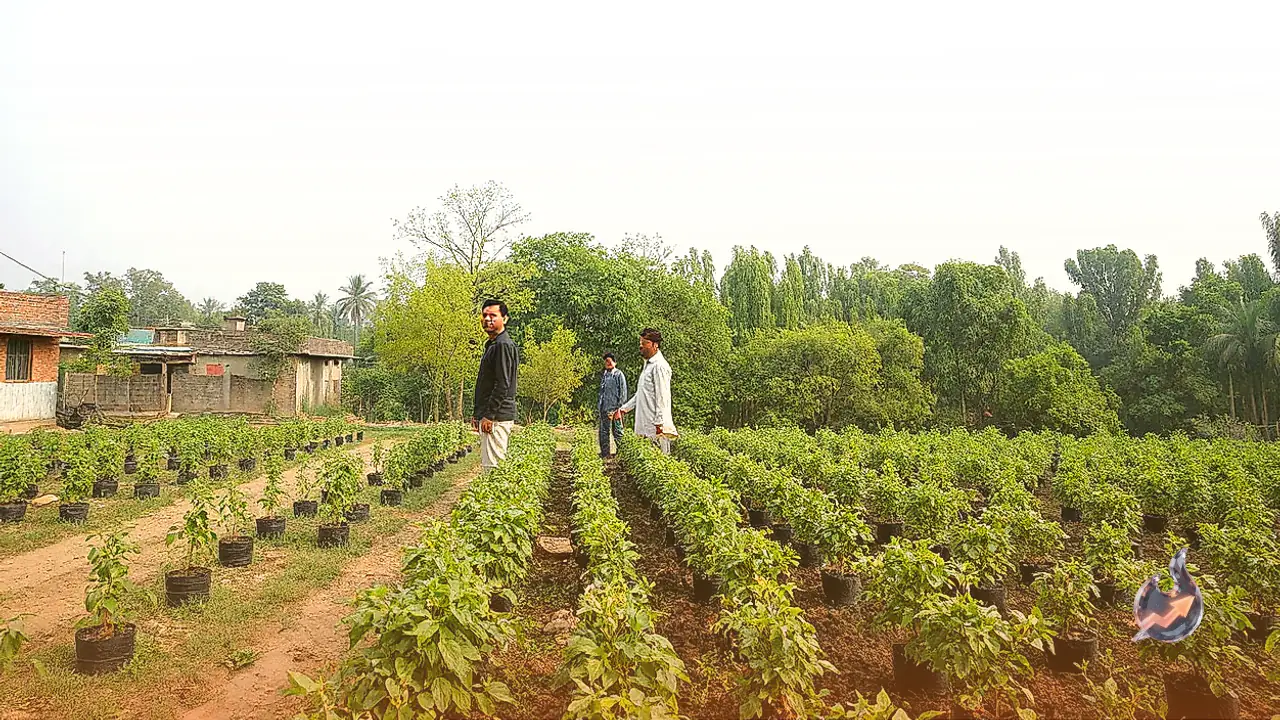

Air pollution levels in Faridabad have become a grave cause of concern recently, with the city's air quality index hovering dangerously around the 400 to 500 mark for multiple consecutive days. Because of this severe environmental hazard, local residents are facing massive breathing difficulties, and stepping outside has turned into a major challenge, especially for young children and elderly citizens. While many people are rushing to install expensive electronic air purifiers inside their homes, a government school teacher from Faridabad chose a much more natural and sustainable method to fight the toxic air. He has successfully converted his entire residence into a thriving mini-forest, cultivating roughly 350 to 400 living plants across his rooftop and interior rooms. Named Gyan Chand, this educator explains that living surrounded by greenery makes the domestic environment feel remarkably fresh and pleasant.
The Motivation Behind the Green Initiative
Gyan Chand shares that there was a time when he felt a strong reluctance to live in Faridabad, with the alarming local pollution being the primary reason behind his distress. Every single year during the winter months, the air quality deteriorates drastically, making normal life difficult. When he built his house roughly 10 years ago, the thought first struck him that he should develop a terrace garden on his roof to cope with the surroundings. Initially, he even considered quitting his job and moving permanently to Uttarakhand to live amidst nature, but being bound by a stable government job, that option was simply not practical. He then wondered why he could not attempt to recreate a Himalayan mountain-like clean atmosphere right here in Faridabad, and consequently, he slowly began collecting and nurturing various plants.
Hundreds of Plants Spanning From Roof to Rooms
Gyan Chand notes that his ambitious green project started humbly with just three or four plants, but their population steadily grew over time, reaching a total of 350 to 400 plants today. His diverse collection features hardy varieties like snake plants, frangipani, agave, and several other botanical species that he purposefully selected. He gave priority to botanical varieties that can easily adapt and survive across all weather conditions with minimal complications. The plants that initially stood at a modest height of three to four feet years ago have now grown massively, with many towering up to 10 to 12 feet high today. Similarly, the few snake plants that he brought in as a small experiment have multiplied exponentially over the years.
Keeping Snake Plants Right Beside the Bed
Gyan Chand points out that his greenery is not restricted to the outdoors, as he has placed numerous plants inside his living quarters as well. He has even placed a snake plant right next to his bed in his sleeping quarters to ensure clean air circulation. While people generally believe that snake plants do not flower, the ones grown by him have actually produced blossoms and even borne fruit. The standout characteristic of this specific plant is that it requires very little maintenance and watering, allowing it to thrive comfortably indoors. Furthermore, while many standard plants release carbon dioxide during nighttime hours, the snake plant is widely recognized for continuing to release oxygen even through the night.
Advocating Plants Over Electronic Air Purifiers
Gyan Chand emphasizes that during winter peaks when the outside AQI crosses the 400 threshold, sitting quietly among his lush plants provides an immensely soothing experience. These plants actively assist in absorbing certain airborne pollutants present in the surrounding atmosphere, proving their utility. Therefore, his firm belief is that instead of solely buying costly air purifiers, people should cultivate living plants inside their residential spaces. The wonderful thing about plants is that they possess life, and when they bloom into different colors, they brighten up the entire living space. If people wish to survive comfortably in polluted urban centers like Faridabad and Delhi, expanding green cover in our immediate surroundings is essential. Achieving this does not require any massive monetary donations, as planting just a single sapling and caring for it is the greatest possible contribution one can make toward the environment.