























Eating fish is widely seen as good for health. A common belief is that regular fish in the diet keeps eyesight from weakening too soon. On top of that, many varieties are loaded with nutrients that the heart and the brain both need, which is why they are considered a healthy choice.
Across the country, rohu, katla, ilish and chingri are hugely popular, and plenty of other varieties make it to the plate as well. But not every fish is good for you. Some species are considered so harmful that staying away from them is the wiser option. Thai Magur is one such fish.
What exactly is Thai Magur
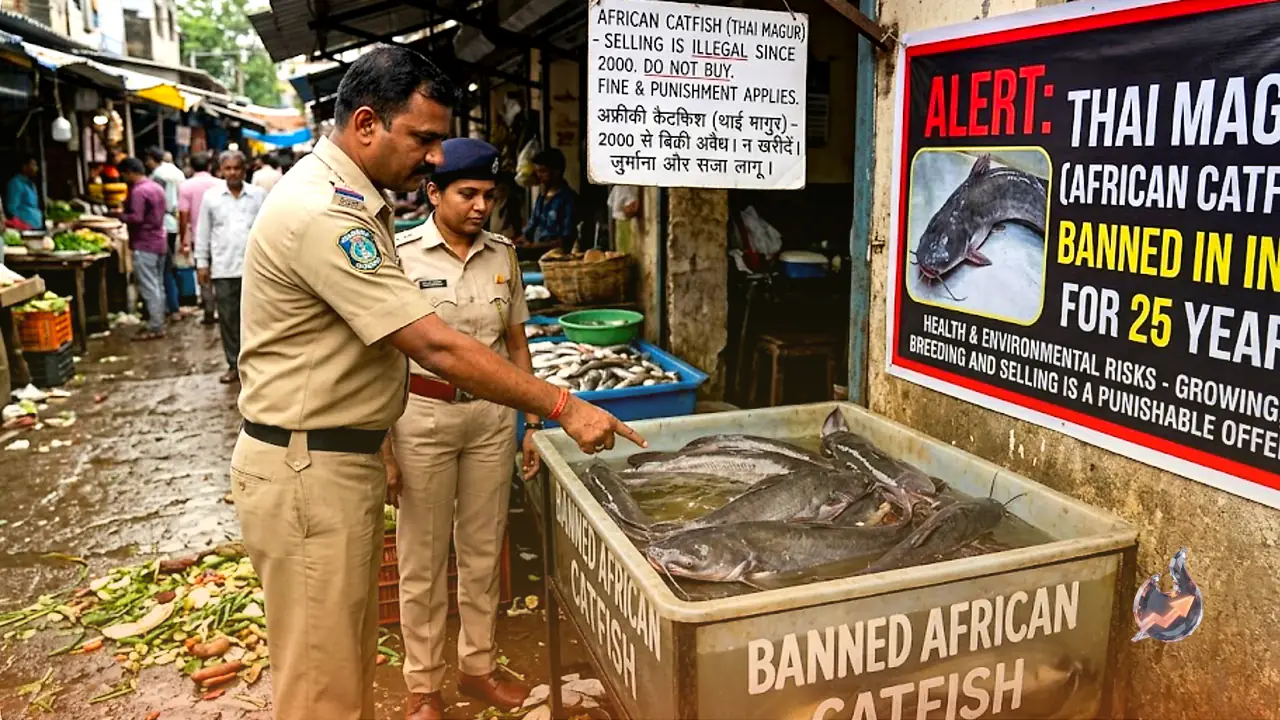
Dark in colour, this fish is fairly easy to spot. It has long whisker-like growths near its mouth, and remarkably, it can survive even in water with very little oxygen. It is actually an exotic species of catfish, also known as Clarias gariepinus or the African catfish. It grows at a rapid pace and manages to stay alive in the toughest of conditions. Its farming has already been banned in India.
A threat to both health and the environment
According to fisheries department officials, this fish is considered harmful not just to the environment but to human health as well. Some studies and experts say that eating it can raise the risk of serious illnesses. That is precisely why awareness drives are run from time to time to alert people about its dangers.
Why the ban came in 2000
India banned the farming of this fish in the year 2000. The biggest reason was its carnivorous and aggressive nature. It takes over both the food and the habitat of local fish, which directly hits the numbers of native species. Experts believe that if it spreads into natural water bodies, it could wreck the entire ecological balance of rivers, ponds and lakes.
The problem of being raised on rotting meat
There is another serious issue with Thai Magur. In many places it is reared by feeding it spoiled or rotting meat. Beyond that, it has the ability to spread certain parasites and diseases that can endanger other fish and aquatic life. Despite growing fast and selling well, these are the very reasons this fish remains banned in India to this day.