


















On June 19, 1865, the enslaved population of Galveston, Texas, finally received the news that they were free. This historic day, which we now recognize as Juneteenth, occurred more than two years after the signing of the Emancipation Proclamation. The delay was simple yet profound: the message of liberation had simply not traveled fast enough to reach those who needed it most. This historic gap highlights a deeper truth about the distance between the official declaration of a right and the actual day-to-day experience of living it.
This long delay raises critical questions about what freedom truly meant to those who were newly emancipated. Were they looking for a brief pause from daily indignities and structural violence, or did they expect a complete transformation of the system itself? Slavery as a legal institution had ended, but the social and economic systems that supported it remained intact. What was granted in 1865 was not full liberation, but a conditional form of relief that had to be navigated under constant surveillance and restriction. In the decades that followed, the simple freedom to move, build, and thrive was continuously challenged by new societal barriers.
A Legacy of Migration in Search of Dignity
In his 1945 autobiography Black Boy, Richard Wright described his departure from the American South as a leap into the unknown, a journey to see if his life could develop differently under other suns, drink of cool rains, and find a place to truly bloom. This powerful sentiment inspired Isabel Wilkerson's landmark book, The Warmth of Other Suns, which detailed the lives of 6 million Black Americans who participated in the Great Migration between 1915 and 1970 to find safety and self-respect.
When Christine Job moved from the United States to Spain in 2017, she was participating in this same long tradition of movement. While she initially viewed it as a simple temporary break, she was experiencing a deep, intergenerational exhaustion common among Black women in America. This bone-deep fatigue is not something that can be resolved by a weekend of rest; it is a physical and psychological state shaped by generations of navigating systemic hostility.
The Science of 'Weathering' and the Resilience Paradox
Public health researcher Arline T. Geronimus coined the term weathering to describe how constant exposure to racial stress and social exclusion accelerates the biological aging process. Her research shows that by middle age, more than half of Black women show signs of advanced biological aging that cannot be attributed to socioeconomic status alone. The root cause is not a failure of personal self-care, but rather how poorly society protects and supports them. While there is no clinical evidence that moving abroad immediately reverses this biological weathering, the psychological relief of escaping a high-stress environment is incredibly significant.
Furthermore, Emory University psychologist Corey Keyes discovered a fascinating paradox in his research. He noted that Black Americans often report higher rates of mental flourishing and emotional resilience than white Americans, despite facing significantly higher levels of systemic stress and discrimination. When controlling for perceived discrimination, the data suggested that Black Americans would be even healthier if these societal barriers were removed. However, misinterpreting this resilience as an innate capacity to endure more pain can lead to dangerous conclusions, shifting the focus away from structural reform and placing the burden entirely on the individual.
Capturing Stories of Growth Abroad
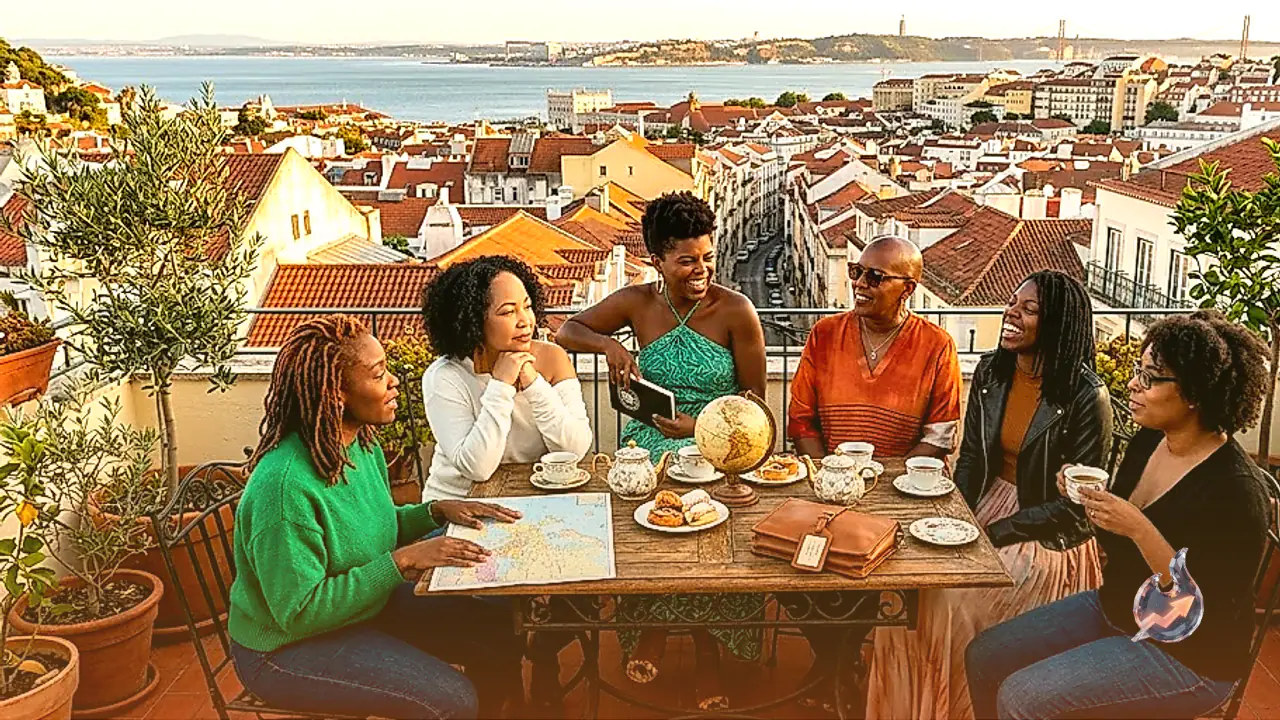
In May 2020, just weeks before the tragic death of George Floyd sparked global protests against racial injustice, Christine Job launched her podcast and digital archive, Flourish in the Foreign. Her goal was to create an internationally recognized oral history project that captured the authentic, nuanced stories of Black women living overseas, offering a counter-narrative to the simplified portrayals often found in mainstream media.
The term flourishing is defined as growing healthily, achieving success, and living in a state of active development. Job wanted to explore this concept not as a medical or academic standard, but as a felt reality. Over the past six years, she has conducted more than 150 life-history interviews with Black women residing in 30 different countries. Through her recent Aging Abroad series, she has revisited these women years later to document how their perspectives on health, community, and personal autonomy have evolved over time.
Niana: Discovering Clarity and Navigating Privilege
Niana, the very first guest on the podcast, originally from Chicago, relocated to Spain and eventually settled in the Netherlands with her husband. Reflecting on her time in Spain, she described feeling an immediate physical lightness, as if a weight had been lifted from her chest. While Spain is not free from racial prejudice, the reduction of daily stress allowed her internal voice to become clear and strong.
However, living abroad also forced Niana to confront the unique advantages of carrying an American passport. She observed that her nationality often granted her access to spaces and opportunities that were denied to Afro-European and Black Spanish women around her. This complex social dynamic created a sense of conflict, highlighting that moving to a new country involves navigating new structures of power and privilege.
Courtney: Escaping the Shadows of a Sundown Town
Courtney grew up in a Michigan neighborhood that her family integrated in 1988. Despite her father being a police officer in a nearby municipality, he was regularly stopped and questioned by local law enforcement while driving home, simply because they did not believe a Black man belonged in that area. Later, when Courtney and her husband moved to Atlanta, they faced similar harassment, with neighbors calling the police on them twice within their first six months for minor occurrences.
The sudden loss of a close friend who had recently earned her doctorate was a turning point for Courtney. In May 2021, she moved to Mexico, seeking an environment free from the specific pressures she had faced in the United States. Courtney views migration as a powerful, modern method of reclaiming personal freedom, aligning her journey with historical figures like James Baldwin in Paris, Josephine Baker in France, and Assata Shakur in Cuba, who traveled abroad to survive and create.
Sienna and Khephra: Rebuilding from the Inside Out
Sienna first arrived in Spain as an undergraduate student and later returned to settle in Murcia. Despite her careful planning and academic preparation, she experienced severe physical stress, including hair loss at the age of 24. This health crisis made her realize that simply changing her physical location was not enough; true wellness required a deep commitment to internal healing and self-discovery. Today, she lives a balanced life in Valencia, managing her professional growth while cultivating a peaceful home.
Similarly, Khephra moved to Madrid in 2013, long before terms like Blaxit became widely used. Coming from New Orleans, she eventually organized major community demonstrations in Spain following the death of Michael Brown. Over the years, Khephra has embraced a transnational identity, finding peace in a sense of belonging that is defined by her own choices rather than her place of birth. For her, liberation means living honestly, accepting her own complexity, and refusing to diminish herself for the comfort of others.
Ayoka: The Generational Shift in Lived Safety
Ayoka B., a writer and poet from Washington, D.C., chose to raise her son in Costa Rica, where he enjoyed a level of safety and freedom that would have been difficult to replicate in his hometown. He could ride his bike to school, spend afternoons at the beach, and move through a supportive community unbothered by systemic suspicion. However, after completing his studies, he decided to return to the United States to live in Washington, D.C., starting his new journey on May 28, 2026.
This decision has brought immense worry to Ayoka, who fears for her son's safety in an environment marked by economic challenges and police violence. Because her son grew up in the peaceful environment she worked hard to provide, he does not carry the same trauma or caution that she developed. This generational gap illustrates how relief can be built and passed down, yet the choices of the next generation may still lead them back to the very environments their parents sought to leave.
The Continuous Journey Toward Self-Determination
Ultimately, these experiences show that finding peace and establishing a fulfilling life abroad is an ongoing process. There is always a transition period between the moment a person seeks change and the moment they feel truly settled. These women are not simply fleeing their homeland; they are actively moving toward a life defined by self-determination and the opportunity to thrive on their own terms. Richard Wright's historical question of whether a person can bloom under a different sun finds its answer in their ongoing journeys of growth and resilience.