






















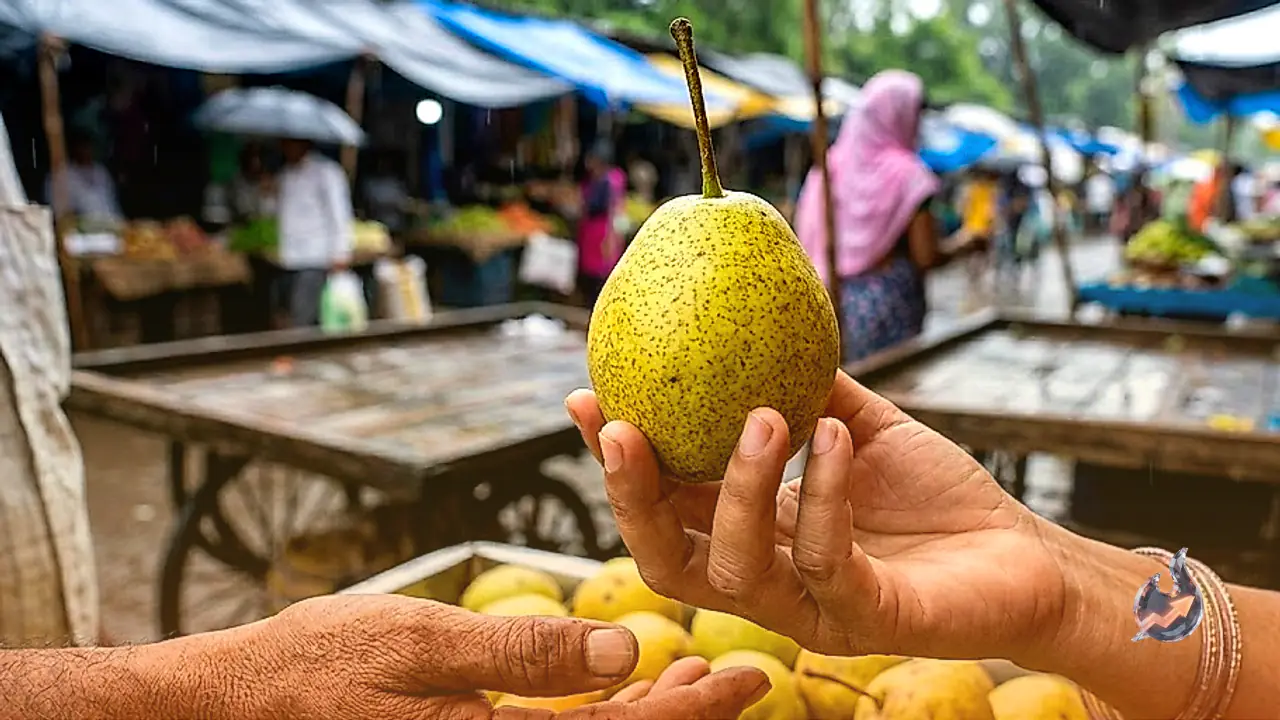

Every monsoon, a small window opens for a fruit that most shoppers only get to buy once a year, the wild pear. Unlike fruits available year round, this one shows up in markets for barely 20 days at a stretch. Despite that short run, its taste, juicy pulp and medicinal properties make it one of the most talked about seasonal fruits of the season.
A season that lasts barely 20 days
The wild pear arrives in markets as soon as the monsoon sets in and disappears again within roughly three weeks. Once that short window closes, supply to markets almost stops entirely, which sharply reduces both its availability and its sales. That narrow window is exactly what sets this fruit apart from other seasonal produce.
A natural fix for digestion
The fruit contains generous amounts of high quality dietary fibre, which helps keep the entire digestive process running smoothly. Regular, balanced consumption significantly boosts intestinal activity, offering lasting relief from chronic and severe constipation.
A strong boost to immunity
Wild pears are rich in vitamin C and several powerful antioxidants that rapidly strengthen the body's immune system. This is why the fruit is considered beneficial against viral infections, seasonal cold and cough, fever and other infectious illnesses.
Traders see steady demand every year
Fruit trader Sonu Rathore says demand for the monsoon pear stays strong every year. Its taste, juicy pulp and nutritional value make it a favourite among buyers. As soon as the monsoon begins, supply to markets rises and customers buy it in large quantities. But because it is a strictly seasonal fruit, its availability in the market stays limited to roughly 20 days, after which supply almost comes to a halt.
Just three days of shelf life, rot sets in on day four
The wild pear's biggest quirk, and its biggest challenge, is its remarkably short shelf life. Once picked, it stays fresh for only about three days. Exposure to the moisture and heavy rainfall of the monsoon rapidly affects its quality, and rot begins to set in from the fourth day onward. This is exactly why traders order it in limited quantities, so that only fresh fruit reaches customers, which in turn keeps its overall market availability limited too.
Good for teeth and gums, and for controlling weight
The pear contains calcium, fibre and several essential nutrients that strengthen teeth and gums while also keeping the digestive system in good shape. Its flavour, lightly sweet with a mild tartness, gives it a distinct identity among fruits. It is also very low in calories while carrying a high water and natural fibre content. Eating it leaves the stomach feeling full for a long stretch, curbing untimely hunger pangs and helping keep overeating in check.
A doctor's take: cooling by nature, low on the glycemic index
Ayurvedic physician Dr. Umesh Sharma explains that the wild pear has a cooling effect on the body and carries mildly sweet, lightly acidic properties. The antioxidants it contains help boost the body's immune response. It is also considered useful for keeping the body hydrated and offering relief from heat. According to Dr. Sharma, the wild pear has a fairly low glycemic index, and the special fibre it contains slows down the process of glucose absorption considerably. As a result, blood sugar levels in the body do not spike suddenly and stay in a controlled range.