























The first spell of monsoon rain turns fields, roadside verges and empty plots in places like Deoghar in Jharkhand green almost overnight, and that is exactly when most cattle owners let their cows and buffaloes loose to graze in the open. The idea is simple, an easy supply of fresh fodder, but veterinarians say this common practice can turn dangerous fast. Not every green plant that sprouts during the rains is safe for animals to eat. Several poisonous weeds grow rapidly through the monsoon, and if milch cattle end up eating them, they can fall seriously ill, their milk yield can drop, and in some cases their lives can be at risk. For families that depend on their cows and buffaloes for daily milk income, that combination of falling yield and a sick animal can be a real financial blow, not just an animal health concern.
Parthenium, or Congress grass, is the biggest threat
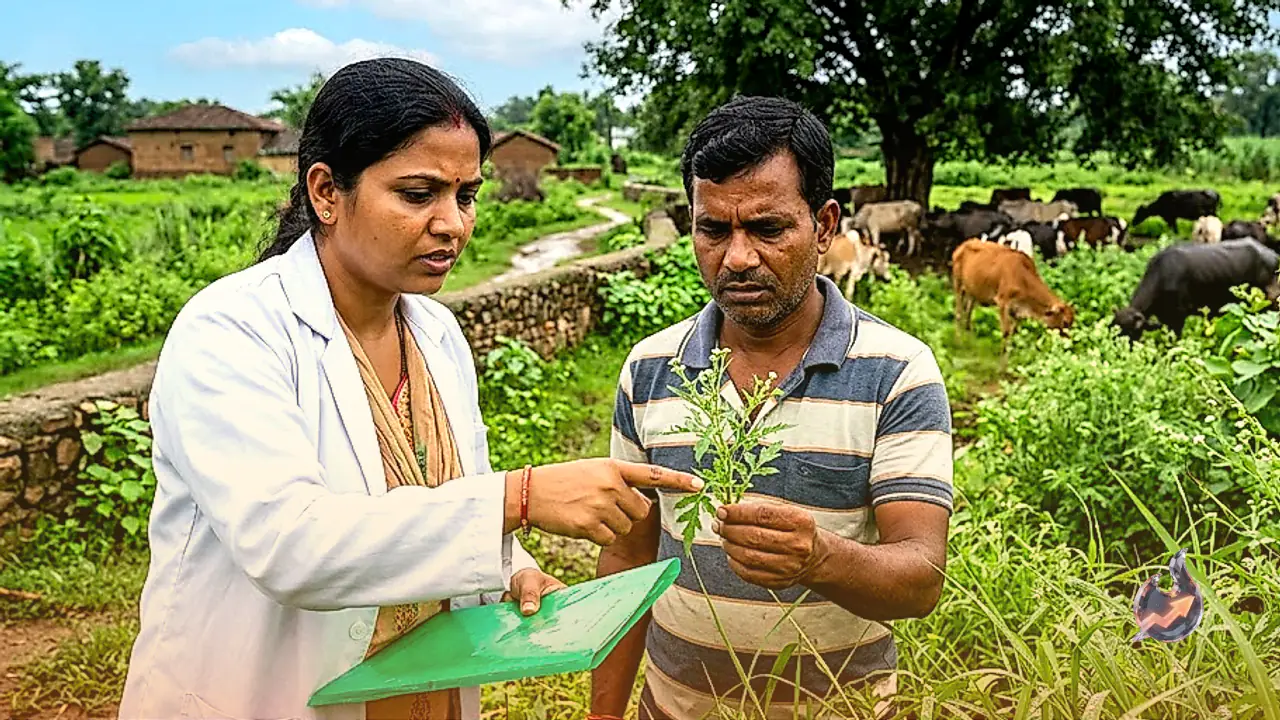
Dr. Poonam Soren, a veterinarian at the Krishi Vigyan Kendra in Deoghar, says cattle owners need to keep a constant watch on their animals through the rainy season. If animals are grazing in the open, owners must check exactly what plants and grasses they are eating, because poisonous weeds often get eaten alongside ordinary green grass without showing any immediate effect. Dr. Soren explains that symptoms of illness sometimes only show up a few hours after the animal has eaten the plant, which is why staying alert in advance is the best form of protection. According to her, the most dangerous weed of all is Parthenium, commonly known as Congress grass, which grows easily in fields, along roadsides and on vacant land. If a cow or buffalo eats it, the plant can affect the animal's skin, its digestive system and its internal organs. Prolonged exposure to or consumption of this grass gradually weakens the animal, and its milk-producing capacity can decline as well, meaning the effects of Parthenium are not always sudden but can build up over repeated grazing in affected fields.
Reeds by ponds and the milky poison of the madar plant
It is not just farmland that poses a risk during the monsoon. The reed weed, known as narkul, which grows along pond edges, waterlogged patches and marshy ground, is just as dangerous for animals. Dr. Soren says that if cows and buffaloes eat too much of it, they can develop indigestion, bloating and symptoms of toxic effect. That is why identifying exactly what grasses and plants are growing in an area is considered essential before letting animals graze near ponds or marshy land, particularly the kind of waterlogged patches that spread quickly once the rains set in. The madar plant is another serious hazard. When its branches or leaves are broken, a white, milk-like poisonous liquid oozes out. If this plant somehow ends up in an animal's stomach, it can trigger diarrhoea, fever, weakness and restlessness. Dr. Soren notes that the condition can sometimes turn severe enough that the animal needs immediate treatment.
What to do first if an animal falls ill
If an animal accidentally eats poisonous grass or a toxic plant and starts showing signs such as indigestion, lethargy or bloating, owners should not take the situation lightly. Dr. Poonam Soren says that in the early stages, the animal should first be given plenty of clean water to drink. As a home remedy, tamarind water can also be given, which often induces vomiting in the animal and helps expel the poisonous substance from its body. However, Dr. Soren is clear that this is only first aid and should not be treated as a substitute for proper treatment. If the animal's condition looks serious or the symptoms persist, owners should contact the nearest veterinarian without delay, since timely treatment can save the animal's life and prevent more serious harm that could otherwise follow if the poisoning is left unaddressed.