



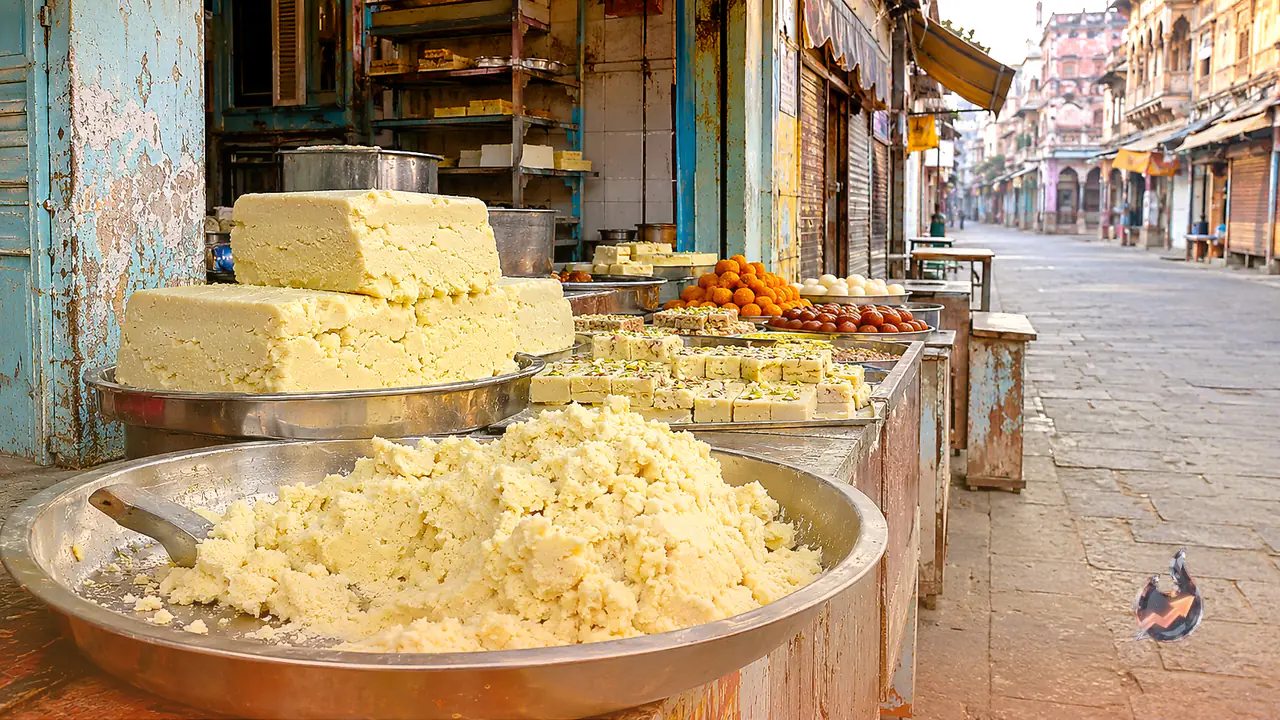


















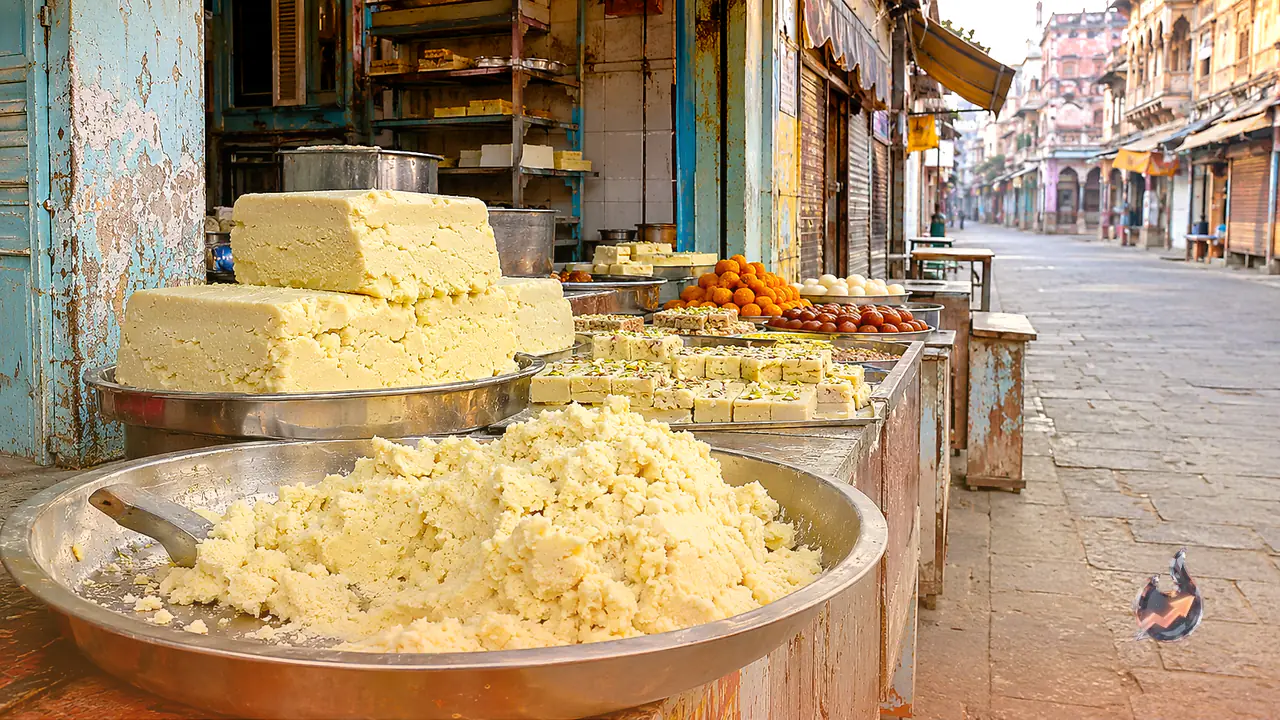

As the festive season kicks off and the demand for sweets skyrockets, the commercial sale of khoya or mawa experiences a massive surge across local markets. However, to maximize profits during peak demand, unscrupulous sellers often dump adulterated or synthetic khoya into the supply chain, which can severely compromise consumer health. Therefore, before you purchase or prepare any traditional sweets, knowing how to distinguish between genuine and fake khoya is an essential safety measure.
Check the Color and Sheen
The visual appearance of genuine khoya is characterized by a natural light cream or off-white shade. It never looks blindingly or unnaturally white. On the other hand, fake khoya often exhibits an abnormal, stark white appearance due to the inclusion of starch or other synthetic fillers. If the khoya on display appears unusually glossy or overly bright, you should immediately exercise caution.
Evaluate the Aroma
Aroma serves as another reliable indicator of dairy purity. Authentic khoya emits a natural, subtle, and mildly sweet fragrance reminiscent of fresh milk. Conversely, adulterated khoya either lacks this characteristic dairy scent entirely or gives off a strange, off-putting odor. In many cases, chemical odors or the distinct smell of low-grade cooking oils can be detected in fake batches.
Test the Texture on Your Palm
To examine the physical consistency, take a small pinch of khoya on your palm and rub it gently. Pure khoya feels remarkably smooth, buttery, and soft, crumbling apart effortlessly without any resistance. In contrast, synthetic or adulterated variants frequently feel rubbery, tough, or excessively grainy to the touch.
Perform the Simple Iodine Test
If you harbor any lingering doubts regarding the quality of your purchase, a straightforward home test can clear the air. Place a small sample of the khoya on a plate and apply a few drops of iodine solution to it. If the sample turns blue or black in color, it confirms the presence of added starch. Genuine khoya will never undergo such a color transformation.
Observe How It Dissolves in Water
Another effective way to verify authenticity is by testing solubility in warm water. Pure khoya dissolves smoothly and uniformly in hot water, creating a homogeneous mixture. Meanwhile, adulterated khoya contains foreign substances that separate into distinct layers or leave behind heavy sediment at the bottom of the glass.
Taste Test for Natural Flavor
The flavor profile of authentic khoya is naturally milky with a very gentle, subtle sweetness. Fake khoya, however, leaves a sticky, bland, or overtly artificial taste on the palate. If an unpleasant or lingering chemical aftertaste remains in your mouth, avoid consuming or using that batch altogether.
Essential Precautions While Shopping
Always practice vigilance when buying dairy products to protect your household from health hazards. Purchase your khoya exclusively from trusted, established local dairies or reputed retail stores. Avoid the temptation of buying unusually cheap khoya, as heavily discounted products are frequently compromised. Always insist on fresh stock and inquire about the manufacturing date whenever possible. Whenever feasible, restrict your purchases to vendors who hold valid FSSAI licenses.