













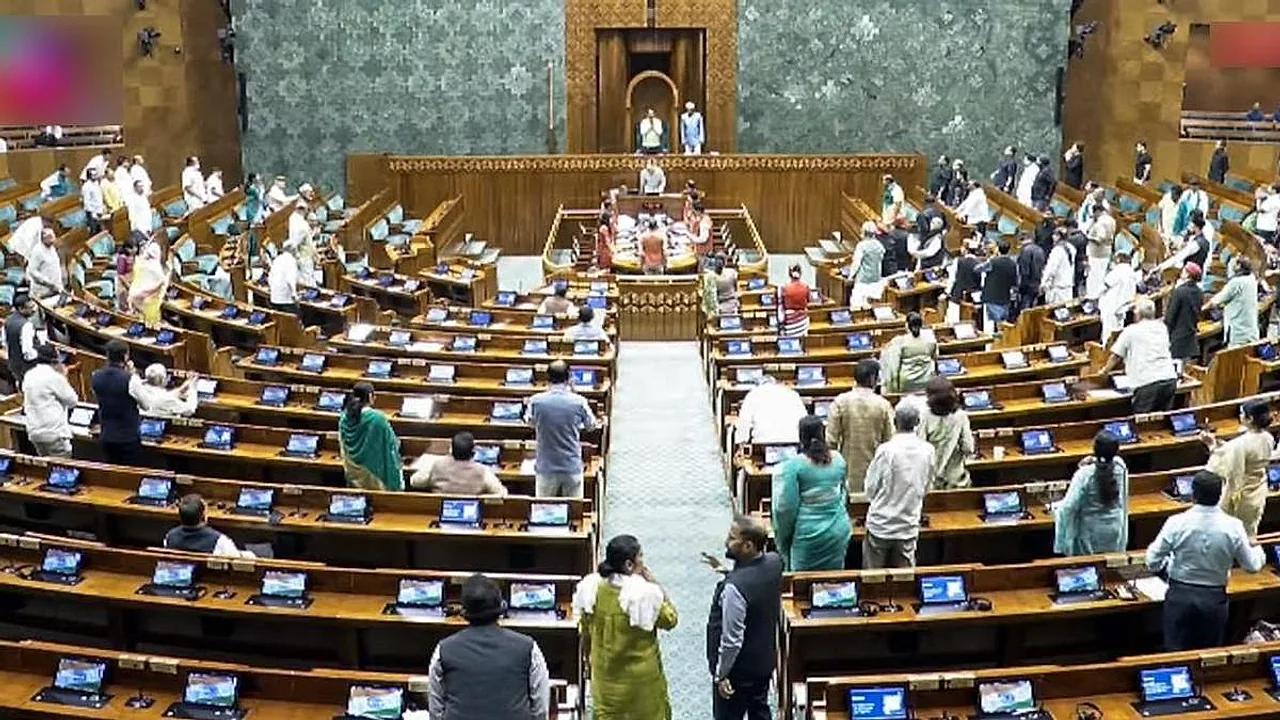

The fourth day of the Monsoon Session of the Indian Parliament, convened on Thursday, July 23, 2026, descended into an unprecedented state of legislative paralysis as the reverberations of the nationwide examination crisis echoed fiercely within the chambers. The relentless and uncompromising demand from the united opposition benches for the immediate resignation of the Union Education Minister, Dharmendra Pradhan, over his ministry's handling of the massive NEET paper leak scandal, ensured that absolutely no legislative business could be transacted. What was supposed to be a day of rigorous questioning and the passage of critical bills transformed into a theatre of intense political confrontation. Both the Lok Sabha and the Rajya Sabha witnessed a continuous loop of uproar, sloganeering, and forced adjournments, laying bare the deep fractures between the ruling coalition and the opposition bloc on the handling of the country's educational infrastructure. The parliamentary gridlock serves as a stark reflection of the anger simmering across the nation, where millions of young aspirants feel their futures have been jeopardized by systemic administrative failures. As the day progressed, it became abundantly clear that the opposition was in no mood to yield, utilizing every parliamentary tool available to keep the government on the back foot, while the treasury benches struggled to restore order and reclaim the legislative agenda. The complete standstill not only highlighted the severity of the crisis but also underscored the immense political capital invested by both sides in controlling the narrative surrounding the welfare of the nation's youth.
The Scheduled Agenda That Was Eclipsed by Outrage
The official parliamentary schedule for both houses had been meticulously planned before the political storm hit the capital. According to the circulated order of business, the day was slated to begin with the crucial Question Hour, a foundational democratic process where lawmakers hold the executive accountable by asking direct questions to various ministers. Following this, the Lok Sabha was scheduled to take up the revised list of government business that had been carried over from Tuesday, July 22, 2026, due to prior disruptions. This unfinished legislative work was considered vital for the administration's policy rollout. Similarly, the Rajya Sabha's itinerary mirrored this structure, heavily prioritizing the Question Hour and the continuation of the governmental debates that remained incomplete from the same Tuesday session. However, the sheer magnitude of the opposition's anger regarding the examination leaks meant that this carefully crafted agenda was entirely abandoned within minutes of the presiding officers taking their respective chairs, completely overshadowed by the singular focus on demanding accountability from the Ministry of Education. The disruption made it clear that until a political resolution was reached on the student issue, the government's broader legislative roadmap would remain firmly stalled.
Pre-Session Strategy Formulation by the Opposition
Understanding the critical nature of the day's proceedings, the leading figures of the opposition alliance convened a high-stakes strategy meeting well before the bells signaled the commencement of the parliamentary session. This crucial gathering saw the participation of some of the most prominent voices in Indian politics, who huddled to finalize their floor coordination. The Leader of the Opposition in the Lok Sabha, Rahul Gandhi, was joined by the Chief of the Samajwadi Party, Akhilesh Yadav. They were accompanied by senior Congress strategist Jairam Ramesh and the vocal parliamentarian from the Nationalist Congress Party (Sharad Pawar faction), Supriya Sule. The objective of this early morning confluence was clear: to present a united, impenetrable front against the government and to ensure that the demand for the Education Minister's resignation remained the absolute epicenter of the day's political discourse. By aligning their tactics, these leaders ensured that members across various opposition parties would echo the same demands in unison, thereby maximizing the pressure on the presiding officers and the ruling administration. This strategic huddle effectively set the uncompromising tone that would dominate the entirety of the day's proceedings in both houses.
Legislative Push Through Adjournment Notices
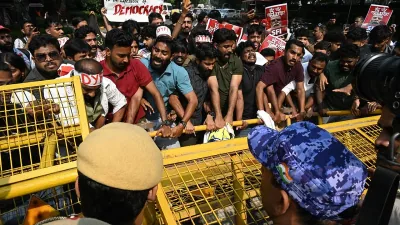
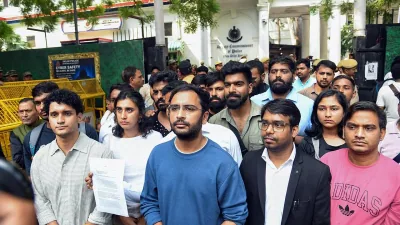
The opposition's verbal protests were immediately backed by formal parliamentary maneuvers designed to halt all routine proceedings. In the lower house, the legislative assault was spearheaded by senior Congress Member of Parliament, KC Venugopal. He formally submitted a notice for an adjournment motion in the Lok Sabha. His notice demanded the immediate suspension of all regular business to facilitate an urgent, comprehensive discussion on what he termed a severe crisis gripping the nation's examination system. Crucially, Venugopal's motion did not stop at the administrative failures; it also fiercely highlighted the recent events of July 20 at Jantar Mantar, where students protesting against the leaks were met with strict police action. He sought immediate accountability for the forced dispersal of the agitating youth. Meanwhile, in the upper house, Congress parliamentarian Randeep Surjewala executed a similar strategy by moving an adjournment notice in the Rajya Sabha. Surjewala's demand mirrored the sentiments expressed in the Lok Sabha, calling for a dedicated debate on the paper leaks, the heavy-handed police response against peaceful student demonstrators, and the pressing need for sweeping educational reforms across the country. These notices cemented the opposition's stance that no other business held precedence over the plight of the students.
Lok Sabha Morning Session Plunges Into Chaos
As the clock struck the appointed hour and the Lok Sabha convened, the palpable tension instantly boiled over. The moment Lok Sabha Speaker Om Birla assumed his chair and formally announced the commencement of the Question Hour, the lower house erupted into massive chaos. Opposition members, armed with their demands and refusing to back down, immediately flooded the well of the house, raising loud slogans against the government's handling of the examination crisis. The deafening noise made it entirely impossible to hear any questions or ministerial responses. In a bid to salvage the session, Speaker Om Birla made repeated, earnest appeals to the agitating lawmakers to allow the house to function smoothly. Addressing the chaotic floor, he urged all members from both the government and the opposition to participate in the Question Hour first and then engage in a structured debate on the issue within the established rules of the house. However, these appeals fell on completely deaf ears. With the unrelenting uproar rendering any legislative work impossible, the Speaker was left with no alternative but to abruptly adjourn the proceedings of the lower house until 12 noon, signaling a total breakdown of parliamentary order right at the outset.
Rajya Sabha Mirrors the Legislative Paralysis
The situation in the upper house, the Rajya Sabha, was virtually indistinguishable from the chaos unfolding in the Lok Sabha. Presiding Officer C.P. Radhakrishnan attempted to initiate the day's business, but he was immediately met with a wall of coordinated opposition resistance. The members of the opposition bloc stood on their feet, vehemently chanting slogans and demanding that all other business be set aside to address the examination leak scandal and the fate of the Education Minister. Despite Radhakrishnan's repeated pleas to the members to maintain the dignity of the house and return to their respective seats, the decibel level only increased. The systematic disruption meant that no documents could be tabled, and no preliminary statements could be made. Recognizing that the environment was entirely unconducive to any form of parliamentary debate or regular functioning, Presiding Officer Radhakrishnan was forced to declare an early halt to the proceedings, adjourning the Rajya Sabha until 12 noon, perfectly synchronizing the legislative paralysis across both chambers of Parliament. This mirroring of disruptions showcased the highly organized nature of the opposition's blockade strategy across the entire legislative spectrum.
The Battle of Narratives at Makar Dwar
With the legislative chambers forcibly emptied by the adjournments, the political battlefield physically shifted to the iconic Makar Dwar within the expansive Parliament complex. Here, a highly visible and dramatic confrontation of protests took shape. Leading the charge for the opposition was Congress Parliamentary Party Chairperson Sonia Gandhi, who joined the agitating members in a powerful show of solidarity. The protest line featured the topmost echelon of the INDIA alliance, including Congress President Mallikarjun Kharge, Rahul Gandhi, Priyanka Gandhi Vadra, and Samajwadi Party Chief Akhilesh Yadav. They stood together, holding placards and raising slogans, reinforcing their demand for accountability in the paper leak scandal. However, this demonstration was not left unchallenged. In a direct counter-mobilization, Members of Parliament belonging to the ruling National Democratic Alliance positioned themselves directly opposite the opposition leaders at the very same location. The ruling coalition members launched their own fierce demonstration, resulting in a tense, face-to-face standoff that visually encapsulated the bitter political divide defining the current parliamentary session. The dual protests effectively turned the exterior of the parliament into an arena of intense optical warfare.
The TMC Rebellion and the Suspension Controversy
While the examination crisis dominated the overarching narrative, the ruling coalition MPs at Makar Dwar were also highlighting a separate, explosive internal parliamentary dispute. Their counter-protest was specifically directed against Trinamool Congress parliamentarian Kalyan Banerjee. The controversy surrounding Banerjee stems from a dramatic political realignment where twenty rebel Members of Parliament from the Trinamool Congress recently defected and merged their faction with the Nationalist Citizen Party of India. In the volatile aftermath of this defection, Banerjee was accused of using highly derogatory and unparliamentary language against female lawmakers belonging to the newly formed faction. Taking the matter with utmost seriousness, three female parliamentarians from the Nationalist Citizen Party of India, namely Mitali Bag, Shatabdi Roy, and Kakoli Ghosh Dastidar, formally registered a stringent complaint with the office of the Lok Sabha Speaker. Acting on this grave complaint, the Lok Sabha had taken swift disciplinary action on Wednesday, July 22, 2026, officially suspending Kalyan Banerjee for the entire remainder of the Monsoon Session, a move that added another layer of intense friction to the already heated atmosphere and further complicated the floor management dynamics.
Government Asserts Readiness for Debate Amidst Accusations
Amidst the relentless disruptions, the government attempted to present its defense and clarify its stance on the floor of the house. Union Minister of Parliamentary Affairs, Kiren Rijiju, took the lead in the Rajya Sabha, firmly stating that the ruling administration was entirely prepared to hold a comprehensive discussion on the NEET examination leaks. Rijiju emphasized that this decision was reached after extensive consultations with various political parties. However, he launched a sharp critique against the Congress party, specifically naming Leader of the Opposition Mallikarjun Kharge, accusing them of intentionally imposing arbitrary conditions on the proposed debate. Rijiju argued that the imposition of such preconditions clearly exposed the opposition's underlying intention, suggesting that they did not actually want a constructive discussion to take place. He reiterated the government's sincere desire to facilitate a debate in both houses without politicizing the sensitive matter. Urging the opposition to drop their caveats, he formally requested the Chairman to allocate a specific time for the debate, declaring that the government was ready to engage on the issue that very day. This articulation aimed to shift the blame for the gridlock entirely onto the opposition benches.
Prime Minister Mandates Fast-Track Justice for Leaks
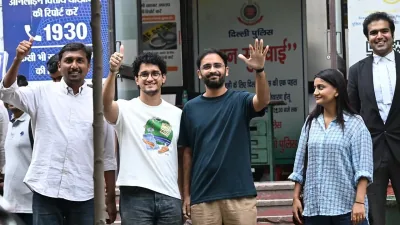
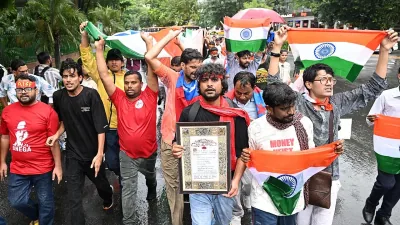
As the parliamentary deadlock showed no signs of easing, Prime Minister Narendra Modi made a highly significant intervention from outside the legislative chambers. Taking to the social media platform X, the Prime Minister announced a decisive governmental response to the crisis that has deeply unsettled the student community. He declared that the administration has taken a firm decision to establish dedicated fast-track courts exclusively for handling cases related to examination paper leaks. In his statement, the Prime Minister emphasized that these specialized judicial avenues are being created to ensure that those found guilty of compromising the examination system face rapid and stringent punishment, eliminating the usual delays associated with the legal process. He further noted that strict directives have already been issued to all relevant officials and government departments to immediately initiate the necessary steps for setting up these courts. This announcement marked the Prime Minister's first direct public commentary addressing the massive, ongoing agitations led by the Cockroach Janata Party in the national capital, framing the fast-track courts as a vital measure to protect the youth and ensure the swift delivery of justice, while attempting to seize the moral high ground amidst the political turmoil.
Afternoon Sessions Trapped in a Cycle of Disruptions
When the clocks struck noon, both houses reconvened with hopes of breaking the impasse, but the reality proved vastly different. In the Lok Sabha, Presiding Officer Dilip Saikia took the chair, only to be greeted by the same impenetrable wall of opposition sloganeering. Amidst the din, Minister Kiren Rijiju reiterated his earlier appeal, emphasizing the government's unconditional readiness to discuss the paper leak issue at an appropriate time. Saikia pleaded with the members to uphold parliamentary decorum, but the relentless demand for the Education Minister's resignation forced him to adjourn the lower house again until 2 PM. Parallelly, the Rajya Sabha resumed its sitting. Leader of the Opposition Mallikarjun Kharge took the floor, countering the government's claims by asserting that the opposition was indeed ready for a debate. However, Kharge stood firm on his demands, insisting on the prior resignation of Dharmendra Pradhan and calling for a comprehensive official statement from the government concerning both the paper leaks and the tragic deaths of students associated with the immense pressure of the exams. His statement triggered a fresh wave of intense shouting, leading to another swift adjournment until 2 PM, proving that the ideological rift remained unbridgeable.
The Ruling Party Launches a Fierce Counter-Attack
Refusing to remain entirely on the defensive, senior leaders of the Bharatiya Janata Party launched a blistering counter-attack against the opposition's tactics. BJP Member of Parliament Sambit Patra aggressively asserted that the Congress party was merely putting on a performative display to deliberately waste precious parliamentary time. He accused the opposition of fundamentally running away from the very issues they claimed to champion. Patra highlighted proactive steps taken by his party, noting that over the past few days, BJP President Nitin Nabin and former party president JP Nadda had engaged in serious dialogues with agitating students and prominent activist Sonam Wangchuk. He stated that these discussions yielded a clear consensus on the need for deep reflection and the formulation of exceedingly strict laws, arguing that the Congress is entirely uninterested in such constructive solutions and only desires political theater. Adding to this offensive, Union Finance Minister Nirmala Sitharaman accused the opposition of playing dirty politics over a highly sensitive issue concerning the youth. She claimed that by inventing new conditions to stall the debate, the Congress is reverting to its known strategy of obstructionism, motivated by the fear that a transparent discussion would bring the truth of the government's rigorous actions to light, thereby stripping the opposition of their only basis for agitation.
Priyanka Gandhi Delivers a Scathing Indictment
The political rhetoric reached a boiling point when Congress leader Priyanka Gandhi Vadra launched a highly personalized and scathing attack against Prime Minister Narendra Modi regarding the treatment of protesting students. Speaking directly to media personnel within the sprawling Parliament complex, she drew a stark and critical contrast regarding the Prime Minister's leadership style. She stated that while the Prime Minister is always quick to eagerly claim credit for monumental national achievements, such as missions to Mars, it is now imperative that he takes full personal responsibility for the administrative decisions that are actively harming the nation's youth. She sharply criticized the dichotomy of his public persona, pointing out that while he frequently shares posts on social media projecting deep affection for children, he concurrently presides over an administration that authorized police forces to utilize tear gas and physical force against students just the night before. Escalating her critique, she questioned whether the nation's democratic history had ever witnessed a scenario where lawmakers from the ruling party themselves are forced to protest outside the chambers. Categorizing the ongoing parliamentary failures as a direct reflection of his leadership, she concluded by labeling him a weak and timid leader who is fundamentally incapable of running the house smoothly, directly challenging his authority.
The Procedural Deadlock Over Rule 267
A significant portion of the legislative friction in the upper house centered around the specific parliamentary mechanism known as Rule 267. Against the backdrop of massive protests spearheaded by the Cockroach Janata Party demanding urgent reforms in the education sector, various opposition factions had submitted a formal notice under Rule 267 in the Rajya Sabha on July 22, 2026. This specific rule is a powerful tool that allows for the total suspension of all listed business of the day to take up a matter of extraordinary public importance. Senior Congress leader Mallikarjun Kharge explicitly articulated the opposition's unyielding stance, declaring that any debate on the examination crisis must exclusively take place under the stringent provisions of this specific rule. He expressed deep frustration, noting that the government flatly refused to agree to this procedural demand. Kharge further alleged that during the ensuing friction, the ruling benches had actively insulted senior leaders including Rahul Gandhi and Priyanka Gandhi. This procedural standoff became a massive ideological battleground, with Samajwadi Party Chief Akhilesh Yadav reinforcing the blockade by declaring that if the government acknowledges the reality of the paper leak, the Education Minister must resign immediately, and only after that resignation is secured will any debate begin, completely paralyzing the legislative machinery.
Total Shutdown and High-Level Interventions
The relentless cycle of disruptions ultimately culminated in a total shutdown of legislative business for the day. In the Lok Sabha, despite Presiding Officer Dilip Saikia's desperate attempt to initiate matters under Rule 377, a procedure designed for raising significant public issues that do not fit into other motion categories, the opposition's deafening chants demanding the Education Minister's resignation made any progress impossible. Consequently, the lower house was adjourned for the entire day, with the next sitting scheduled for Friday, July 24, 2026, at 11 AM. The Rajya Sabha suffered an identical fate. When the house briefly reconvened at 3 PM with Harivansh Singh presiding, he practically begged the members to allow the consideration of a bill, reminding them that they had already wasted four days. However, the chaos continued. Shortly before the final adjournment, Minister Kiren Rijiju passionately complained to the chair that Kharge and his colleagues were intentionally sabotaging the proceedings to escape a factual debate. Ignoring this, Kharge began reading aloud a letter detailing the severe injustices faced by the student community. As the sloganeering reached a fever pitch, Harivansh Singh finally conceded defeat, adjourning the upper house for the day. Amidst this unprecedented institutional paralysis, Union Home Minister Amit Shah held a crucial closed-door meeting with Lok Sabha Speaker Om Birla, signaling urgent high-level consultations to navigate the ongoing parliamentary crisis.