


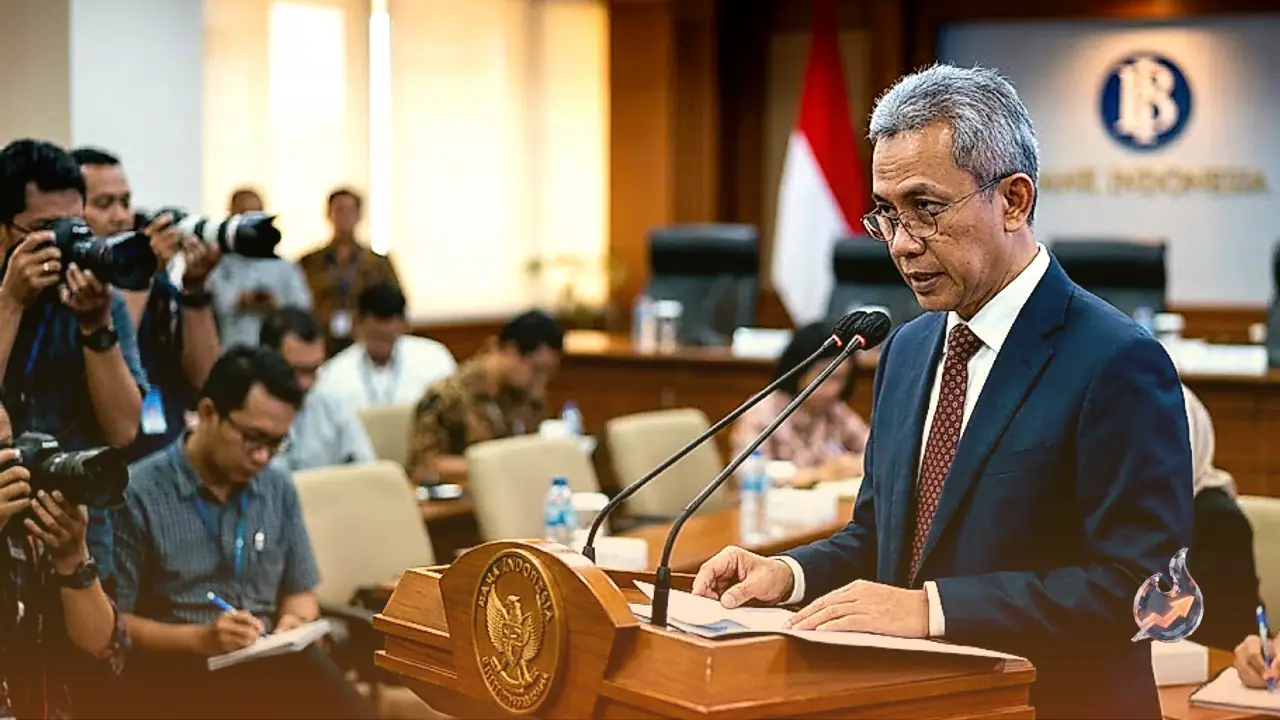



















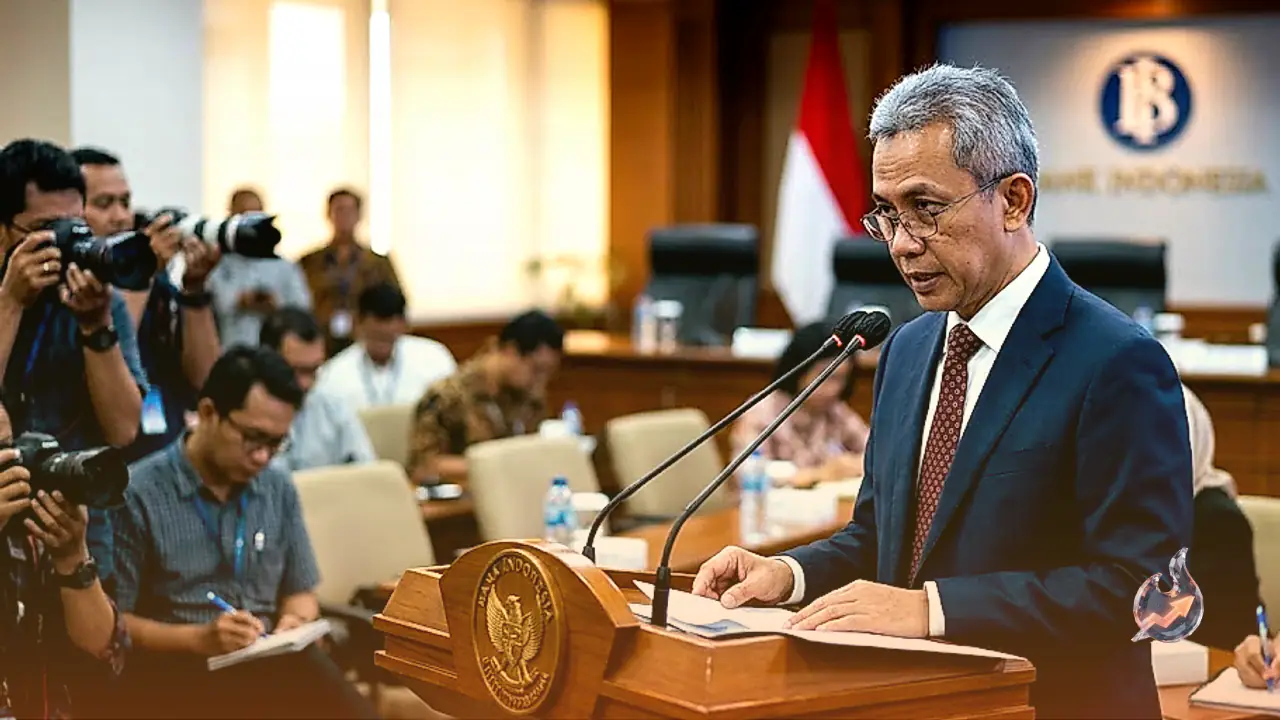

Bank Indonesia held its benchmark policy rate unchanged at 5.75 percent for a third consecutive gathering, moving directly in line with broader market consensus. The monetary decision underscores the central bank's ongoing requirement to balance ascending domestic inflation risks and foreign exchange stability against the necessity of preserving macroeconomic growth. Newly appointed Bank Indonesia Governor Destry Damayanti stated that the current policy interest rate is adequate to maintain stability across the financial architecture. She further indicated that underlying economic fundamentals are projected to keep the Indonesian Rupiah consistently anchored despite international headwinds.
Neutral Stance and Deployment of Non-Rate Policy Mechanisms
Monetary authorities adopted an increasingly neutral stance during the latest proceedings, recognizing that the broader domestic economy needs a boost. Governor Damayanti noted that Bank Indonesia is actively exploring policy pathways extending beyond direct benchmark adjustments to address persistent international uncertainties. Market analysts assess that as long as foreign exchange depreciation pressures on the domestic currency remain contained, monetary policymakers are inclined to hold rates steady. By relying on targeted alternative liquidity tools rather than blunt interest rate hikes, policymakers seek to insulate commercial credit conditions while shielding the financial system from external shocks.
Restructuring of Conventional Hedging Swap Discounts
In a direct move to stimulate capital inflows into local financial instruments and reinforce foreign reserves, Bank Indonesia implemented a tiered increase in the premium discount on conventional hedging swaps. While previous regulations applied an identical 12.5 percent flat rate across all maturities, the newly calibrated structure introduces term-specific incentives. The premium discount for the 3-month tenor has been lifted to 15 percent, while the 6-month tenor has been raised to 20 percent. For the 12-month contract duration, the discount has reached 25 percent. These measures aim to diminish hedging expenditure for global portfolio allocators, thereby encouraging sustained foreign currency conversion into local sovereign assets.
Outlook for Policy Continuity and Tightening Contingencies
Currency stability is anticipated to remain the overarching anchor of Bank Indonesia's operational framework over the coming quarters. Policy projections indicate that benchmark interest rates are well positioned to remain at 5.75 percent throughout the remainder of the calendar year. The current interest rate configuration, coupled with proactive reserve flow frameworks, offers adequate room to stimulate commercial enterprise while keeping consumer price pressures and foreign exchange volatility inside manageable thresholds. Nevertheless, monetary authorities retain full flexibility to deliver further tightening if depreciation stress on the Rupiah intensifies unexpectedly or if consumer inflation trends upward on a more persistent trajectory.
Currency Technical Dynamics and Cross-Market Crosscurrents
Live financial metrics for USD/IDR reflect the spot rate trading near 17,893, climbing 0.31 percent from its prior close of 17,837, within an established 52-week band spanning 15,636 to 18,222. The 14-day RSI stands at 62, while the MACD baseline sits at 16.19 relative to a -19.07 signal mark, reflecting underlying upside momentum. Moving averages remain in an orderly trajectory with the 20-day EMA at 17,751 and 50-day EMA at 17,770, elevated above the 200-day EMA of 17,378. Short-term pivot calculations place central equilibrium at 17,864, flanked by upward resistance targets at 17,934 and 17,974, with baseline downside support located at 17,824 and 17,754. In broader currency markets, the Australian Dollar posted its fourth consecutive daily pullback toward 0.7000 as elevated US Treasury yields bolstered the greenback, while the Bank of Japan advanced its monetary normalization by lifting its short-term rate target from 1.00 percent to 1.25 percent in a 7-2 vote.