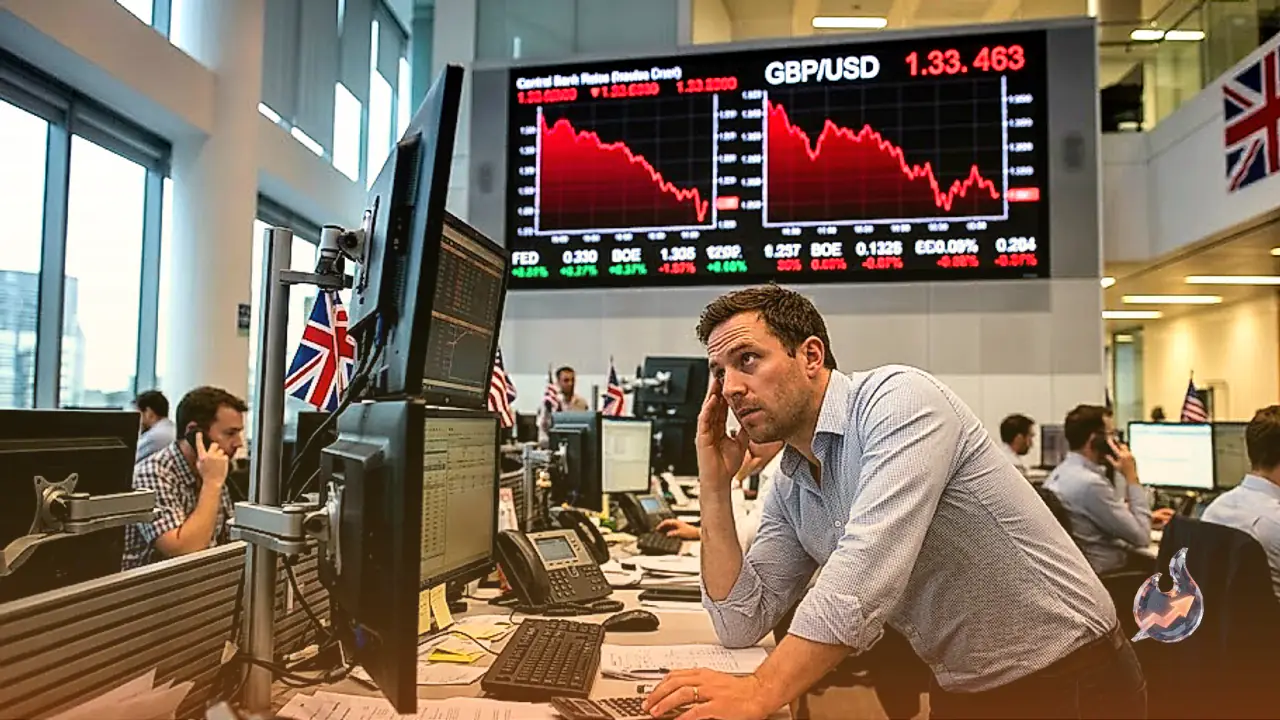

























Selling pressure across international currency markets has dragged the shared European currency below the 1.1450 threshold, marking its lowest valuation against the US Dollar since the closing days of July. The downward momentum stems from a resilient Greenback alongside emerging cracks in domestic economic indicators across the euro area. This combination has cast doubt on the aggressive trajectory of borrowing cost increases that investors had previously anticipated from regional monetary authorities.
Sinking Consumer Morale and the Energy Dilemma
Fresh sentiment readings released by the European Commission revealed that the preliminary consumer confidence gauge for September deteriorated to -16.5. This result fell short of market projections that pointed to -16 and marked a clear retreat from the -15.5 recorded in August. The contraction illustrates that regional households are feeling an intense pinch from high electricity and heating expenses, which leaves less disposable income available for discretionary goods and services.
Because the Eurozone must purchase almost every single barrel of crude petroleum and the vast majority of its natural gas supplies from international producers, its economic balance remains exceptionally vulnerable to commodity price shocks. A conditional gesture extended by Iran on Tuesday regarding safe passage for oil tankers through the Strait of Hormuz could ease some of these energy bills. However, any softening in energy prices that allows household spending to slow also diminishes the urgency for the European Central Bank to continue tightening credit conditions. For a currency that relies heavily on higher yields to close the valuation distance with the US Dollar, receding rate hike prospects present an immediate fundamental headwind.
Policy Divergence Between the European Central Bank and the Federal Reserve
In an effort to tame soaring inflation following energy disruptions, the European Central Bank lifted its deposit rate to 2.50% on September 10, representing its second policy tightening move since geopolitical conflict pushed fuel costs upward. This benchmark represents the interest paid to commercial banks on their overnight reserves. Following the decision, derivative traders began pricing in an additional three to four rate increases over the course of the coming twelve months. The core bullish thesis for holding Euros rested on the premise that each successive tightening step would narrow the 1.375 percentage point spread against the Federal Reserve's 3.875% midpoint, reducing the appeal of allocating capital into Dollars.
Reinforcing that outlook, Bundesbank President Nagel stated on September 11 that borrowing costs might need to climb high enough to deliberately cool down economic growth. Nagel delivered two separate speeches on Tuesday, and his hawkish perspective had provided the foundation for market pricing of multiple upcoming hikes.
Survey Headwinds and Crucial Central Bank Communications
Market attention is now shifting directly toward Wednesday's preliminary business survey metrics. The Hamburg Commercial Bank composite Purchasing Managers Index, which gauges activity across corporate buyers where 50 marks the threshold between expansion and contraction, is projected to slip to 51.5 at 08:00 GMT, down from 52 in August. Within that composite, services activity is forecast to land at 51.7, while manufacturing is expected to remain steady at 52.7. While a reading of 51.5 still represents economic growth, it confirms that operational expansion is losing steam. Two consecutive days of soft macroeconomic prints would provide policymakers with solid grounds to deliver fewer rate increases than money markets anticipate, an approach consistent with the cautious framework outlined by European Central Bank President Christine Lagarde.
Currency traders will also parse a packed roster of public appearances by monetary officials. Vice-President Vujčić is scheduled to address markets on Wednesday at 07:00 GMT, followed by Executive Board member Cipollone at 16:00 GMT and Chief Economist Lane at 16:30 GMT. On Thursday, Executive Board member Schnabel speaks at 07:15 GMT before Chief Economist Lane delivers additional remarks at 09:00 GMT. If these remarks align more closely with Lagarde's tempered policy stance rather than the market's aggressive rate hike pricing, the Euro could see its fundamental backing erode further. Later on Thursday, Germany's Ifo business survey for September will be released. Given that Germany serves as the industrial engine and largest single economy in the euro area, an adverse result there carries disproportionate weight in undermining the rationale for elevated borrowing costs.
Technical Assessment for EUR/USD
On the technical side of trading, the EUR/USD pair continues to encounter stiff resistance at the 1.1500 handle, which has capped every upward rebound since the Federal Reserve announced its policy determination on September 16. Further overhead, the 50-day Exponential Moving Average located around 1.1550 serves as a critical structural ceiling. It was the decisive break beneath this technical marker on September 14 that initiated the current downward trajectory toward multi-week lows.
Immediate downward support sits at Tuesday's session trough just north of 1.1400. Beyond that level, chartists point toward the late-July base near 1.1350, the exact zone from which the vigorous August rally originally launched. The broader technical stance remains bearish as long as trading activity holds below 1.1500, with initial downward objectives situated at 1.1400 and subsequently at 1.1350. Momentum indicators are flashing stretched conditions, with the daily Stochastic Relative Strength Index sliding under 10 to reach its most oversold territory since the middle of March. While this indicates potential for a short-term corrective pause, any technical bounce toward 1.1500 would not alter the prevailing downward bias unless confirmed by a daily close above 1.1550.
The Eurozone Monetary Framework and Market Dynamics
The Euro functions as the shared official currency across 20 European Union member nations comprising the Eurozone. Ranking as the second most heavily traded currency on the planet behind the US Dollar, it represented 31% of all global foreign exchange transactions in 2022, commanding a daily turnover exceeding $2.2 trillion. The EUR/USD pair is the most liquid instrument in global finance, accounting for roughly 30% of total foreign exchange volume, followed by EUR/JPY at 4%, EUR/GBP at 3%, and EUR/AUD at 2%.
Headquartered in Frankfurt, Germany, the European Central Bank acts as the central reserve authority managing the region's monetary policy and setting interest rate benchmarks. Its statutory mandate requires maintaining price stability, balancing inflation control against the need for steady economic expansion. The primary lever for achieving these goals remains the adjustment of base lending rates, where higher regional rates typically attract global portfolio flows and bolster currency valuations. Monetary policy choices are formalized eight times per year by the Governing Council, composed of the governors of the Eurozone national central banks and six permanent executive members, including President Christine Lagarde.
Key economic indicators play a pivotal role in shaping market expectations. The Harmonized Index of Consumer Prices serves as the primary gauge for measuring inflation against the ECB's 2% objective. Readings reflecting persistent pricing pressure compel policymakers to increase borrowing costs, supporting the currency against international peers. Additional releases such as Gross Domestic Product, employment metrics, and PMI surveys provide vital health checks on economic resilience. The collective output of Germany, France, Italy, and Spain accounts for 75% of the regional economy, making their national data disproportionately influential. Finally, the trade balance, reflecting the difference between physical exports and imports, provides sustained underlying currency support whenever high global demand for European merchandise produces a positive trade surplus.
Cross-Asset Movements in Global Markets
Broader currency and commodity arenas also experienced notable volatility. AUD/USD prolonged its Monday slump, sliding under the key 0.7100 zone to touch a fresh three-day low as the firm US Dollar weighed heavily on risk-sensitive currencies, while traders positioned ahead of Thursday's summit between Donald Trump and Xi Jinping.
Concurrently, USD/JPY registered moderate gains near 157.50 during Tuesday's Asian trading window. Concerns regarding potential market intervention by Japanese authorities helped curb deeper losses for the Yen, although the Bank of Japan's dovish demeanor during its latest rate hike to a 31-year peak kept Yen buyers constrained. The Bank of Japan adjusted its short-term interest rate target upward to 1.25% from 1.00% via a 7-2 vote, marking continued monetary normalization in line with consensus expectations. Meanwhile, the US Dollar maintained upside momentum driven by the hawkish trajectory of the Federal Reserve and elevated geopolitical strife in the Middle East. Safe-haven demand and physical interest also lifted gold prices back toward the $4,400 per troy ounce milestone, advancing despite a stronger Dollar and mixed yields on US government debt.