





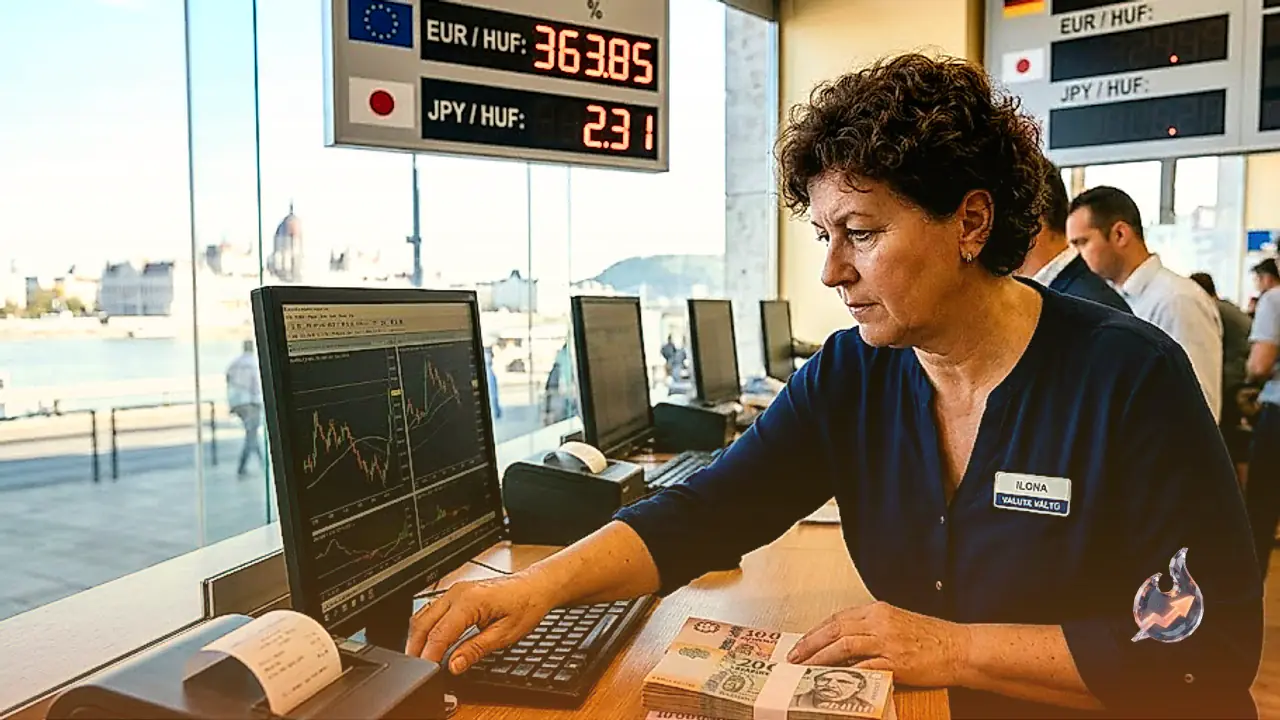



















The preliminary Eurozone Manufacturing Purchasing Managers’ Index (PMI) registered an unexpected acceleration in July, rising to 52.0 from June’s reading of 51.4. Economic analysts had predicted that manufacturing activity across the continent would expand at a much more moderate pace, forecasting a modest climb to 51.3. This sudden economic resilience has injected fresh energy into the markets, but its impact is being countered by mounting geopolitical anxieties that are currently keeping global investors on edge.
Economic Surprise in the Eurozone and EUR/USD Dynamics
The Purchasing Managers' Index (PMI) is widely considered a key barometer for economic health, with any reading above the 50.0 threshold denoting an expansion in sector activity. The Eurozone's surprise leap to 52.0 indicates a healthier industrial environment than previously anticipated. Driven by these upbeat business PMI readings from Germany and the wider Eurozone, the Euro (EUR) managed to maintain its footing near the 1.1400 level against the US Dollar (USD) during Friday's European trading hours.
However, the upside potential for the shared currency remains limited. Despite the European Central Bank's (ECB) recent hawkish stance on holding interest rates, escalating military and diplomatic conflicts in the Middle East have pushed investors toward a highly cautious approach. Capital is flowing toward defensive options rather than risk-sensitive assets. Markets are now waiting for the next major economic trigger, which will be the release of preliminary US PMI data scheduled for later in the day.
Sterling Clings to Support Post-UK Retail Sales Data
Across the English Channel, the British Pound is exhibiting a similar pattern of resilient but capped price action. Following a sharp sell-off on Thursday, the GBP/USD currency pair is clinging to minor gains, hovering just above the critical 1.3300 handle during Friday's European session. Sterling has received some necessary support from a robust UK Retail Sales report along with favorable July PMI numbers.
Nevertheless, a broader recovery for the pound remains restricted by the prevailing global risk-off sentiment. The deepening geopolitical tension in the Middle East has discouraged aggressive buying, prompting traders to secure their positions. All eyes are now on the upcoming US economic calendar to see if the forthcoming American manufacturing and services data will support or weaken the greenback.
Gold Falls Below Key Level as Inflation Fears Rise
In the commodities sector, precious metals are facing persistent selling pressure for the second consecutive trading day. Gold slid further during the Asian session, dropping below the $4,050 per ounce level. Under normal circumstances, rising geopolitical stress acts as a catalyst for safe-haven bullion; however, the current dynamics are being heavily influenced by energy and monetary policy.
The intensifying US-Iran tensions have driven crude oil prices higher, which in turn has fueled global inflation anxieties. As a result, market participants are increasingly pricing in expectations that the US Federal Reserve will have to keep interest rates higher for a longer period. This sentiment has helped the US Dollar retain its strong weekly gains, keeping the currency close to the nearly one-month high it touched on Thursday. Since Gold is a non-yielding asset, a stronger dollar and higher interest rate expectations present a major obstacle to its price recovery.
Geopolitical Tensions Cast a Shadow Over Cryptocurrencies
The broader cryptocurrency market is also feeling the impact of the ongoing standoff between the United States and Iran. Risk assets across the board are under pressure, dragging Bitcoin (BTC) down to its 50-day Exponential Moving Average (EMA) support level, which currently sits around $65,135 on Friday. Amid this general market downturn, altcoins such as Pi Network and Sky have emerged as the poorest performers over the last 24 hours.
Meanwhile, Ethereum (ETH), the leading altcoin, is hovering around the $1,880 mark, up slightly by 0.16% from its previous close of $1,877. On Thursday, Ethereum slipped by 3% even as derivatives interest saw a modest expansion. Live market metrics indicate that Ethereum's open interest increased by 600,000 ETH over the past two days, reaching a total of 14.60 million ETH, its highest level since June 7.
From a technical analysis perspective, Ethereum's 14-day RSI stands at a neutral 57, suggesting a balanced momentum. The MACD histogram is at 43.46, positioned above its signal line of 38.62, which indicates a short-term bullish divergence. However, the long-term trend remains downward due to an active death cross where the 50-day EMA ($1,830) is trading below the 200-day EMA ($2,267). Bollinger Bands are currently tracking between $1,718 and $1,959, and with the 14-day ATR sitting at 64.39, traders should monitor key technical levels, with solid 20-day support near $1,712 and immediate resistance at $1,955.