























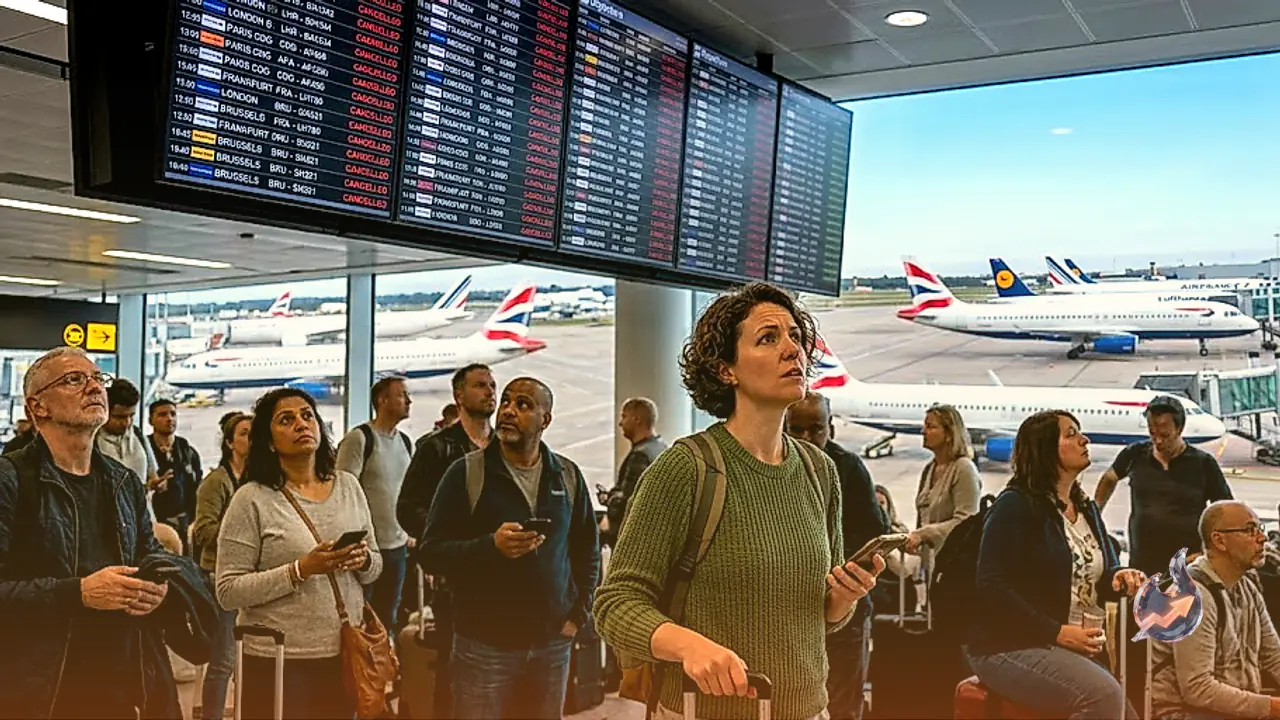

A major technical failure within Britain's national air traffic control network has triggered widespread flight disruptions across the United Kingdom and European airspace. The unexpected system glitch on Tuesday forced the cancellation of nearly 300 flights, leaving thousands of passengers stranded and causing cascading delays across multiple international hubs. The outage primarily affected flight departures, creating significant operational bottlenecks throughout the region.
Air Traffic Control Breakdown and System Recovery Efforts
Britain's National Air Traffic Services (NATS) officially confirmed the technical incident on Tuesday afternoon, stating that its engineering teams were actively working to isolate and remedy the underlying system fault. According to NATS, while engineers are pursuing corrective measures to rectify the glitch, returning the complex air traffic management system to full operational capacity will require considerable time. Officials highlighted that the malfunction predominantly impacted outbound flights departing from UK airports, disrupting scheduled departures and creating severe backlog on airport aprons.
Widespread Impact on British Airways, EasyJet, and Key Airports
Data provided by the flight tracking service Flightradar24 revealed that the breakdown impacted a broad spectrum of commercial carriers. Major operators, including British Airways and budget carrier EasyJet, saw significant portions of their flight schedules disrupted alongside several other international airlines. The disruption reached across major aviation gateways throughout Britain. Affected facilities included London Stansted and London City airports, as well as Manchester, Birmingham, Gatwick, and multiple airports across Scotland. Furthermore, flight boards at London Heathrow indicated that numerous short-haul departures bound for various destinations in continental Europe faced outright cancellations or prolonged delays.
Passenger Frustration on Runways and Airspace Chaos Across Europe
The sudden technical failure resulted in severe inconvenience for travelers caught in transit. Numerous passengers took to social media platforms to report being confined inside aircraft stationary on airport runways for hours prior to learning that their flights had been officially cancelled. Passengers expressed sharp dissatisfaction regarding the lack of timely communication and guidance from airline representatives. Budget carrier EasyJet confirmed that several of its planned flights could not operate, noting that the systemic failure caused widespread delay ripples throughout European airspace. Aviation authorities have urged travelers to verify their flight status directly with their respective airlines before departing for airports. Meanwhile, officials noted that the precise root cause of the technical failure has not yet been determined, with technical investigations remaining ongoing.