























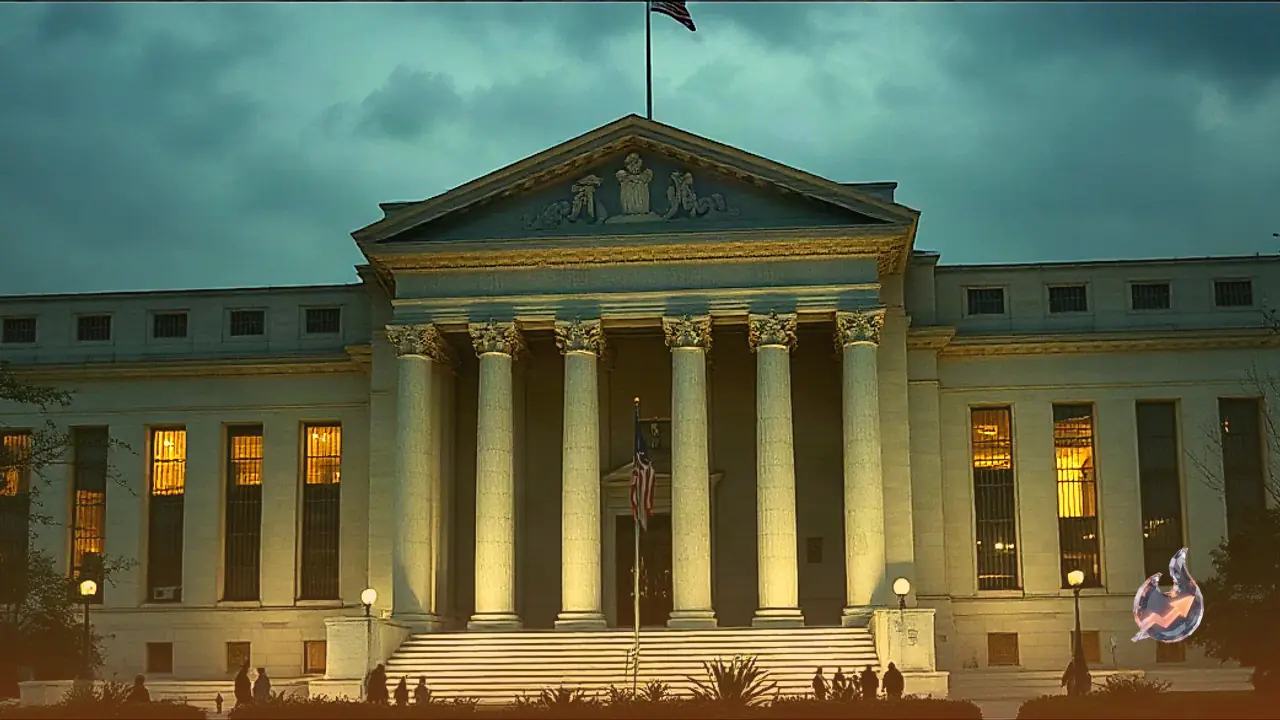

Global financial markets have turned their undivided attention toward the US Federal Reserve as its September 2026 monetary policy meeting draws to a close on Wednesday, September 16. The Federal Open Market Committee (FOMC) convened for its scheduled two-day deliberations on Tuesday, September 15. The impending policy resolution is expected to reverberate across worldwide trading desks, including Indian markets, given that shifts in US borrowing costs invariably alter the valuation of the greenback, Treasury yields, equity benchmarks and cross-border portfolio allocations.
Official Schedule and Timings for Indian Observers
The Federal Reserve is slated to publish its official monetary policy statement in Washington at 2:00 pm Eastern Time on Wednesday, September 16. For market watchers tracking the developments from India, that release translates precisely to 11:30 pm Indian Standard Time (IST) on Wednesday night.
Shortly after the policy document goes public, Federal Reserve Chair Kevin Warsh will take the podium to address reporters in his scheduled press conference. This media briefing will commence at 2:30 pm Eastern Time, which corresponds to 12:00 midnight IST as the calendar turns to Thursday, September 17. For Indian traders and portfolio managers, the operational sequence involves receiving the baseline rate decision late on Wednesday evening and following the extended question and answer session through the early minutes of Thursday.
Where to Stream the Policy Briefing Live
Investors across the globe can observe the proceedings in real time through verified digital channels maintained by the central bank. The Federal Reserve will broadcast the press conference live on its official website as well as through its verified YouTube channel. The written policy communique will land on the central bank's portal at 11:30 pm IST, followed by the video live stream of Chair Kevin Warsh beginning promptly at midnight.
Significance of the September Economic Projections
The September gathering carries distinct weight compared to standard calendar meetings because policymakers are due to release their updated Summary of Economic Projections alongside the policy text. These forecasts outline where central bank officials expect benchmark borrowing costs, consumer inflation rates, broad gross domestic product expansion and national unemployment levels to trend over the forecasting horizon. Financial institutions examine these estimates closely to gauge the collective resolve and strategic posture of the committee.
Current Target Band and Potential Policy Outcomes
The central bank has held its benchmark federal funds target range steady at 3.50% to 3.75% since July. However, market consensus regarding the September gathering experienced renewed uncertainty following fresh macroeconomic indicators. The most recent Consumer Price Index report documented its steepest monthly rise in four months, unsettling expectations of an unhindered easing trajectory.
Should the committee opt for a 25-basis-point increase, it would represent the central bank's first rate hike in over twelve months. Delivering an upward adjustment would signal that policymakers remain acutely wary of lingering inflationary pressures and stand willing to preserve tighter financial conditions. Conversely, if the Federal Reserve chooses to leave the policy rate untouched at 3.50% to 3.75%, attention will pivot toward the nuance within the accompanying text and projected rate paths. Market participants will dissect whether a standstill signifies a temporary pause or demonstrates growing confidence that price trends are steadily aligning with policy targets.
Market Sensitivities Surrounding Kevin Warsh's Remarks
Beyond the mechanical rate declaration, the tone struck by Kevin Warsh during the post-announcement briefing could carry equal significance for asset pricing. Analysts will scrutinize his commentary regarding the cooling or persistence of consumer prices, the strength of the labor market, overall economic momentum and the trajectory of future policy steps. A hawkish delivery could fuel dollar strength and lift government bond yields, placing immediate pressure on risk-sensitive equities. By contrast, a more measured, balanced, or less restrictive commentary would generate an entirely different set of expectations for global asset allocators.
Direct Implications for Indian Markets and Liquidity
For market participants in India, the consequences of Federal Reserve determinations are closely linked to foreign institutional investment behavior. Swings in US Treasury yields and dollar valuations directly dictate the flow of overseas capital into domestic equities and debt. These cross-border adjustments also influence the foreign exchange value of the Indian rupee. Consequently, Indian equity investors and currency desks will be parsing the language from Washington at midnight to anticipate the subsequent course of global capital flows.