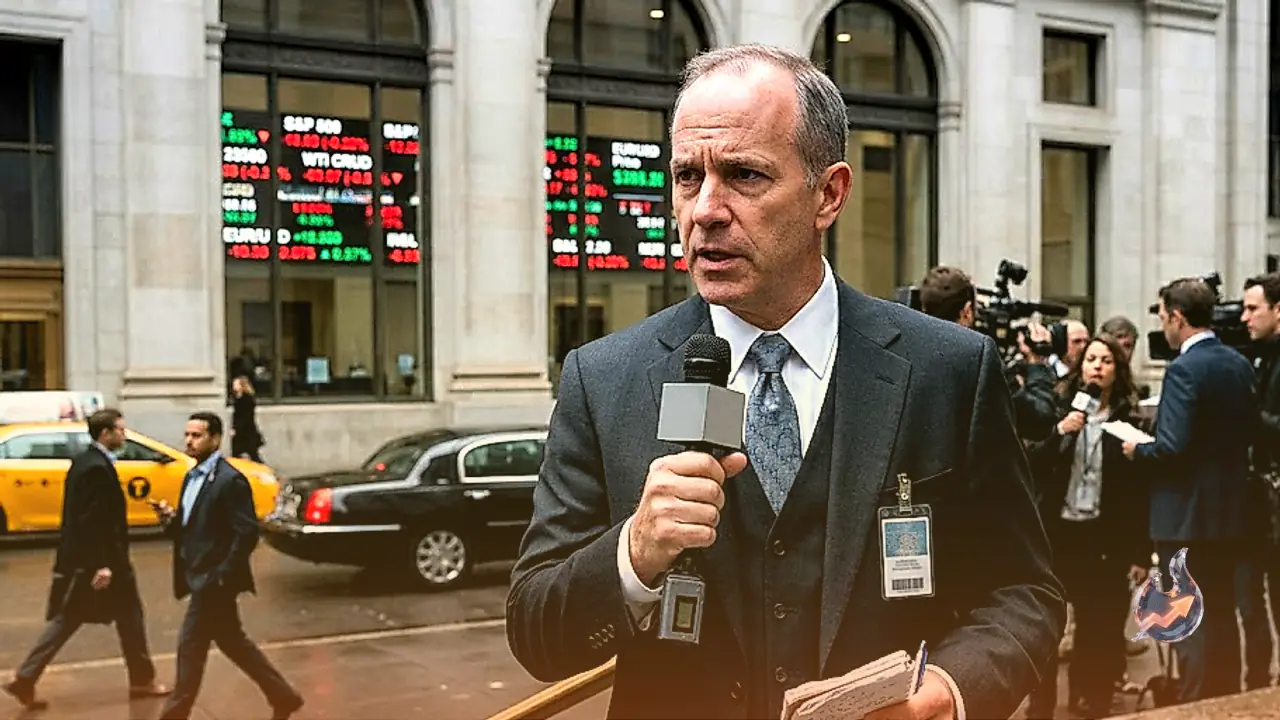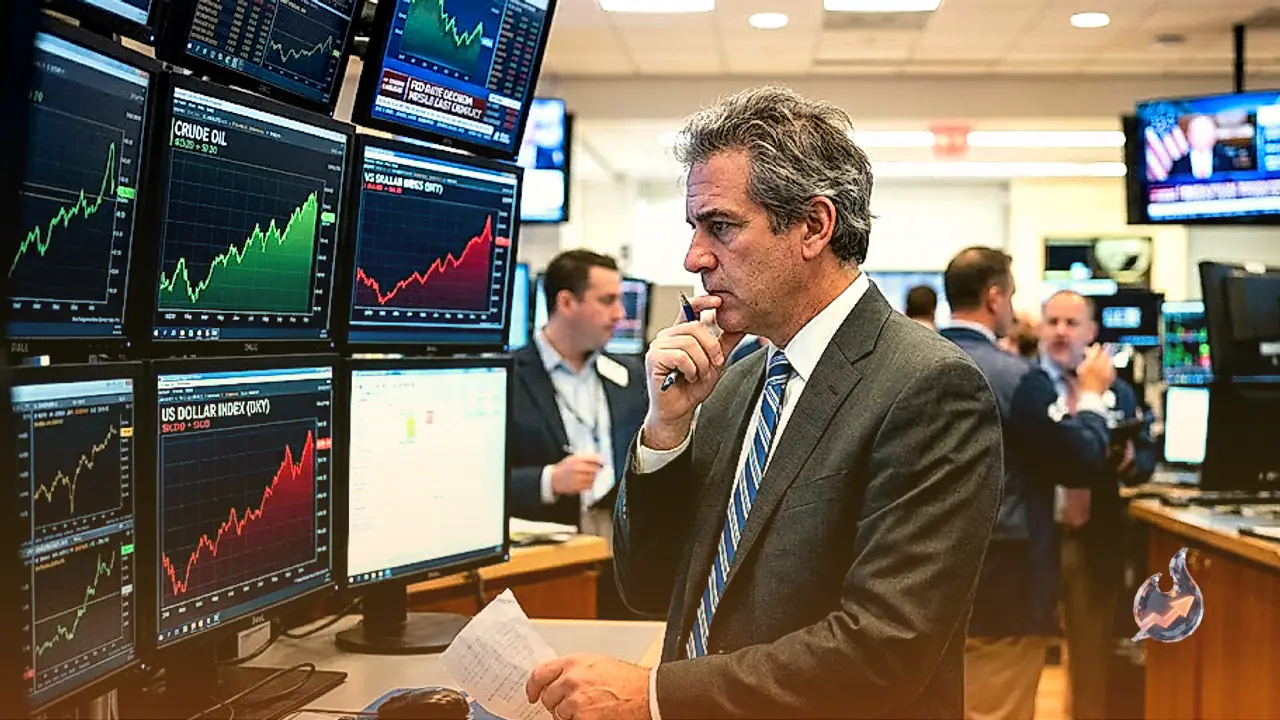

























Financial markets worldwide are experiencing renewed turbulence as the US 10-year Treasury yield surged to 4.80%, driven by an intense global bond market selloff. Fueled by growing expectations that the US Federal Reserve may implement further interest rate hikes, the US Dollar (USD) has gathered substantial strength, pushing the Indonesian Rupiah (IDR) into a steep decline. The leap in benchmark US borrowing costs to its highest level since early 2025 underlines a sharp contraction in global risk appetite. Compounding these inflationary headwinds, escalating hostilities between the United States and Iran have driven crude oil prices to fresh multi-month highs, magnifying anxieties over potential energy flow disruptions from the Middle East.
Rising Food Prices Push Indonesian Core Inflation to Multi-Year Peak
While external headwinds from the soaring US Dollar place heavy pressure on the Rupiah, Indonesia’s domestic economy is facing its own inflationary squeeze. Price pressures in Indonesia gathered momentum throughout August, with headline consumer price inflation accelerating sharply from July's three-month low, largely driven by escalating food costs. Underlying inflation dynamics have similarly tightened, with core inflation rising to its highest mark since March 2023. This combination of accelerating domestic price indices and currency weakness complicates the policy outlook for Indonesian monetary authorities.
Fiscal Deficits and Bond Market Interventions Under Analyst Scrutiny
Market analysts at ING emphasized that global investor attention remains firmly anchored on the long end of the US yield curve. Analyst Francesco Pesole highlighted that years of minimal appetite for fiscal consolidation are now catching up with debt markets. Investors are increasingly concerned that Treasury Secretary Scott Bessent may feel compelled to utilize his policy toolkit to stabilize the sovereign bond market. In response, institutional traders are exploring positions such as USD/CHF bids to hedge against broader dollar debasement risks.
Deconstructing Market Dynamics: Risk-On vs. Risk-Off Regimes
To understand the current shifts across asset classes, it is essential to examine the mechanics of 'risk-on' and 'risk-off' market environments. During a 'risk-on' phase, market participants display optimism regarding economic growth and exhibit a higher willingness to acquire risk-bearing assets in pursuit of higher yields. In these conditions, equity indices typically advance, industrial commodities gain, and currencies of major commodity-exporting nations appreciate. Cryptocurrencies also experience capital inflows during risk-on regimes.
Conversely, in a 'risk-off' environment—such as the one currently dominating global sentiment—investors pivot toward capital preservation and safe-haven instruments. Capital flows heavily into sovereign bonds, Gold experiences renewed buying, and safe-haven currencies including the US Dollar (USD), Japanese Yen (JPY), and Swiss Franc (CHF) appreciate. In risk-off markets, riskier assets and emerging market currencies come under sustained selling pressure.
Currency Behavior Across Global Risk Cycles
The structural composition of national economies dictates how their respective currencies react to risk sentiment shifts. High-beta and commodity-linked currencies—such as the Australian Dollar (AUD), Canadian Dollar (CAD), New Zealand Dollar (NZD), Russian Ruble (RUB), and South African Rand (ZAR)—thrive during risk-on periods. This strength stems from their economic dependence on raw material exports, which benefit from anticipated industrial expansion and global trade activity.
In contrast, safe-haven currencies dominate during risk-off episodes. The US Dollar gains due to its status as the primary global reserve currency and the perception of US government debt as a risk-free benchmark. The Japanese Yen strengthens as domestic investors hold a vast proportion of Japanese government bonds, making mass liquidations unlikely during crises. Meanwhile, Switzerland's stringent banking regulations provide robust capital protection, sustaining strong demand for the Swiss Franc during geopolitical or financial stress.
Major Foreign Exchange Pairs: GBP/USD and EUR/USD Under Pressure
Heightened geopolitical tensions and hawkish Fed repricing have pushed major currency pairs downward. GBP/USD declined toward the 1.3500 handle during early European trading on Wednesday. Safe-haven inflows into the US Dollar continue to suppress the British Pound amid Middle East uncertainties. Foreign exchange traders are closely awaiting the upcoming US August non-farm payrolls report on Friday for clearer direction on Fed policy.
EUR/USD similarly remains locked in a bearish trend, trading below 1.1600 on Wednesday to touch a two-week low following Tuesday's negative close. Escalating Middle East conflict and shifting expectations toward tighter Fed policy have forced the Euro onto the defensive. Market participants are monitoring US private-sector employment data released later in the session for additional cues.
Commodity Markets: Gold, WTI Crude Oil, and Record Diesel Spreads
In commodity trading, Gold rebounded from a four-week low to trade above $4,320 per ounce heading into the European session. A modest pullback in the US Dollar provided temporary relief for the precious metal, though further gains remain capped by hawkish Fed interest rate expectations. Simultaneously, West Texas Intermediate (WTI) crude oil advanced for a third consecutive session—and the fifth positive session out of six—reaching its highest price point since July 24 during Wednesday's Asian trading.
The energy sector is displaying particularly acute stress in refined products. While crude oil prices appear relatively steady, the US diesel crack spread—measuring the premium of ultra-low sulfur diesel futures over WTI crude—surpassed $100 per barrel for the first time in history, hitting an intraday record of over $102.00. This dramatic surge underscores deep-seated supply bottlenecks in global refining capacity.
Cryptocurrency Pullback: BTC, ETH, and XRP Show Fatigue
Following substantial gains throughout August, the cryptocurrency market is exhibiting early signs of momentum exhaustion. Technical indicators across the top three digital assets—Bitcoin (BTC), Ethereum (ETH), and Ripple (XRP)—point to weakening bullish trend strength.
Bitcoin (BTC) is displaying early bearish divergence signals. Ethereum (ETH) has extended its downside retracement following a firm rejection near the $2,500 psychological barrier. Meanwhile, Ripple (XRP) continues to consolidate beneath critical technical support levels, keeping the short-term outlook cautious across crypto asset markets.