























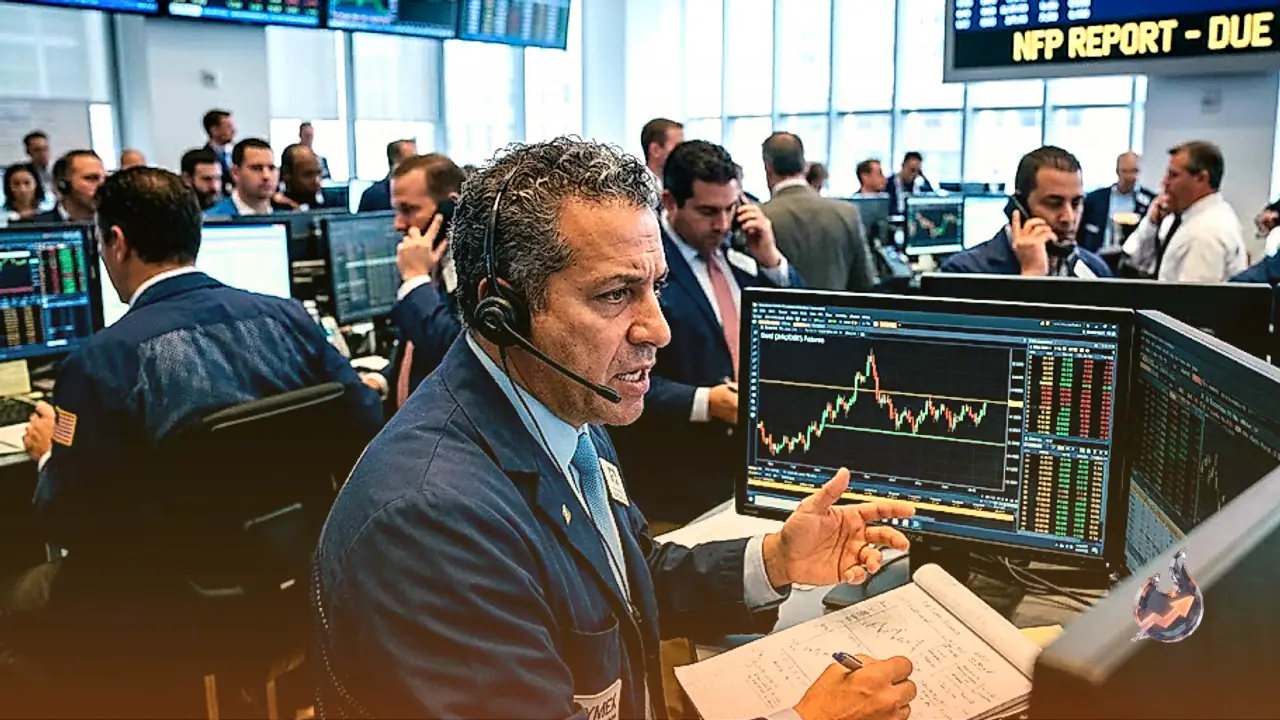

Gold bulls are adopting a cautious stance as the US dollar mounts a slight recovery ahead of the highly anticipated US NFP report. Persistent energy-driven inflation fears continue to reinforce expectations of tighter monetary policy from the Federal Reserve, capping significant upside potential for the precious metal. At the same time, receding rate-hike bets and soft US bond yields are keeping the greenback under pressure, which in turn lends underlying support to the commodity.
Crude Oil Surge and Middle East Escalation
Meanwhile, crude oil prices are hovering near their highest levels recorded since July 24, fueled by renewed hostilities between the US and Iran alongside ongoing friction over the Strait of Hormuz. Adding fuel to the Middle East crisis, Iran targeted American military bases located in Kuwait and the United Arab Emirates on Thursday. US Vice President JD Vance noted that President Donald Trump retains a wide array of options to address Tehran, spanning economic, military, diplomatic, and covert measures. Concurrently, South Korea is reportedly preparing to deploy naval assets before the end of the year to safeguard freedom of navigation within the strategic Strait of Hormuz.
Technical Outlook and Immediate Price Levels
These persistent geopolitical risks keep the risk premium alive, supporting oil prices and helping underpin the safe-haven dollar. However, the short-term trajectory of the metal depends heavily on upcoming employment data. For now, the XAU/USD pair has successfully stalled its recent correction from the vicinity of the $4,700 mark, which was its highest level since May 14, and remains on course to post modest weekly gains. Nevertheless, establishing acceptance and sustained strength above the round $4,500 threshold is essential to validate any meaningful continuation of the upward move.
Key Resistance and Support Barriers
Looking upward, the 61.8% retracement level near $4,540 acts as an initial hurdle, followed by the 78.6% retracement at $4,609 and a cluster of swing highs around $4,698. On the downside, immediate support is spotted at the 38.2% retracement near $4,442, ahead of the 23.6% marker at $4,381. Further down, the 200-period simple moving average at $4,322 and the structural floor near $4,283.63 reinforce an overarching bullish bias in the market.
Federal Reserve Mandate and Monetary Policy
Monetary policy in the United States is governed by the Federal Reserve, which operates under a dual mandate to foster price stability and achieve maximum employment. Its primary tool for steering these objectives is adjusting benchmark interest rates. When inflation accelerates past the central bank's 2% target, policymakers raise interest rates to cool borrowing across the broader economy. This typically strengthens the US dollar by making domestic assets more lucrative for international capital. Conversely, when inflation drops or unemployment climbs, the central bank may lower rates to stimulate economic activity, which weighs on the currency.
FOMC Meetings and Non-Standard Measures
The Federal Open Market Committee convenes eight times annually to evaluate economic indicators and formulate monetary policy. The committee comprises twelve officials, including the seven members of the Board of Governors, the head of the Federal Reserve Bank of New York, and four rotating regional bank presidents serving one-year terms. During severe economic distress, the central bank may deploy quantitative easing to inject liquidity into a frozen financial system, a strategy heavily utilized during the 2008 financial crisis. Conversely, quantitative tightening involves halting bond purchases and letting maturing assets roll off the balance sheet, a process that generally supports the US dollar.
Broader Market Movements and Forex Highlights
In currency markets, the USD/JPY pair retested its August monthly swing low during the Asian session on Friday as hawkish repricing of Bank of Japan rate expectations and suspected intervention strengthened the Japanese yen. Meanwhile, the AUD/USD pair held firm above 0.7200, lingering near mid-May highs as traders awaited US labor data. In the cryptocurrency sector, Bitcoin traded above $80,000 on Friday, bolstered by risk-on sentiment after Federal Reserve Governor Christopher Waller hinted at a potential pause in rate hikes, dropping September hike probabilities to 50%.
Labor Market Data and Diesel Markets
As the trading week draws to a close, attention shifts squarely to US labor statistics. August non-farm payrolls are scheduled for release, with economists anticipating an addition of 58k jobs. The unemployment rate is projected to hold steady at 4.1%, while wage growth is expected to moderate to 3% compared to 3.2% previously. In energy markets, while headline crude may appear calm, diesel is telling a dramatic story as the US diesel crack spread recently surged past $100 per barrel for the first time, hitting an intraday peak above $102.00.