























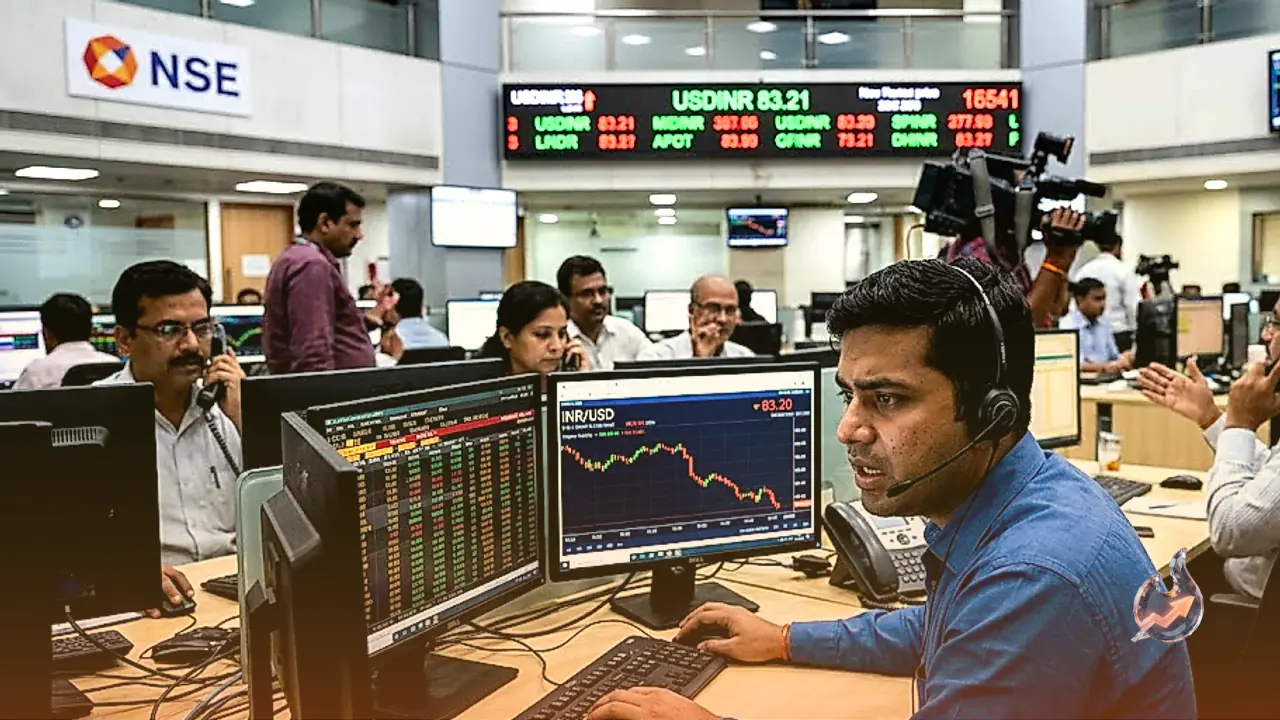

The Indian Rupee is trading close to a two-month low ahead of the highly anticipated US Non-Farm Payrolls data release. The currency is reflecting broader underlying strength supported by robust FCNR receipts and receding hawkish rate expectations from the Federal Reserve.
Federal Reserve Commentary and Dollar Impact
Federal Reserve Governor Christopher Waller stated at a newsmaker event that recent economic data shows initial signs of disinflation. Waller downplaying upside inflation risks triggered a sharp retreat in the US Dollar, prompting traders to pare back aggressive interest rate hike expectations.
Regarding monetary policy, Waller indicated that he would support holding interest rates steady at the upcoming September meeting if Consumer Price Index growth cools down further. However, he kept the option of a rate hike open should inflation figures surprise on the upside.
Employment Projections and RBI Reserves
Estimates suggest the US economy added 56K fresh jobs following a reduction of 23K in July, while the Unemployment Rate is projected to hold steady at 4.1%. Meanwhile, strategists at Societe Generale noted that the Reserve Bank of India has materially strengthened its intervention firepower.
The central bank recently disclosed raising $136.38 billion through foreign exchange mobilization schemes, including the FCNR(B) window launched in early June, which significantly bolsters reserve buffers and market stabilization capacity.
Technical Outlook and Key Levels
On the downside, immediate attention remains on price action around the 94.49 area. A sustained close beneath this threshold could expose the currency pair to further weakness toward the May low of 94.08. Conversely, a recovery above the 100-day simple moving average at 95.29 is required to ease bearish pressure.
Key Drivers of the Indian Rupee
The Indian Rupee remains highly sensitive to external variables such as crude oil import prices, the valuation of the US Dollar, and foreign institutional inflows. Direct intervention by the Reserve Bank of India in the foreign exchange market plays a vital role in curbing excessive volatility.
The RBI actively manages liquidity and interest rates to keep inflation anchored around its 4% target. Higher real interest rates generally benefit the currency by attracting capital through carry trade mechanisms, whereas higher inflation relative to trading partners can weigh on the exchange rate.
Global Market Context
Across broader global markets, safe-haven flows and currency interventions continue to influence pairs like USD/JPY and AUD/USD, while Gold holds firm and Bitcoin sustains trading above $80,000. Attention is firmly fixed on the US employment report for further clarity on monetary policy trajectories.