























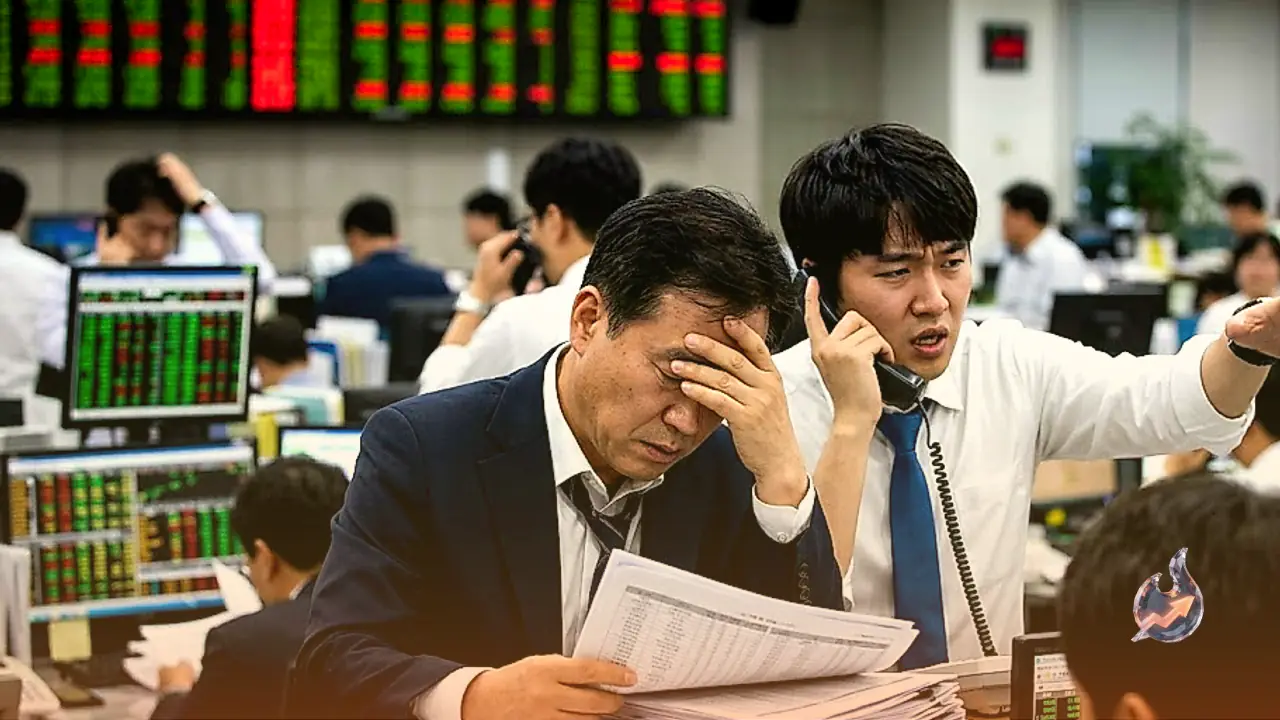

South Korea's stock market suffered a brutal session on Monday, July 13, 2026, as the benchmark KOSPI index tumbled almost 9% and slipped below the 7000 mark. The damage was led by the country's two heavyweight memory chip makers, SK Hynix and Samsung Electronics, which together dominate the index. SK Hynix shares have plunged more than 15% at the time of writing, while Samsung Electronics has slid more than 10%. Here is a closer look at what triggered the sell-off, and whether the pain in Seoul could spill over into US markets.
What Sent the Chip Giants Tumbling
A big part of the slide looks like old fashioned profit-taking. AI-linked stocks have soared over the past few years, and after such a long run, many investors appear to be locking in gains and shifting their money elsewhere. Phillip Wool of Rayliant Global Advisors argues that risk management is also feeding the correction. "Prudent risk management suggests you have to scale those back," he said.
SK Hynix's recent Nasdaq listing has added another layer of confusion. The debut was heavily anticipated and went well, but there is now genuine disagreement over how the US-listed shares should be priced against the original South Korean stock. Daniel Yoo, global strategist at Yuanta Securities, put it bluntly: "Everybody's really confused about what's going to happen to the memory demand and where the fair price is." Yoo also pointed out that the larger pool of shares now available to investors may itself be stirring up price swings.
The US-Iran Flashpoint
Geopolitics has poured more fuel on the fire. The United States launched fresh attacks on Iran, and the escalation has rattled investor confidence. Oil prices have jumped more than 4%, a move that could pile extra pressure on an already fragile broader economy. That combination may have deepened the losses at SK Hynix and Samsung Electronics, with traders bracing for possible supply chain disruptions if the conflict drags on.
Will It Reach US Markets?
The worry now is contagion. Because memory chips sit at the heart of the AI boom, a sharp repricing in Seoul rarely stays contained. If profit-taking, valuation doubts over the Nasdaq listing and rising oil all persist, the nervousness that hammered South Korean shares could well seep into US technology stocks in the days ahead.