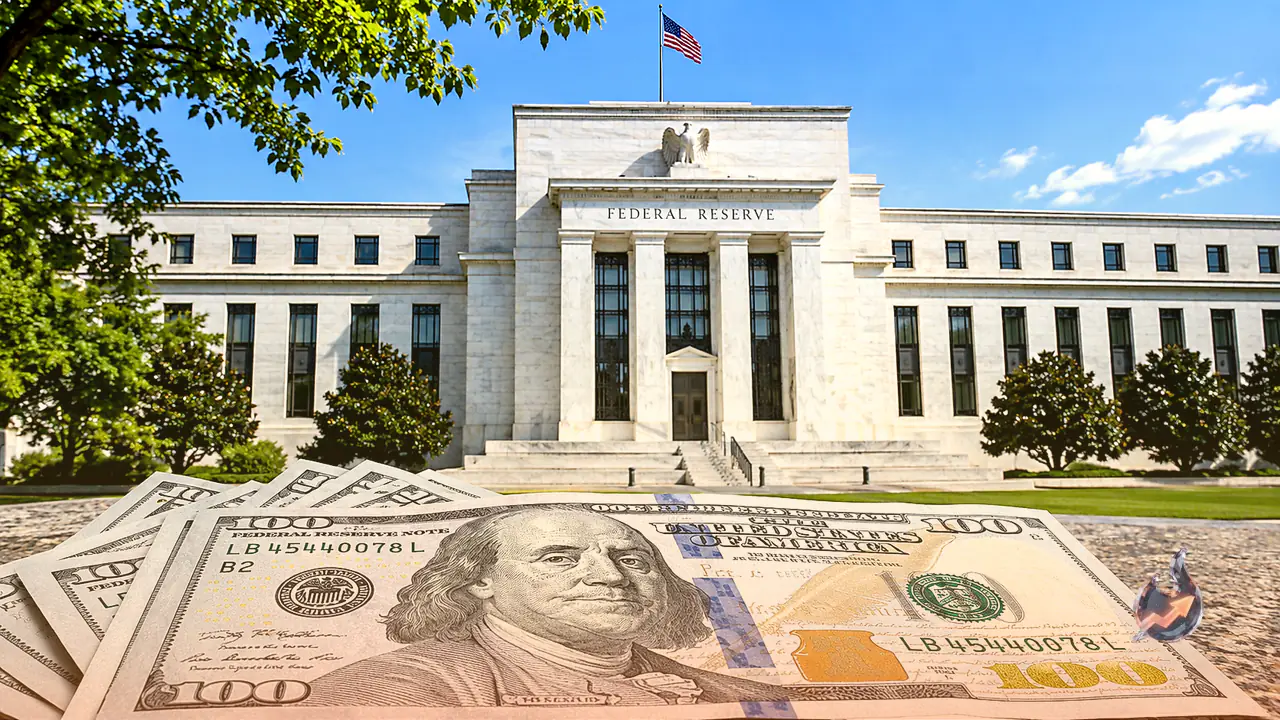

A four-week winning streak has propelled the US Dollar Index to its strongest level since late March 2025, tracking the greenback's performance against six major global currencies. While prevailing market narratives attribute the rally to continuous expectations of Federal Reserve interest rate hikes, Treasury Secretary Scott Bessent challenged that assumption by publicly warning the central bank against hiking rates too far. Interestingly, the policy-sensitive two-year Treasury yield finished the four-week period lower than where it started.
Dissecting the Four-Week Rally and Treasury Yields
The greenback's upward momentum began on a modest note. In the week ending October 30, the Dollar Index edged up by 0.07%, followed by a 0.4% advance in the week ending November 6. During those same consecutive weeks, the two-year Treasury yield fell by 0.13 and 0.05 percentage points respectively. Because traders pricing in aggressive monetary tightening typically drive yields higher, the dollar's initial strength was powered by factors outside the monetary policy debate.
The week ending November 13, however, aligned perfectly with traditional monetary dynamics. On November 10, the October inflation report exceeded expectations, prompting investors to actively price in a potential half-percentage-point rate increase for the December meeting, an option Fed Governor Christopher Waller suggested should be under evaluation. Consequently, the two-year yield surged by 0.37 percentage points, and the index climbed 1.1%, accounting for more than half of its total 2% four-week gain.
In the subsequent week ending November 20, the yield retreated by 0.25 percentage points, yet the dollar climbed an additional 0.4%. That period was characterized by sharp equity liquidations, during which the S&P 500 dropped 8.6% and the Nasdaq Composite plunged 10%, recording its steepest weekly loss since March 2020. Frightened market participants rotated out of equities and parked capital into cash and sovereign debt. This safe-haven demand lifted the dollar even as economic distress lowered interest rate expectations.
Scott Bessent's Stance and Market Reaction
Treasury Secretary Scott Bessent intervened three times across ten days, vocalizing opposition to a half-point rate adjustment in broadcast appearances on November 13 and November 20. In an interview on Sunday, he remarked that widespread concern exists regarding a potential policy error if the Fed tightens credit excessively. Bessent emphasized that business borrowing costs have risen steeply and financing conditions have deteriorated in recent months. His comments targeted the larger half-point hike, given that a quarter-point move in December is widely anticipated.
Equity market developments had largely rendered Bessent's warning redundant by the time of his Sunday appearance. On November 14, interest rate futures reflected an 11.5% probability of a half-point increase at the December 9 gathering. By the market close on November 20, that probability collapsed to zero, while the odds of no policy change climbed from zero to roughly 11%. The aggressive move he cautioned against had already vanished from market pricing two days earlier.
Fed Policy Signals and Differing Views on Financial Conditions
Warnings from administration officials only influence the foreign exchange market if they actively shift where investors expect interest rates to settle, as yield differentials between the US and foreign nations underpin dollar demand. By that metric, market action moved counter to Bessent's objective. As equity benchmarks rebounded on Monday, the probability of a quarter-point hike on December 9 surged back to 97.76%. Traders grew more confident in an upcoming hike following his caution, leaving the Dollar Index virtually unchanged from its November 20 close.
Central bank decision-makers have maintained their hawkish posture. Following the October 28 meeting, Fed Chair Kevin Warsh acknowledged that financial conditions had tightened further, though he stopped short of labeling them restrictive. Fed Governor Lisa Cook stated on November 20 that the rate increase implemented in September might prove insufficient to tame inflation, while Governor Waller actively promoted evaluating a half-point hike. Bessent and Chair Warsh appear to observe the same financial reality while arriving at divergent interpretations.
Economic Data and the Upcoming Inflation Benchmark
Macroeconomic indicators continue to present a resilient picture. S&P Global's November survey of services sector activity registered at 54.7 on Monday, undershooting the projected 55.8 figure. Although reflecting moderated expansion, the metric remains comfortably above the 50 threshold separating growth from contraction. For Bessent's arguments to gain traction, the central bank would need to execute a rate hike in December while explicitly signaling an impending pause, an outcome unsupported by recent central bank commentary.
Sustaining the dollar's winning streak into a fifth week requires support from either safe-haven flows or widening rate expectations. Monday compromised the first pillar, as equity markets staged an aggressive relief rally. The Nasdaq Composite jumped roughly 6% after Nvidia reinstated its chief executive, sharply reducing the immediate necessity for dollar cash buffers. Consequently, market attention is concentrated on rate trajectories ahead of the Thanksgiving holiday on Thursday.
The definitive test arrives Wednesday with the publication of the Personal Consumption Expenditures Price Index, the Federal Reserve's primary inflation gauge. Economists anticipate core PCE, excluding food and energy prices, to accelerate to 3.2% from 3.1% year-on-year, while the headline figure is projected to rise to 3.8% from 3.6%. An inflation reading at or above forecasts would likely drive two-year yields higher, reigniting policy-driven dollar strength akin to the week of November 13. Conversely, a softer inflation reading alongside buoyant stocks could strip the dollar of both growth drivers, concluding its winning run.
Developments Across Currency Pairs and Precious Metals
In broader currency markets, AUD/USD commenced the week on a firmer footing, reclaiming 0.6650 and ending a three-session decline toward its year-to-date low recorded on Friday, though upside momentum appears constrained. Persistent expectations of Fed tightening and geopolitical instability keep the dollar trading near April 2025 highs, while subdued Australian flash PMIs and a cautious stance from the Reserve Bank of Australia limit gains for the Australian currency.
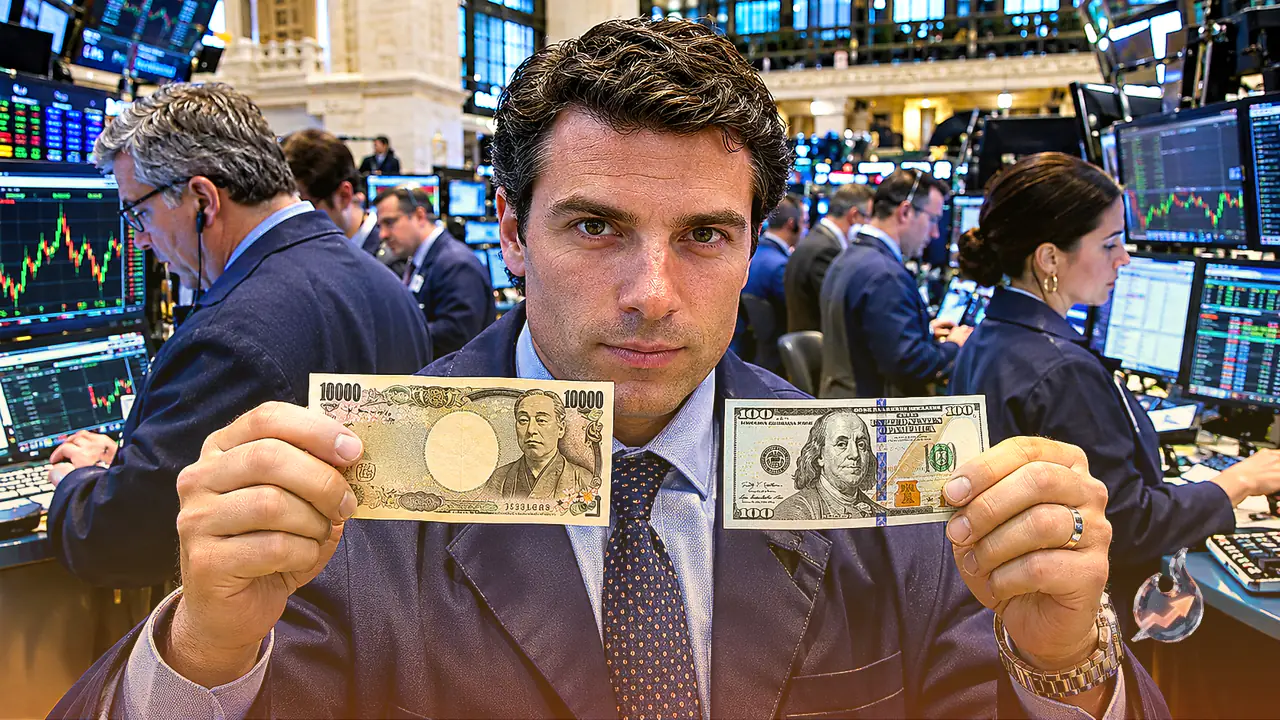
Meanwhile, USD/JPY saw renewed buying pressure, climbing back toward 159.00 and recovering part of Friday's drop to a multi-day low. Lingering hesitation regarding Bank of Japan rate increases continues to weigh on the yen, while dollar strength and Middle East tensions offer underlying support, even as intervention threats loom over further advances. Concurrently, spot gold exhibited resilience by paring last week's sharp retreat to trade near $3,700 per troy ounce on Monday, driven by opportunistic buying despite higher Treasury yields and a robust dollar.