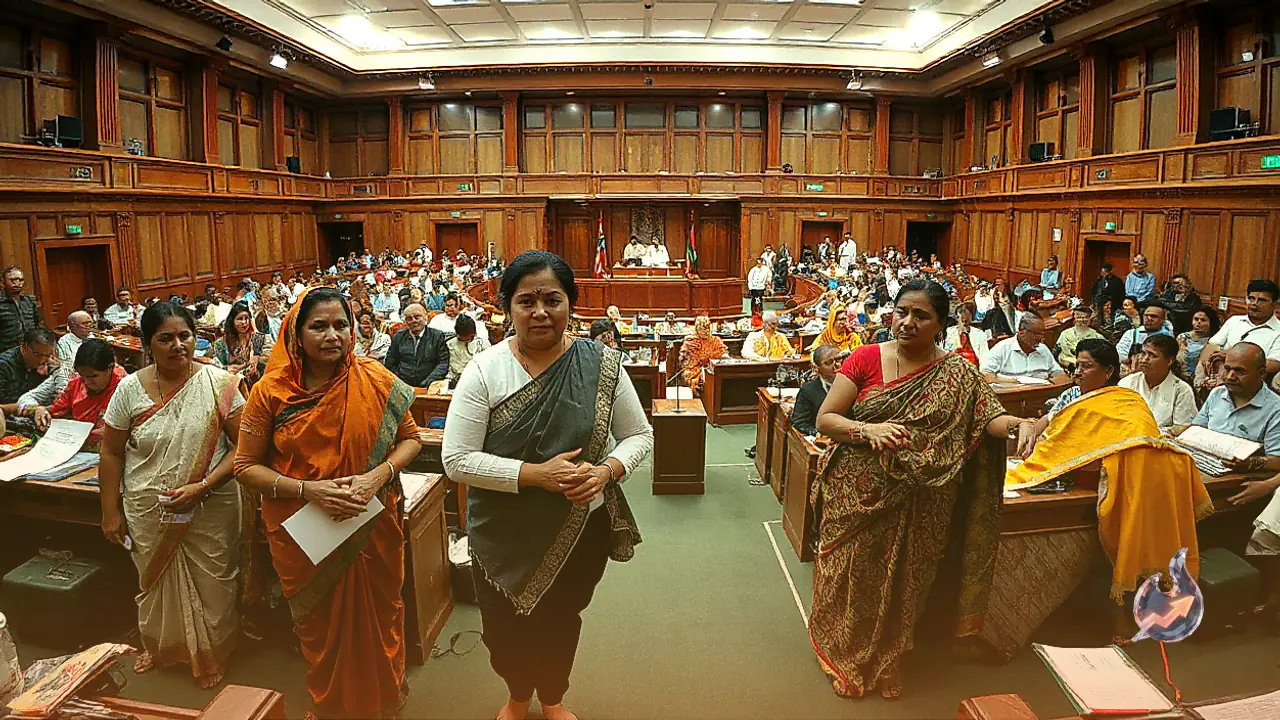

The administration led by Prime Minister Narendra Modi has made comprehensive preparations to pass the delimitation and women's reservation bills in Parliament with a two-thirds majority. Speculation regarding the convening of Parliament had been circulating for several days, but Parliamentary Affairs Minister Kiren Rijiju recently put an end to the suspense, creating significant political momentum across the country.
Lok Sabha proceedings will run for four days from November 30 to December 3, while Rajya Sabha proceedings will be held for two days on December 2 and December 3. Officials clarified that this will not be a special session; since the monsoon session had not officially concluded, the ongoing session will simply be extended. Union Home Minister Amit Shah had dropped strong hints regarding this on Constitution Day, stating that Rahul Gandhi had previously stalled the women's reservation bill, but the government remains firmly resolved to introduce and pass the legislation at the earliest.
Political Equations and Opposition Stance
A fierce tug-of-war has emerged among political parties over these crucial legislative measures. Prominent leaders such as Rahul Gandhi, Akhilesh Yadav, Mamata Banerjee, and Uddhav Thackeray are vehemently opposing the bills, claiming they will prevent the government from succeeding. However, a major political shift occurred when a key partner in the INDIA bloc, the faction led by Sharad Pawar, adopted a distinct stance. Supriya Sule, a leader and daughter of Sharad Pawar, publicly stated that if there is nothing wrong with the bill and Lok Sabha seats across all states increase by fifty percent, there is no harm in supporting it.
Since the delimitation legislation constitutes a constitutional amendment bill, securing its passage requires the support of at least two-thirds of the members. During the previous attempt, the bill garnered 298 votes in favor but failed to pass due to the absence of the mandatory two-thirds majority. Questions are now being raised about whether the government has successfully gathered the required numbers. The sudden announcement of the parliamentary meeting was anticipated because the monsoon session had not been formally adjourned, and Prime Minister Modi's instructions to cabinet members to stay in Delhi and postpone foreign travels further signaled the impending session.
Arithmetic and Shifting Political Alignments
It is also evident that the primary objective of convening Parliament is to pass the delimitation bill, thereby increasing the number of seats in the legislature to implement the women's reservation policy, which has remained pending. Efforts to secure the two-thirds threshold have been underway for several months. Looking at the sequence of events chronologically, the separation of the DMK from Congress, the fracturing of the Trinamool Congress, the alignment of Uddhav Thackeray's Shiv Sena MPs with Eknath Shinde, the joining of AAP Rajya Sabha members from Punjab into the BJP, the support of the Akali Dal, and Supriya Sule's remarks on the delimitation bill all connected the dots. For observers watching these developments closely, the sudden scheduling of Parliament came as no surprise.
Supreme Court Verdict on Packaged Food Warning Labels
Amidst ongoing political developments, the Supreme Court delivered a major verdict addressing a long-pending public health issue. The apex court mandated that all packaged food manufacturing companies must now disclose whether their products contain levels of fat, sugar, and salt exceeding prescribed safety thresholds.
The FSSAI and the central government have been directed to formulate comprehensive guidelines within four months. Highlighting that the right to health constitutes a fundamental right, the court emphasized that citizens possess an absolute right to know whether the food they consume is safe. Consequently, food packaging must feature clear warning symbols alongside complete ingredient disclosures, specifying the exact percentages of high fat, sugar, and salt to alert consumers effectively.
Transparency and Emphasis on Children's Health
If these nutritional components exceed authorized limits, companies must print a prominent red box containing detailed disclosures on the packaging. This intervention became necessary because multinational corporations have reportedly manufactured lower-quality food products for consumers in India compared to Western nations, a double standard the court declared unacceptable. A particularly commendable aspect of the ruling is the court's emphasis on fostering nutritional awareness among children.
The judiciary directed that school syllabi must incorporate necessary revisions to educate children about healthy food through realistic approaches rather than rote textbook learning. This requires organizing workshops, extracurricular activities, and awareness programs in educational institutions so students can readily identify nutritious options and avoid harmful foods. This ruling offers substantial relief to consumers who previously lacked visibility into the contents of packaged goods. When companies print mandatory warnings on packaging, countless individuals can be protected from avoidable health risks. Further details can be viewed on Aaj Ki Baat.