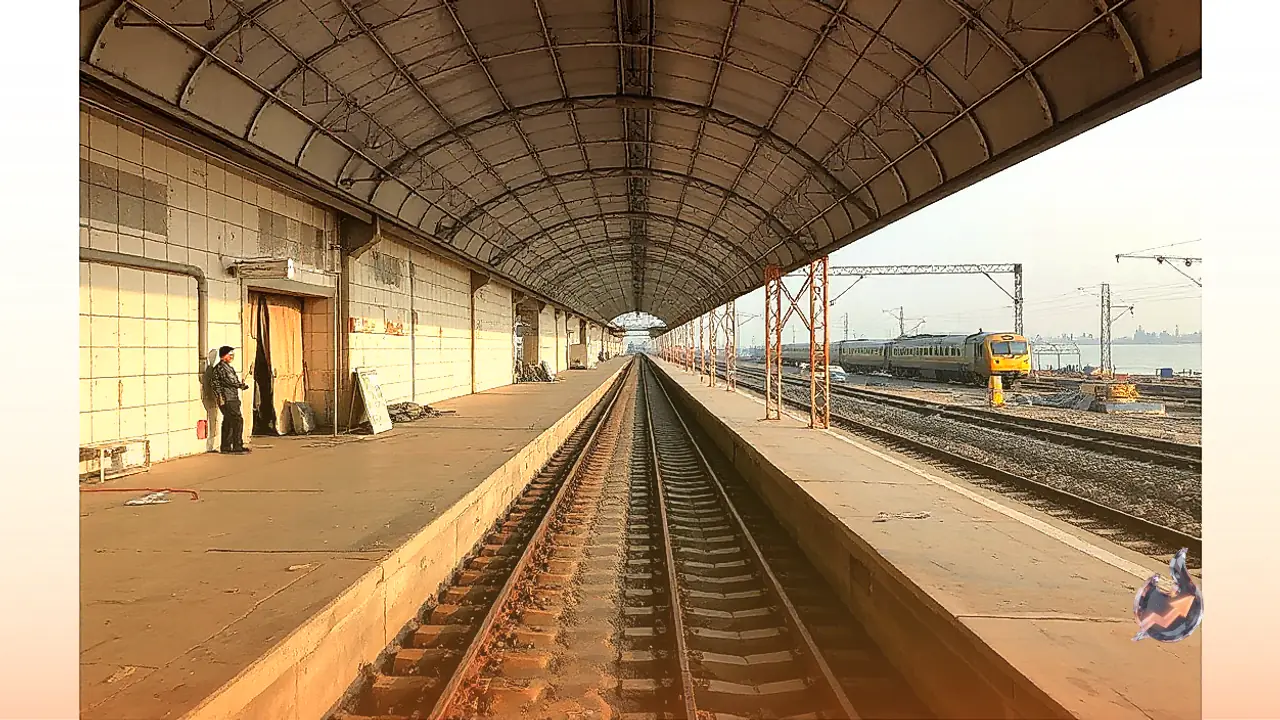

India's ambitious high-speed rail project connecting Mumbai and Ahmedabad is rapidly moving toward reality across its 508-kilometer alignment. The mega infrastructure initiative showcases extraordinary engineering feats, including a massive underground terminal located 100 feet below ground level at Mumbai's Bandra-Kurla Complex—deeper than a 10-story building. Just a few kilometers away, a massive 3,200-tonne machine is excavating the country's first undersea rail tunnel beneath the Arabian Sea floor. According to details shared by Railways Minister Ashwini Vaishnaw, the flagship line will reduce travel time between Ahmedabad and Mumbai from the current 8 to 9 hours to a mere 1.58 hours, enabling seamless same-day round trips for commuters.
Origin of the Vision and Strategic Timeline
Tracing the genesis of the bullet train initiative, the Railway Minister noted that the inspiration struck during a journey on Japan's high-speed Shinkansen network between Tokyo and Osaka. While discussions around high-speed rail in India had floated for years, formal long-term planning was instituted under Prime Minister Narendra Modi in 2016. In September 2017, the Indian government alongside the Japanese administration officially launched the joint project, with Japan offering its cutting-edge Shinkansen technology and India committing the required budget allocation.
Although ground activity faced initial delays due to the COVID-19 pandemic, full-scale civil construction commenced in 2021. Despite early scepticism over timelines and execution capabilities, physical structures have now visibly materialized across the corridor. The operational launch for the initial segment of the bullet train line is slated for the final quarter of 2027.
Aerodynamic Speed Challenges and the 465 km Elevated Viaduct
Operating a passenger train at speeds exceeding 300 km/h presents intense aerodynamic and structural challenges. Driving a conventional road vehicle at 80 km/h is manageable, but handling speeds of 150 km/h introduces severe air pressure resistance against the steering mechanisms. At velocities reaching 200, 300, or 350 km/h, wind dynamics and safety tolerances alter completely, requiring specialized track geometry, reinforced tunnels, and streamlined trainsets.
A major operational hazard on surface tracks is the risk of stray cattle or animal intrusions, which can cause catastrophic derailments at high speeds. To completely eliminate this risk, 465 kilometers of the total 508-kilometer alignment are being built as an elevated viaduct corridor. This elevated structure is engineered to withstand maximum design speeds of 350 km/h, with commercial trains intended to operate at an active speed of 320 km/h.
Undersea Excavation and Prefabricated Engineering
Bridge and tunnel construction methods along the route reflect modern pre-fabrication techniques. Instead of casting bridge spans on-site in small segments, massive 40-meter-long concrete girders weighing approximately 970 tonnes are cast in specialized off-site casting yards and lifted into place using high-capacity launchers.
In Maharashtra, a 21-kilometer underground tunnel stretch is under construction, including a 7-kilometer section running directly under the seabed. The excavation utilizes heavy Tunnel Boring Machines (TBM) with a cutterhead diameter of 13.5 meters—equivalent to a four-story building's depth. These specialized machines weigh up to 3,200 tonnes and span 96 meters in length. To date, 5 kilometers of this 21-kilometer tunnel have been bored, while 4 mountain tunnels along the route have already been successfully completed.
BKC Terminal Specifications and September 2026 Progress Status
The underground terminal at Bandra-Kurla Complex (BKC) in Mumbai is designed across three subterranean levels, featuring six 400-meter-long platforms capable of accommodating 16-coach bullet trains.
Progress records through September 2026 show that track bed formation and civil readiness have reached 456 kilometers along the route, with 371 kilometers of elevated viaducts fully erected. To suppress environmental acoustic impact during high-speed passes, over 600,000 sound barriers have been mounted across 299 kilometers of track. Electrical traction readiness includes the installation of 9,300 Overhead Equipment (OHE) masts covering 206 kilometers. Civil structures for 8 stations stand completed while detailed interior fitting moves ahead, alongside advanced progress at three primary maintenance depots located in Sabarmati, Surat, and Thane.
Restoring Railway Transport Market Share and Regional Growth
Beyond speed, the high-speed corridor carries long-term economic relevance for India's transport sector. In 1950, Indian Railways accounted for nearly 80 percent of the nation's total freight and passenger movement. However, over six decades of highway expansion and capacity constraints saw that share decline to a low of 27 percent.
Sustained capital investments and passenger service upgrades over the past decade have helped lift the railway transport share back up to 30 percent. Connecting key economic and industrial hubs including Mumbai, Thane, Vapi, Surat, Vadodara, Anand, and Ahmedabad, the bullet train infrastructure is expected to spur commercial integration and shorten economic distance across western India's major business corridors.