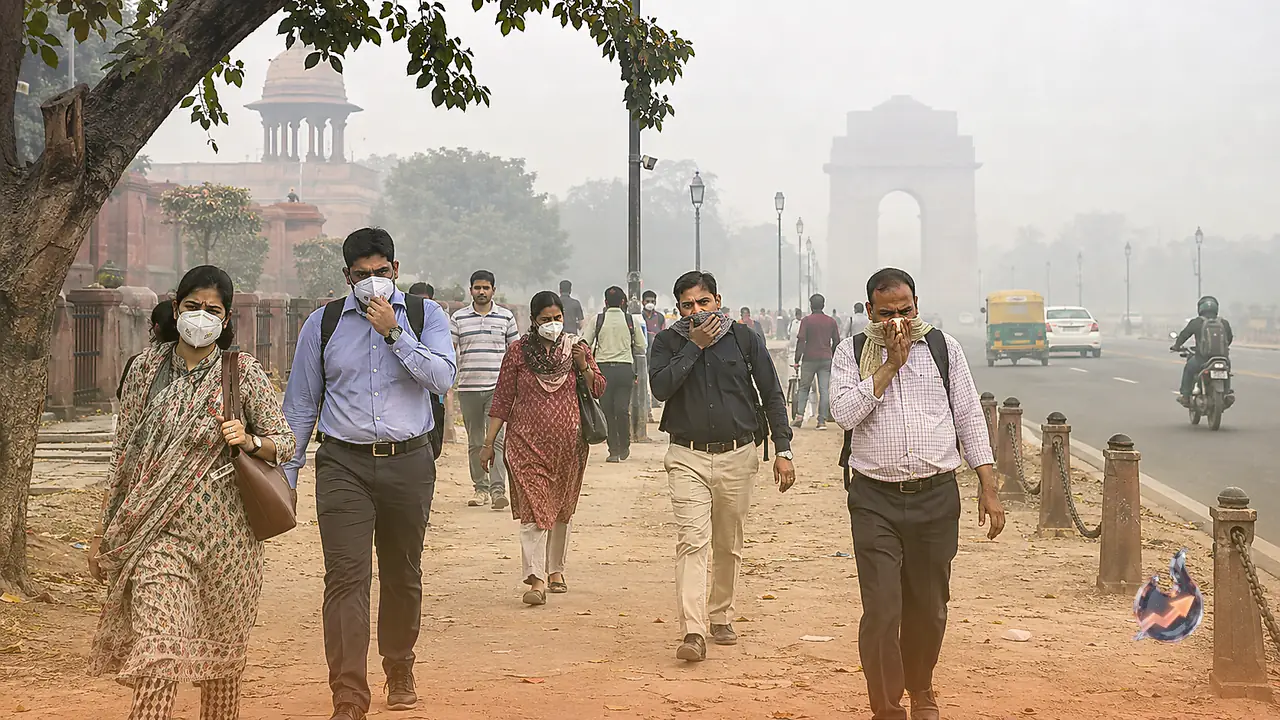



















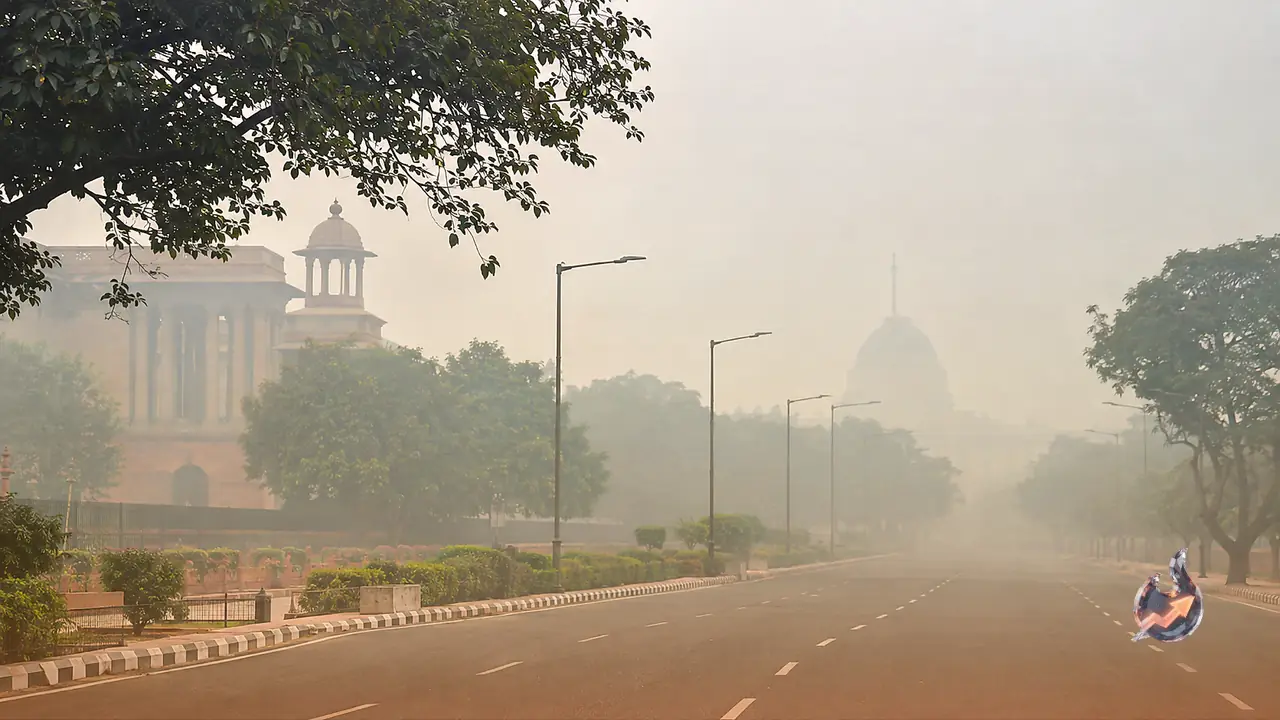

A fresh political slugfest has erupted across the national capital as air pollution levels breached severe thresholds in the aftermath of Diwali, drawing sharp reactions from political leaders. While residents struggle to breathe the toxic air, leaders from opposing parties have locked horns over the primary catalysts behind the worsening environmental crisis. The deteriorating air quality has once again transformed into a major battleground for political point-scoring between the ruling dispensation and the opposition.
Political uproar over sudden stubble burning data
At the center of this brewing controversy are strong allegations leveled by Delhi government minister and BJP leader Kapil Mishra, who claimed that stubble burning incidents in Punjab witnessed a sudden tenfold surge on the day of Diwali. According to his assertions, fires were lit across nearly 1,200 locations during the evening and night of the festival. Mishra characterized this abrupt spike as a calculated conspiracy aimed at sabotaging Delhi's air quality and bringing misery to its citizens.
Backing his claims with satellite data, the BJP leader stated that he, along with party colleague Sirsa, specifically requested these remote-sensing figures to analyze the ground reality. He pointed out that on November 5, 6, and 7, farm fires in Punjab were relatively subdued. However, he claimed that while only 125 instances were recorded on November 7, the numbers escalated dramatically during Diwali festivities, raising serious questions about the sudden surge.
Calls for investigation and phone record scrutiny
Targeting AAP leadership directly, Mishra alleged that political actors who traveled from Delhi to Punjab may have orchestrated the farm fires and demanded a thorough probe into the matter. He urged Punjab Chief Minister Bhagwant Mann to register formal FIRs and conduct comprehensive investigations wherever stubble burning was reported. He asserted that unearthing the truth behind these events could spell severe trouble and potential imprisonment for Arvind Kejriwal.
Furthermore, Mishra demanded that the call records of AAP leaders who journeyed to Punjab should be thoroughly examined to establish any deliberate malintent. Visual evidence and video documentation related to these allegations have also emerged, highlighting the contentious claims made by the political figures. He reiterated that those found responsible for engineering the farm fires must face stringent penal action.
Aam Aadmi Party fires back at allegations
The accusations drew a sharp and immediate rebuttal from the Aam Aadmi Party, with senior leader Baltej Singh Pannu dismissing the claims as a politically motivated attack. He asserted that the opposition always looks for opportunities to demonize farmers from Punjab and accused BJP leaders of weaponizing the issue of farm smoke even before the paddy harvesting season commenced.
Pannu further claimed that stubble burning instances in Punjab have dropped by roughly 90 percent, and urged critics to stop blaming the state's cultivators for Delhi's pollution woes. Questioning the sincerity of the accusers, he asked what measures the ruling party at the center had taken for the welfare of the farmers who lost their lives during the historic agricultural agitations.
Meanwhile, environmental conditions across the capital continue to remain grim as the Air Quality Index hovered above the 400 mark at multiple monitoring stations on Monday morning. The highest reading was logged at Delhi Technological University at 439, followed closely by Burari Crossing at 433, Vivek Vihar at 421, North Campus and Sonia विहार at 419 each, and Bawana at 418, placing them squarely in the severe category.
Official figures released by the Commission for Air Quality Management indicate that a total of 4,459 stubble-burning events were recorded in Punjab up to November 8. Physical inspections were carried out at 2,998 locations, out of which farm fires were verified at 1,310 sites. Authorities have initiated criminal proceedings under section 223 of the Bharatiya Nyaya Sanhita in 884 cases, while red entries have been marked in land records for 1,017 farms, alongside prosecution proceedings against 18 nodal officers.