























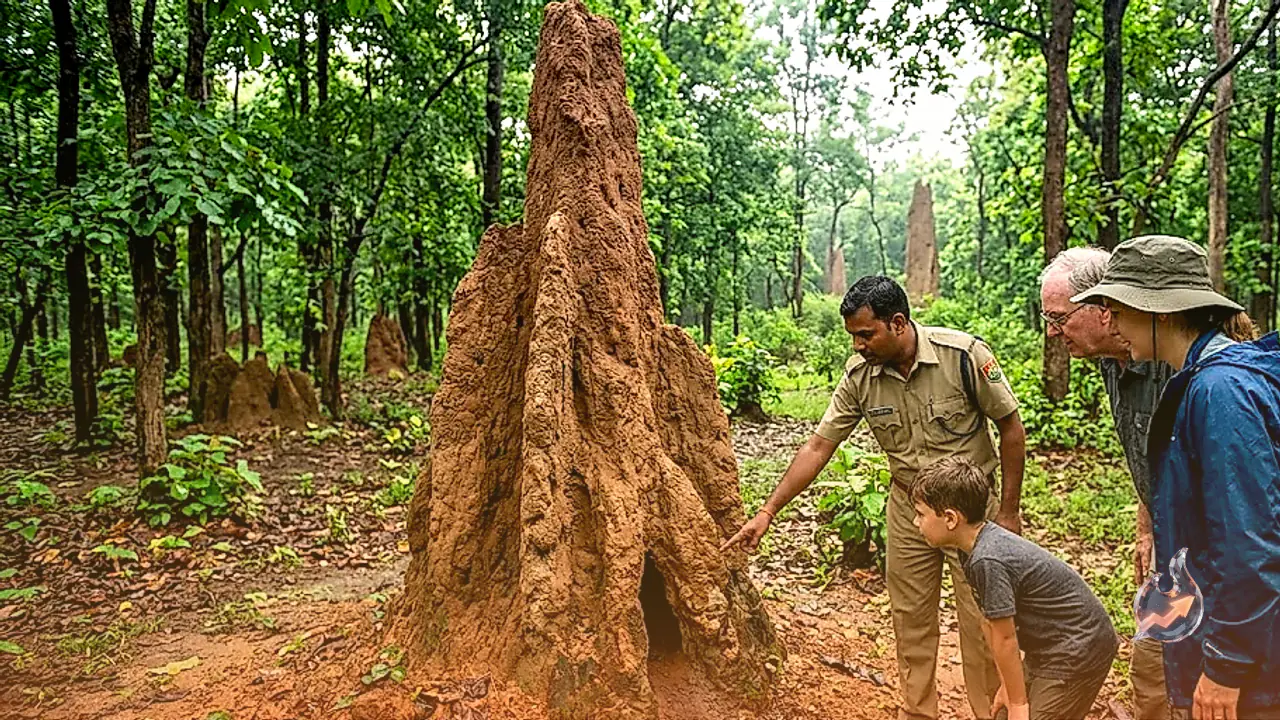

Nestled in the Lakhimpur Kheri district of Uttar Pradesh, Dudhwa National Park has earned global recognition for its rich biodiversity, dense forest canopies, extensive marshlands, and rare wildlife species. Alongside prominent inhabitants such as tigers, leopards, elephants, rhinoceroses, deer, and swamp deer (barasingha), hundreds of bird species and thousands of microscopic and small organisms play a vital role in sustaining the natural sanctuary. Amidst this complex web of life, remarkably resilient termite mounds measuring anywhere between 5 and 20 feet in height have emerged as crucial ecological hubs, boosting soil fertility while doubling as secure shelters for reptiles.
Unsung Ecological Role of Termites in Forest Habitats
In human settlements, agricultural fields, and wooden infrastructure, termites are universally viewed as destructive pests that inflict severe financial and material damage. However, within the natural dynamics of a virgin forest, their contribution is entirely transformative and beneficial. Every year, massive quantities of fallen leaves, dry twigs, tree bark, and rotting timber accumulate across the forest floor. Without a natural mechanism to decompose this organic debris, the woodland floor would quickly become suffocated under decaying matter. Termites step into this gap by breaking down dry wood, soil particles, and vegetative remnants, effectively converting waste into nutrient-rich organic matter that rejuvenates the soil.
Furthermore, the extensive network of subterranean burrows and tiny tunnels excavated by termites dramatically alters the physical structure of the earth. These passages allow air and water to circulate freely throughout the topsoil, enhancing moisture retention and aeration. By continuously recycling essential nutrients back into the ground, termites provide natural nourishment to surrounding trees and plants, maintaining the overall health of the ecosystem.
Engineering Wonders: 5 to 20 Foot Resilient Structures
The impressive mounds scattered across the landscape of Dudhwa National Park are far more than simple piles of mud; they are sophisticated architectural wonders built through an intricate biological process. Termites meticulously construct these edifices using a carefully bonded combination of soil particles, salivary secretions, and processed organic materials. The visible tower standing above the ground represents merely a fragment of the entire fortress, which houses a labyrinth of interconnected tunnels, ventilation shafts, and specialized chambers accommodating millions of colony members.
Within Dudhwa National Park, these mounds routinely reach towering heights ranging from 5 to 20 feet. To a casual observer, they appear as solid, rocky outcroppings, yet their internal matrix is surprisingly crumbly and lightweight. Despite this porous composition, the mounds exhibit extraordinary structural integrity, remaining completely intact even when subjected to torrential monsoon downpours and violent windstorms. The internal architecture is engineered specifically to ensure continuous airflow, delivering vital oxygen to the deep subterranean chambers of the termite colony.
Monsoon Shelter for Snakes and Unique Wildlife Attraction
During the heavy monsoon season, torrential rainfall frequently floods the low-lying terrain and forest floor of Dudhwa. As water inundates their terrestrial habitats, various snake species seek refuge inside these elevated termite mounds. The hollow, dry, and thermally regulated interior of the mounds offers an ideal, predator-safe sanctuary for snakes escaping the floodwaters.
Consequently, tourists and wildlife enthusiasts embarking on safaris through Dudhwa National Park frequently spot snakes coiled near or slithering around these massive structures. This captivating sight adds an extra layer of thrill and fascination for visitors, offering them a direct glimpse into nature's intricate interdependencies. Through their multi-functional design, these termite mounds remain indispensable pillars of Dudhwa's vibrant ecological landscape.