





















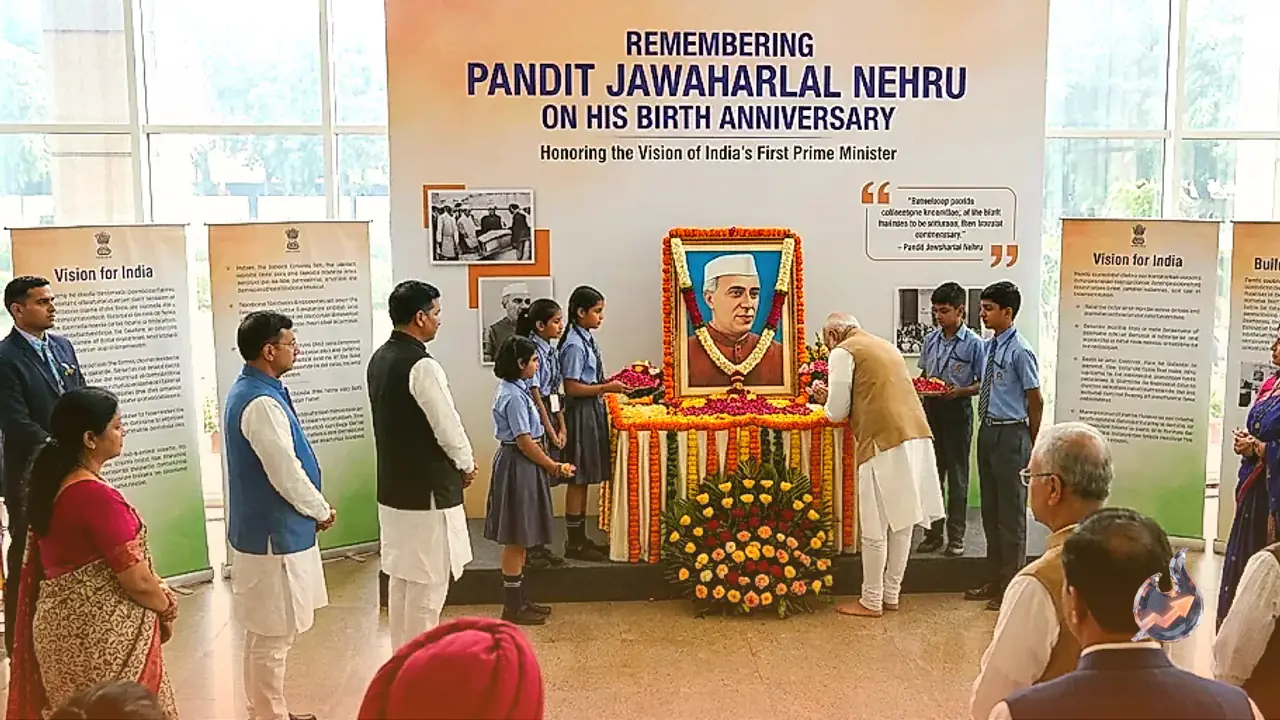

Commemorations and tributes marked the birth anniversary of independent India's first Prime Minister, Pandit Jawaharlal Nehru, as political figures reflected on his enduring legacy. Joining the observances, Rahul Gandhi took to the social media platform X to share a dedicated post honoring his contributions and outlining the foundational ideals he championed for the nation. The post quickly drew considerable online engagement, prompting diverse reactions across the platform.
Redefining Freedom and Self-Governance
In the shared message, the focus was placed on how freedom was viewed not merely as an endpoint, but as a stepping stone toward a fresh journey for the country. Self-governance, under this vision, extended far beyond holding political power, representing instead the active participation of every single citizen and a shared responsibility toward the nation's collective future. India was described as an ongoing discovery and a profound concept, with its rich diversity serving as its greatest strength.
About Pandit Jawaharlal Nehru
Pandit Jawaharlal Nehru served as the inaugural Prime Minister of India and stood as a central figure in domestic politics both before and after independence. Rising as a prominent leader of the Indian independence movement under the guidance of Mahatma Gandhi, he governed the nation from its establishment as a free republic in 1947 until his passing in 1964. He is widely recognized as the principal architect of the modern Indian nation-state, shaping it into a sovereign, socialist, secular, and democratic republic. Hailing from a Kashmiri Pandit background, he was commonly addressed as Pandit Nehru, while children across the country affectionately knew him as Chacha Nehru.
Public Reaction
The online discourse surrounding the anniversary post reflected varied perspectives from the public. While numerous users paid respectful tributes, recalling his pivotal role in shaping modern democratic institutions, others engaged in broader debates regarding historical governance and policies.