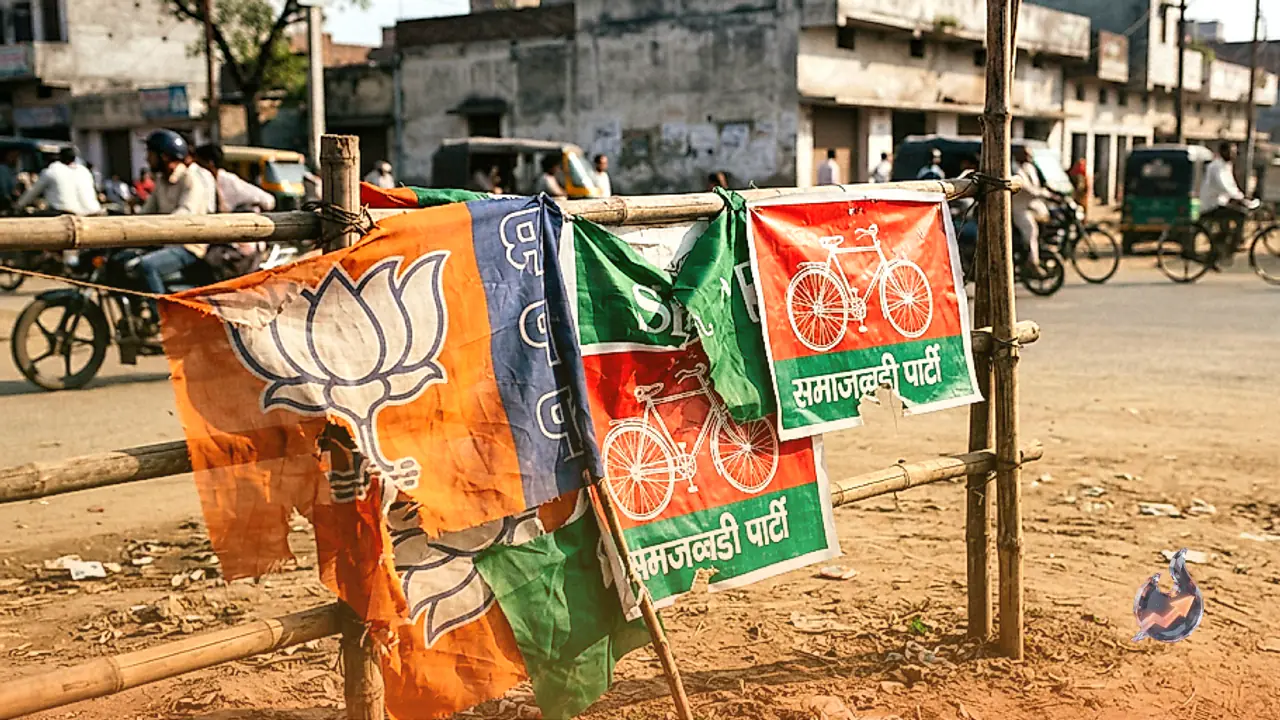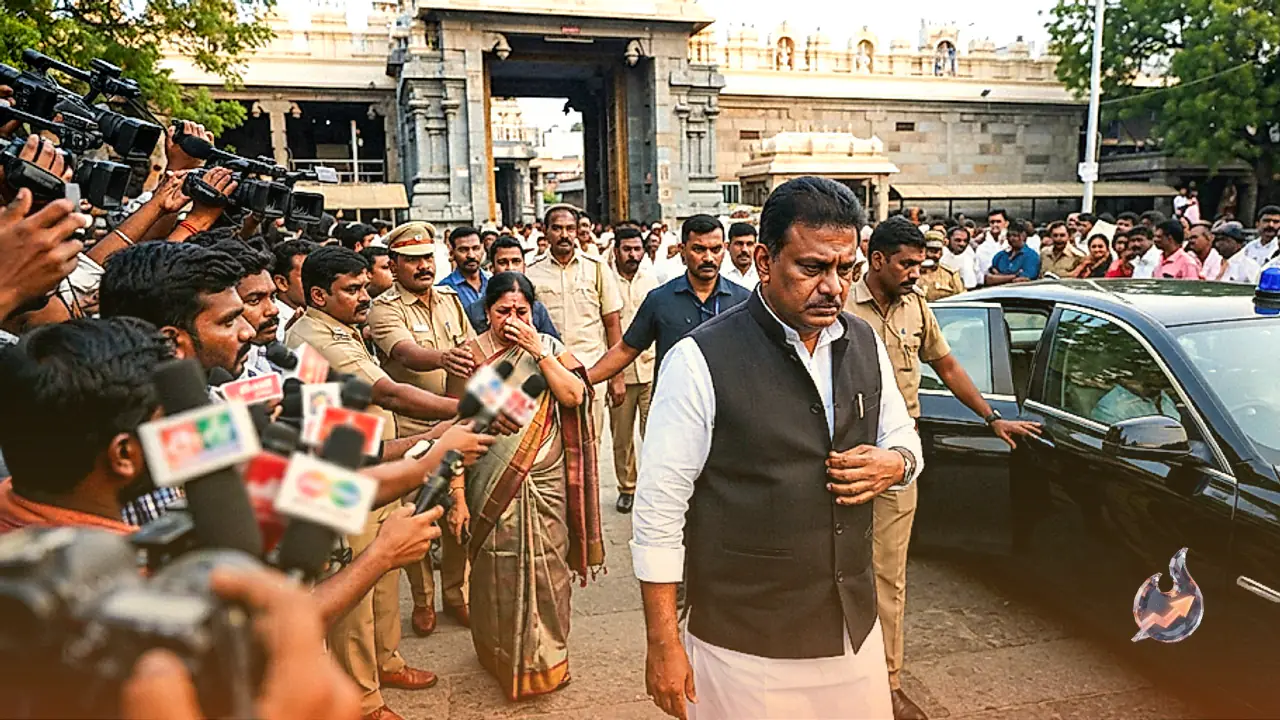















The potential release of senior Samajwadi Party leader Azam Khan from prison has once again become a central talking point across the political landscape of Uttar Pradesh. Azam Khan has long held significant sway not just in Rampur, but throughout the entire state. Among Muslim voters, he commands a stature comparable to the influence that Mulayam Singh Yadav and Lalu Prasad Yadav traditionally enjoyed among the Yadav community. In his prolonged absence, the Samajwadi Party has faced a continuous uphill battle to maintain its grip over this vital voter base. Consequently, one of India's leading legal minds, Kapil Sibal, has been representing him fiercely from the Supreme Court down to the Allahabad High Court. Observers frequently debate whether keeping Azam Khan behind bars serves the tactical interests of Chief Minister Yogi Adityanath and the ruling Bharatiya Janata Party, or if his eventual freedom could radically realign regional political dynamics.
In recent times, Azam Khan's legal hurdles have only multiplied rather than receding. On one occasion, shortly after securing bail in a specific case and stepping out of prison, the Enforcement Directorate pounced and arrested him in connection with another matter within a mere forty minutes. Presently, his hopes for liberation rest entirely upon pending petitions before the Allahabad High Court. Although the Supreme Court provided him with significant legal relief in a separate matter on November 17, dismissing an appeal filed by the Uttar Pradesh government against a High Court order that stayed his conviction in a fake birth certificate case, this does not mean he will walk free immediately. The second arrest executed by the Enforcement Directorate remains a formidable obstacle blocking his path to freedom.
The Extensive Ledger of Criminal Cases Against Azam Khan
Official records presented during judicial proceedings indicate that a staggering ninety-two criminal cases have been registered against Azam Khan. A detailed order issued by the Allahabad High Court concerning a dual PAN card matter explicitly noted these ninety-two criminal cases along with eight prior convictions. The litigations encompass a wide range of grave allegations, including land grabbing, fraud, forgery, controversies linked to the Maulana Mohammad Ali Jauhar University, and other penal offenses. However, it is important to note that Azam Khan has not been convicted in all these matters; he has successfully secured bail in several cases and has been acquitted in a few others.
The sheer magnitude of his legal entanglements is underscored by the events of October 29, 2026, when the Allahabad High Court suspended his sentence and granted him bail in the dual PAN card case. Crucially, however, the court did not stay his conviction in that particular matter. Immediately afterward, when he walked out of the Rampur jail on October 31, the Enforcement Directorate promptly arrested him in connection with a money laundering investigation tied to the Jauhar University.
A Brief Forty-Minute Freedom Followed by Immediate Rearrest
The date of October 31 proved to be intensely dramatic for Azam Khan. Following the relief granted by the High Court in the dual PAN card case, he emerged from the Rampur prison gates at approximately 6:30 PM. Yet his taste of freedom lasted for barely forty minutes. At around 7:10 PM, central investigative officers took him back into custody right outside the jail premises. This particular case stems from alleged financial irregularities, misuse of government funds, and money laundering investigations connected with the Maulana Mohammad Ali Jauhar University and the Jauhar Trust. The agency alleges that irregularities occurred in land acquisition and the deployment of public money for the institution.
Challenging this swift rearrest before the Supreme Court, senior advocate Kapil Sibal pointed toward Azam Khan's advanced age and the overwhelming volume of cases piled against him. Sibal submitted that Azam Khan is approximately 80 years old and faces twenty-eight additional matters. Sibal questioned the suspicious timing of the FIRs, pointing out that cases pertaining to alleged incidents from 2006 were suddenly registered in 2019. He argued that Azam Khan was being systematically entangled in endless litigation to keep him incarcerated indefinitely, pleading that he deserved immediate bail given his precarious health and age, warning that he might perish inside the prison walls if relief was denied. Although the apex court did not directly quash the Enforcement Directorate's arrest at that juncture, it directed the matter back to the High Court.
Arguments and Allegations Presented in the High Court
When the petition challenging the arrest came up for hearing before the Allahabad High Court on November 16, Kapil Sibal once again characterized the entire episode as an act of political vendetta. He alleged that every single time Azam Khan stood on the verge of walking out of jail, a fresh case was promptly fabricated against him. Sibal asserted that investigative agencies and state officials were acting in tandem to harass his client, aiming to keep him locked away through past electoral cycles and now extending the confinement up to the 2027 assembly elections.
During the proceedings, Sibal drew the court's attention to a glaring anomaly, revealing that as many as twenty-six FIRs were registered against Azam Khan within a tight window of eight days, specifically between July 12 and July 20, 2019. These cases ostensibly pertained to incidents dating back to 2006. Later on, twenty-eight additional FIRs were clubbed into the same ongoing Enforcement Directorate probe. Furthermore, the defense alleged that the agency failed to provide the mandatory grounds of arrest to Azam Khan, violating fundamental safeguards guaranteed under Article 22(1) of the Constitution. Conversely, the Enforcement Directorate robustly rejected these accusations, maintaining that sincere attempts were made to furnish the arrest grounds to Azam Khan, but he flatly refused to accept the documents.