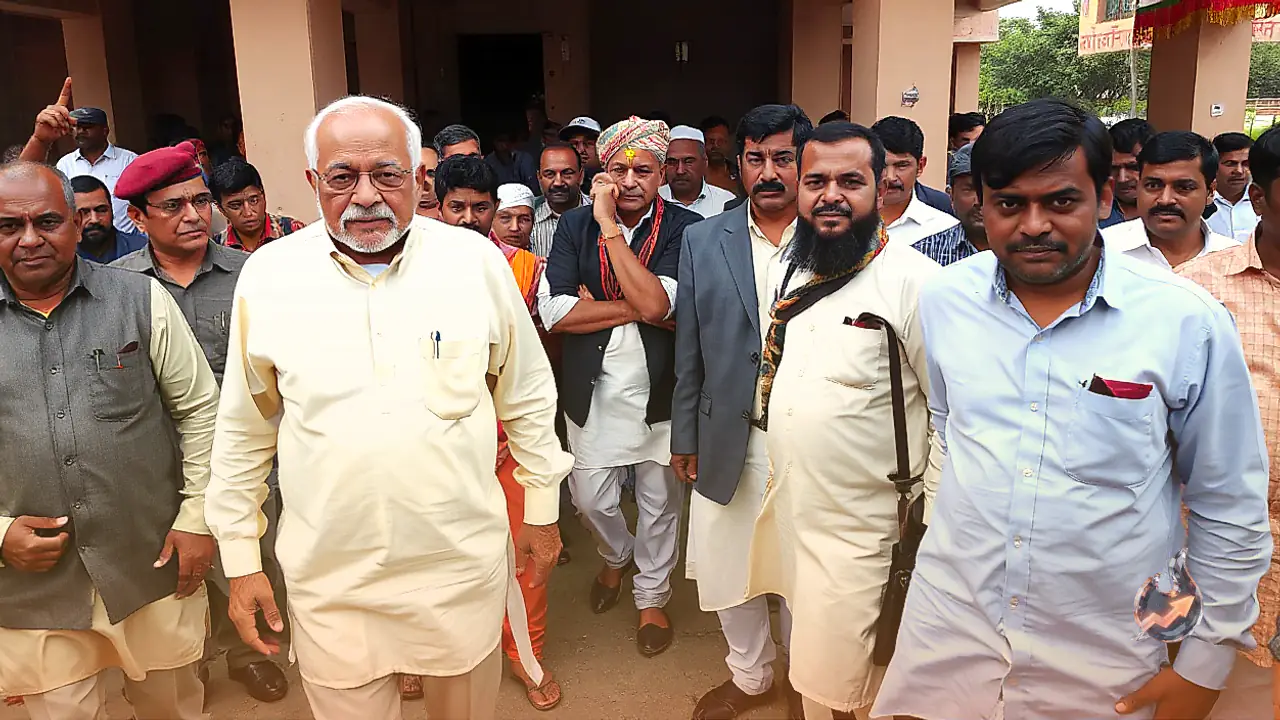

Political fortunes in rural Rajasthan continue to pose a significant challenge for the Bharatiya Janata Party, as election results across district councils and panchayat committees show Congress holding a commanding lead. The recent re-polling process further cemented this trend, with Congress capturing 13 out of the 22 contested panchayat committee seats, while the BJP was restricted to just 5 seats. In the district council re-polls, both major parties secured two seats each, ensuring that the Congress maintained its upper hand without allowing the opposition any space to recover.
Crucial Leadership Elections Approach
The political focus now shifts toward the upcoming selection of local administrative heads, with district chiefs scheduled to be elected on November 25 and block pradhans on November 27. Congress faces the task of converting its massive electoral advantage into administrative authority, whereas the BJP confronts the high-stakes challenge of capturing as many local bodies as possible despite having fewer numbers. The competition has evolved past mere statistics into a tactical battle involving political maneuvering, camp politics, and the potential for cross-voting.
Re-poll Results Reflect Continued Struggles
Fresh voting conducted across 28 polling booths in Rajasthan only deepened the ruling challenges for the opposition. Within the 22 panchayat committee wards that went to the polls again, Congress established its dominance by winning 13 seats, leaving the BJP far behind with only 5. Meanwhile, the Bahujan Samaj Party secured one seat, independent candidates claimed two, and one ward remained uncontested due to a complete lack of candidate nominations.
Bundi Results and Voter Turnout Highlights
Out of the four contested district council wards, the BJP and Congress split the outcomes evenly with two seats each. Despite this tie at the district council level, the overwhelming panchayat committee results secured a substantial advantage for Congress. The BSP's victory in Bundi added an intriguing dimension to the local arithmetic, bringing the party closer to the majority threshold. Voter enthusiasm remained notably high during the process, with ward 13 of the Jaipur district council recording the highest turnout at 81.40 percent. Across the 22 panchayat committee polling booths, overall turnout reached 72.22 percent, led by ward 6 in the Dudu panchayat committee, which recorded a peak turnout of 84.93 percent.
Wide Seat Margins in District Councils
Out of 41 total district councils in Rajasthan, counting for 37 councils took place on November 20. The results across 1,275 wards of these 37 councils heavily favored Congress, which secured 796 seats to claim the top spot. In contrast, the BJP lagged significantly behind with 359 seats, creating a massive gap of 437 seats between the two principal rivals. This meant Congress secured more than double the number of seats won by the BJP.
Regional Parties and Broader Rural Presence
Beyond the two major national parties, the Rashtriya Loktantric Party won 51 seats, and the Bharat Adivasi Party secured 43. Independent candidates accounted for 13 seats, while the Communist Party of India (Marxist) won 7 and the Bahujan Samaj Party took 6. Congress achieved a clear majority in 23 district councils, whereas the BJP secured a majority in only 5. The Rashtriya Loktantric Party crossed the majority mark specifically in Nagaur. These tallies indicate that Congress has established a far more robust grassroots presence than the BJP in rural governance, though fierce political contestation is expected in districts where no single party secured an outright majority.
Dominance Persists in Panchayat Committees
The margin of victory for Congress remained equally pronounced in the panchayat committee elections. Out of 7,543 total wards, results have been finalized for 7,542. Congress emerged victorious in 3,771 wards, while the BJP managed to win 2,118 seats, resulting in a staggering difference of 1,553 seats between them. Other political formations also made their presence felt, with the Rashtriya Loktantric Party winning 497 seats, the Bharat Adivasi Party taking 278, and the Bahujan Samaj Party securing 61. Independents won 664 seats, the Communist Party of India (Marxist) took 50, and the Aam Aadmi Party won 2. One ward saw no election due to a lack of nominations. Ultimately, even the re-polling phase failed to help the BJP close this substantial gap.