



















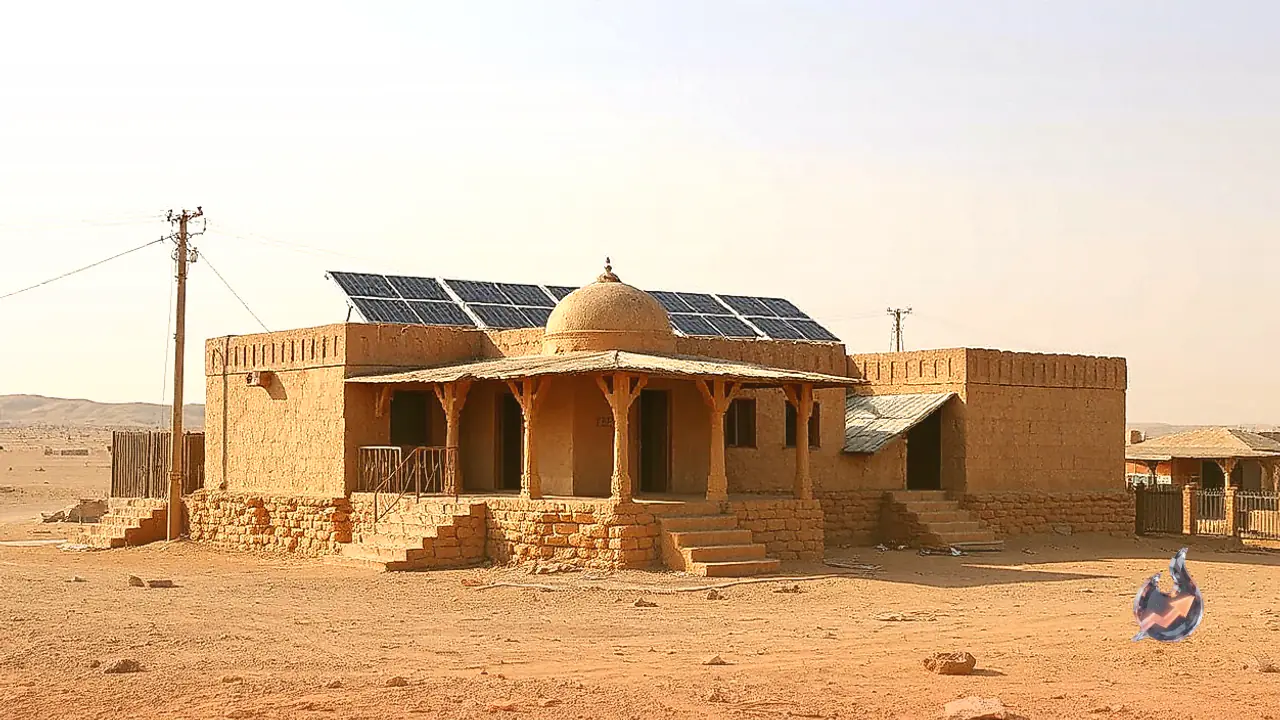

Intense sunlight and high temperatures are often seen as a major inconvenience for the general public, but for the Khetri Copper Complex (KCC) project, the blazing sun has turned into a lucrative source of financial savings and earnings. To curb mounting electricity expenses, the project administration has installed solar power plants on the rooftops of the administrative building, the acid plant premises, and the KCC hospital. Driven by the electricity generated from these installations, the project has achieved a remarkable total savings of approximately 1 crore 21 lakh 57 thousand rupees over the past two financial years.
The Cost Advantage Between Solar Power and Discom Tariffs
Behind this substantial financial saving lies a massive cost gap between the electricity supplied by the Discom and the power produced by the solar installations. KCC currently receives electricity from the Discom at a rate of 8.25 rupees per unit, whereas the power generated from its own rooftop solar setup incurs an expense of only around 4 rupees per unit. This directly translates to a savings of 4.25 rupees on every single unit consumed. This clear cost differential has rendered solar energy an economically viable and highly beneficial asset for the project's financial management.
Daily Power Generation and Monthly Savings Figures
The solar plants set up within the KCC premises generate approximately 4600 to 5000 units of electricity daily, bringing the average monthly production to around 1.50 lakh units. Looking purely at monthly figures, the project saves roughly 6 lakh rupees every month, pushing annual savings to an impressive total of about 72 lakh rupees. According to official project data, during the financial year 2023-24, the solar plants yielded a total of 11 lakh 31 thousand 740 units of electricity, saving roughly 48 lakh 9 thousand rupees. Subsequently, in the financial year 2024-25, the solar generation rose to 17 lakh 10 thousand units, resulting in savings of approximately 72 lakh 67 thousand rupees. Combining both years, a total savings of 1 crore 21 lakh 57 thousand rupees has been successfully recorded.
Total Electricity Requirements and Reduced Discom Dependency
To keep the KCC project fully operational and to meet the needs of its residential township, a total electricity requirement of around 50 lakh units exists every month. Out of this total, roughly 45 lakh units are consumed directly by project operations, while the remaining 5 lakh units are allocated to the residential township. With the rooftop solar setup contributing about 1.5 lakh units of electricity each month, the project's dependence on the Discom has decreased correspondingly. Consequently, the volume of electricity required to be procured from the Discom has now dropped to approximately 48.50 lakh units.
Capacity Expansion Plans for the Future
Encouraged by the impressive financial savings delivered by the existing solar setup, the KCC administration is now preparing to commission an additional plant. Currently, the project operates a solar plant with a capacity of roughly one megawatt, which is planned to be expanded to 1.8 megawatts. This future enhancement will further boost solar power generation and aid in minimizing reliance on external power grids. S. Shivdarshi, Deputy General Manager (Human Resources) at the KCC project, stated that the solar plant currently produces one thousand kilowatts of electricity, and another solar plant will be installed shortly to drive up overall power production.
Substantial Savings Through LED Lighting Integration
Beyond solar energy adoption, KCC has also integrated LED lighting extensively to lower its overall power expenditures. Older light fixtures across the township roads, project premises, and various departmental offices have been systematically replaced with modern LEDs. The positive outcomes of this switch were evident when savings of approximately 33 lakh 75 thousand rupees were recorded in the financial year 2018-19, followed by about 32 lakh rupees in 2022-23. At present, the continuous use of LED lighting alone saves roughly 32 lakh rupees every year.