























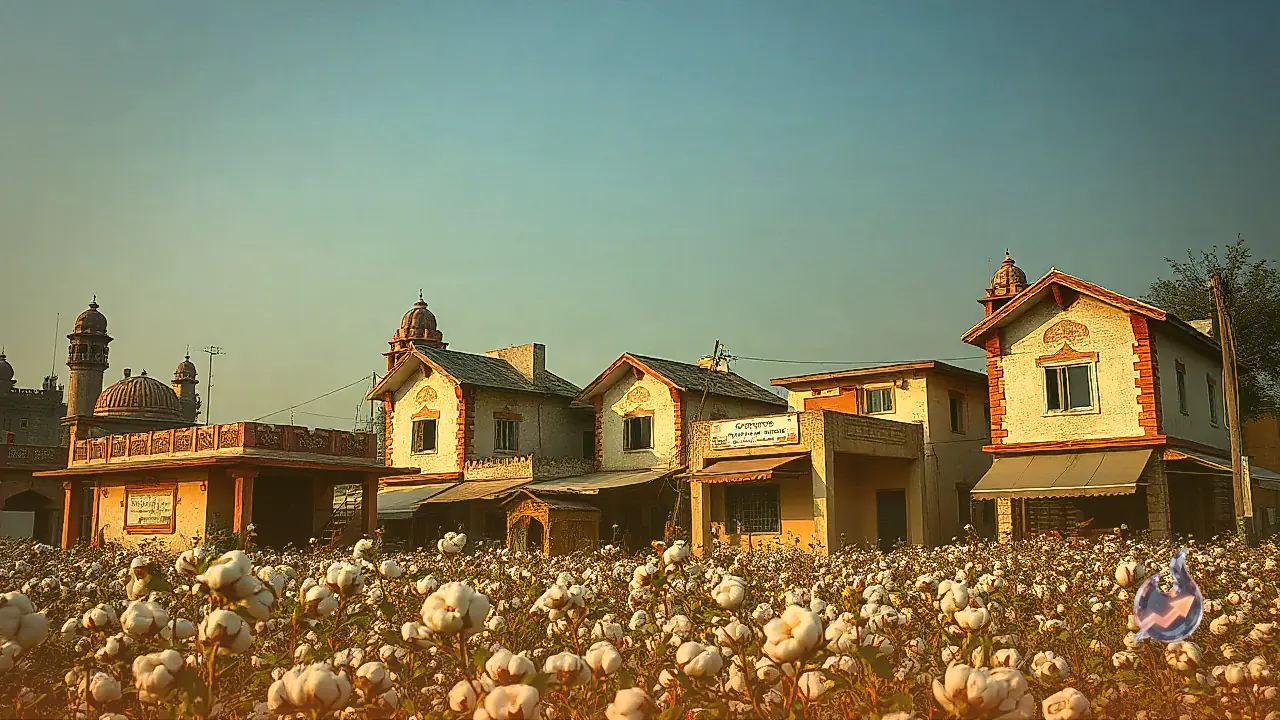

Farmers across the textile hub of Bhilwara in Rajasthan are confronting an escalating threat to their cotton harvest, as infestations of the destructive pink bollworm spread across the district. The pest attacks the inner reproductive parts of the crop, causing severe worries regarding production volumes and fiber quality. To prevent widespread financial distress, agricultural authorities have stepped up ground monitoring and issued specific management protocols to help growers identify and counter the pest effectively.
Bhilwara Cotton Footprint and Growing Risks
Bhilwara holds national prominence for its fabric production and maintains an equally crucial position in regional raw cotton cultivation. Due to a robust ecosystem of operational cotton gins and spinning mills within the district, local growers generally receive prompt and competitive prices for their raw harvest. Consequently, farmers cultivate cotton across an expansive footprint of approximately 40,000 to 50,000 hectares annually in the district. Over recent days, however, infestations of pink bollworm have begun undermining both fiber quality and overall crop yield, endangering the expected returns of thousands of farming households.
Identifying Symptoms and Crop Damage
The pink bollworm poses a particularly severe threat because its larvae target the developing bolls directly. According to Dr. Shankar Singh Rathore from the horticulture division of the Bhilwara agriculture department, visible symptoms typically emerge roughly 60 to 70 days following sowing. Larvae bore into the young bolls, feeding silently on inner seeds and lint while remaining hidden beneath the exterior surface. Because external signs are difficult to spot during initial feeding, cultivators often discover the infestation only after interior damage has advanced considerably. Managing the pest therefore requires strict adherence to early preventative measures rather than reactive treatments alone.
Farm Sanitation and Residue Disposal
Breaking the breeding cycle of the pink bollworm depends heavily on sanitizing fields and managing agricultural waste between growing seasons. Agricultural officials recommend that cultivators eliminate old crop remains well before introducing new seed batches. Growers must thoroughly shake out and clean stored stalks and dry sticks kept around farmland, ensuring any remaining dried bolls are completely burned or destroyed.
- Avoid piling large bundles of cotton stalks along field borders and edges, as these dry residues serve as primary overwintering shelters for pest pupae.
- Coordinate with local ginning mills and cotton processing facilities to ensure lingering agricultural residues near factories are disposed of systematically before planting cycles begin.
Neem Extracts and Controlled Spray Applications
Outlining tactical pest control practices, Dr. Shankar Singh Rathore recommended precise timing for field applications. Once the cotton crop completes 60 days of growth, farmers should spray a 5 percent solution of Neem Seed Kernel Extract (NSKE). This organic formulation acts as an eco-friendly barrier, suppressing initial pest proliferation without disturbing field ecology.
Furthermore, during the critical window between 60 and 120 days of crop growth, cultivators must exercise caution with chemical interventions. Using unauthorized tank mixes or excessively potent commercial formulas without expert guidance can harm the crop and accelerate chemical resistance. Growers are advised to apply only authorized, department-recommended formulations in strictly measured doses to protect crop health while maintaining environmental safety.