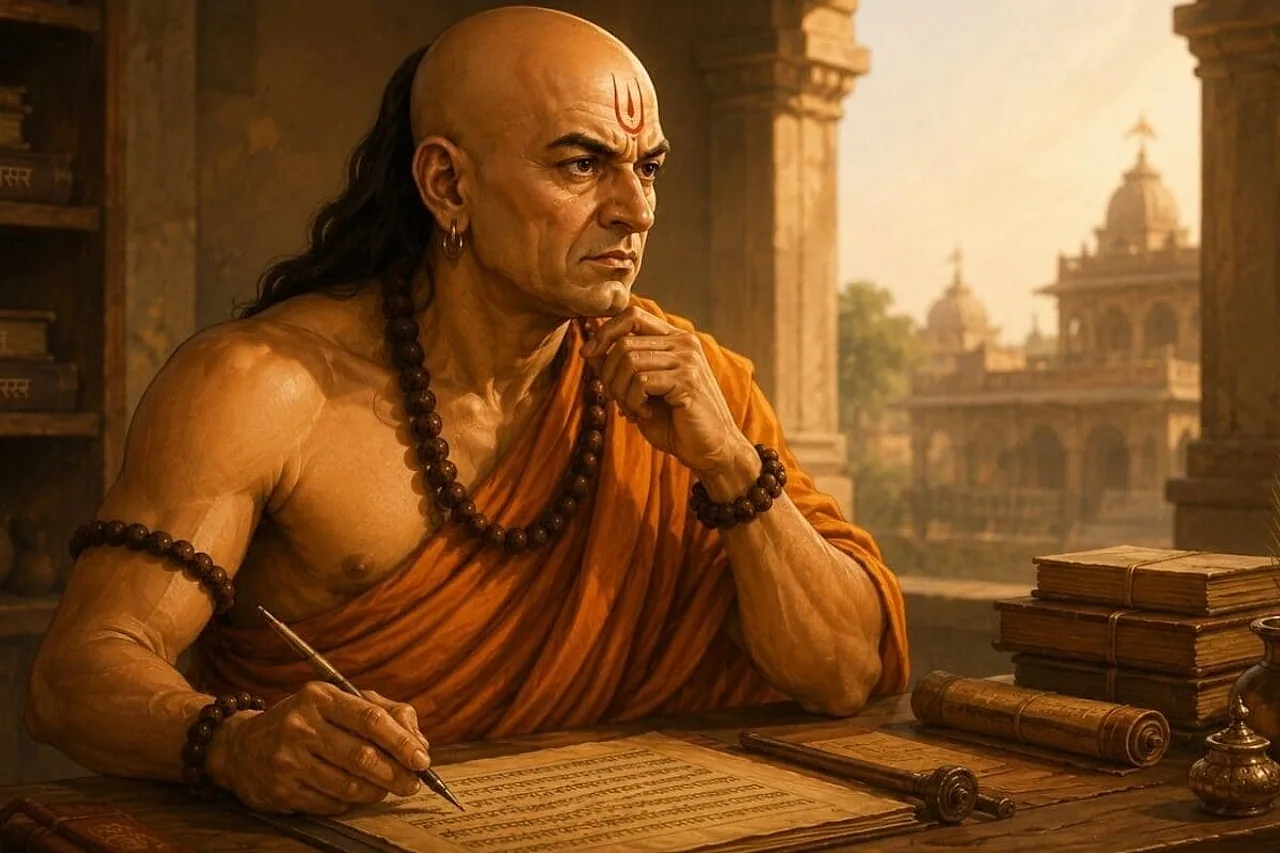

The wisdom of Chanakya extends far beyond mere financial strategy or career advice, delving deeply into the moral fabric of daily life and family relationships. A household is defined not solely by its accumulated wealth, social status, or material comforts, but fundamentally by the conduct, values, and character of its members. The habits and behavior of children, in particular, cast a direct reflection on the reputation and standing of their parents in society. Through his timeless maxims, Chanakya outlined crucial principles regarding filial conduct, warning that a single child prone to wrongdoing and bad behavior can completely tarnish a family's standing.
The Destructive Impact of a Wayward Son
To illustrate the gravity of a child's misbehavior, Chanakya employed a powerful verse comparing a bad son to a catastrophe in nature. Just as a single dry tree catching fire in the middle of a dense forest can ignite the entire woodland and reduce everything to ashes, the improper actions of one errant son can ruin the reputation of an entire lineage. This teaching emphasizes that the consequences of a child's bad habits are never confined to that individual alone; rather, falling into bad company, habitual lying, disrespectful behavior, and unlawful activities brings collective disgrace. Every son must therefore exercise vigilance regarding his actions and decisions, steering clear of any conduct that might bring humiliation to his parents in public.
The Radiance of a Virtuous Son
Conversely, just as Chanakya detailed the devastation caused by an undisciplined child, he also highlighted the immense value of a virtuous, educated, and well-behaved son. Using the celestial body of the moon as an analogy, he noted that just as the moon illuminates the dark night sky with its gentle and beautiful light, a single righteous and knowledgeable son can fill an entire family with joy and pride. This implies that a multitude of offspring is not required to bring honor to a household; one exceptional child endowed with wisdom, integrity, and good character is sufficient to elevate the family name. A son's achievements and moral fiber ultimately become the true identity and legacy of his entire family.
Five Essential Qualities of an Ideal Son
According to Chanakya Niti, an exemplary son must cultivate several fundamental traits that guide him toward a noble life. First and foremost, education should not merely serve as a tool for securing employment, but as a moral compass to distinguish right from wrong and make sound decisions in times of crisis. Second, honoring parents is the ultimate hallmark of good upbringing; a son must understand their feelings and treat them with deep respect, maintaining a polite and courteous tone even during disagreements. Third, a responsible son looks beyond his own self-interest, standing firmly by his family during difficult times and sharing domestic burdens. Fourth, dishonesty, deceit, and unethical gains must be strictly avoided, as trust can only be earned through truthfulness and transparent dealings. Finally, a dedicated son relies on hard work and noble deeds rather than despairing over obstacles, always keeping the future welfare and dignity of his family in mind.