






















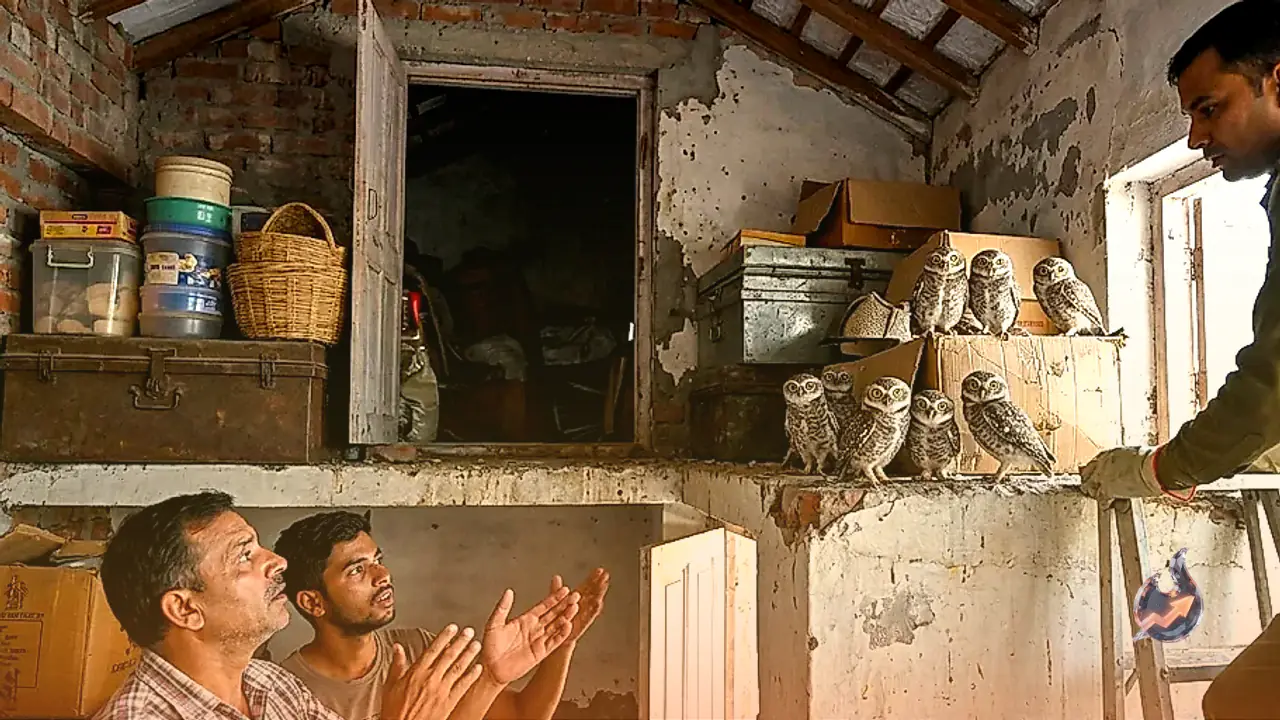

In a surprising turn of events in the Hapur district of Uttar Pradesh, a family discovered seven owls perched together in the loft of their newly constructed house. The unusual presence of such a large group of owls in one spot sparked curiosity and widespread conversation among nearby residents. In Indian culture, the owl holds a unique position, associated with deep-rooted religious beliefs, folk legends, and conflicting symbolic meanings.
Mythological and Practical Significance of the Owl as Goddess Lakshmi's Vehicle
In Hindu traditions, the owl is venerated as the carrier or vehicle (vahana) of Goddess Lakshmi, the deity of wealth, fortune, and prosperity. Sacred depictions, iconography, and traditional artworks frequently feature Goddess Lakshmi alongside the owl. In West Bengal, the owl receives special reverence during traditional Lakshmi Puja celebrations, where its presence is considered highly auspicious.
Beyond religious symbolism, there is also a practical, ecological reason behind this reverence. In agricultural communities, owls serve as natural pest controllers. They hunt field mice and rodents that would otherwise destroy standing crops. By safeguarding agricultural produce and protecting food supplies, the owl historically became synonymous with preserving wealth, naturally connecting it to the goddess of prosperity.
Seeing an Owl at Home: Indicator of Wealth or Omen of Misfortune?
Folk beliefs across India hold contrasting views regarding the presence of an owl near human habitations. On one hand, many people view the sudden appearance of an owl as a sign of incoming financial gains and divine blessings from Goddess Lakshmi. On the other hand, certain cultural practices associate owls with ill omens.
In some regions, an owl perching on a rooftop or calling out during the dead of night is interpreted by local lore as a warning of upcoming trouble or negative events. It presents a fascinating cultural paradox where a creature honored as a divine vehicle is simultaneously viewed with apprehension in localized folklore.
Finding Seven Owls Together and the Sacred Meaning of the Number Seven
The discovery of seven owls simultaneously in the Hapur home naturally drew public attention due to the mystical associations with the number seven. In Hindu philosophy and scriptures, seven is considered a sacred number representing harmony and cosmic order.
Key traditions highlight this significance, such as the seven sacred vows (Saptapadi) taken during marriage rituals, the cosmic concept of the Saptarishis (seven revered sages), and the spiritual realm of the seven worlds (Sapta Lokas). Because of this deep-seated reverence for the number seven, the rare sighting of seven owls together was viewed by locals not as a coincidence, but as an occurrence carrying traditional symbolism.
What Should You Do Upon Spotting an Owl? Traditional Practices and Guidance
According to spiritual customs, because the owl is associated with Goddess Lakshmi, encountering one should not cause fear or alarm. There is no requirement to perform elaborate rituals or attempt to disturb the bird. Respecting living creatures remains a core element of traditional ethics.
However, local traditions suggest that if owls appear in odd numbers such as 1, 3, 5, or 7, one can simply light a small lamp (diya) from a respectful distance to offer quiet prayers to Goddess Lakshmi. Furthermore, in certain communities across India, the owl is revered as a representation of ancestral or clan deities (Kul Devta). Rather than panicking, tradition encourages observing the birds peacefully from afar.