























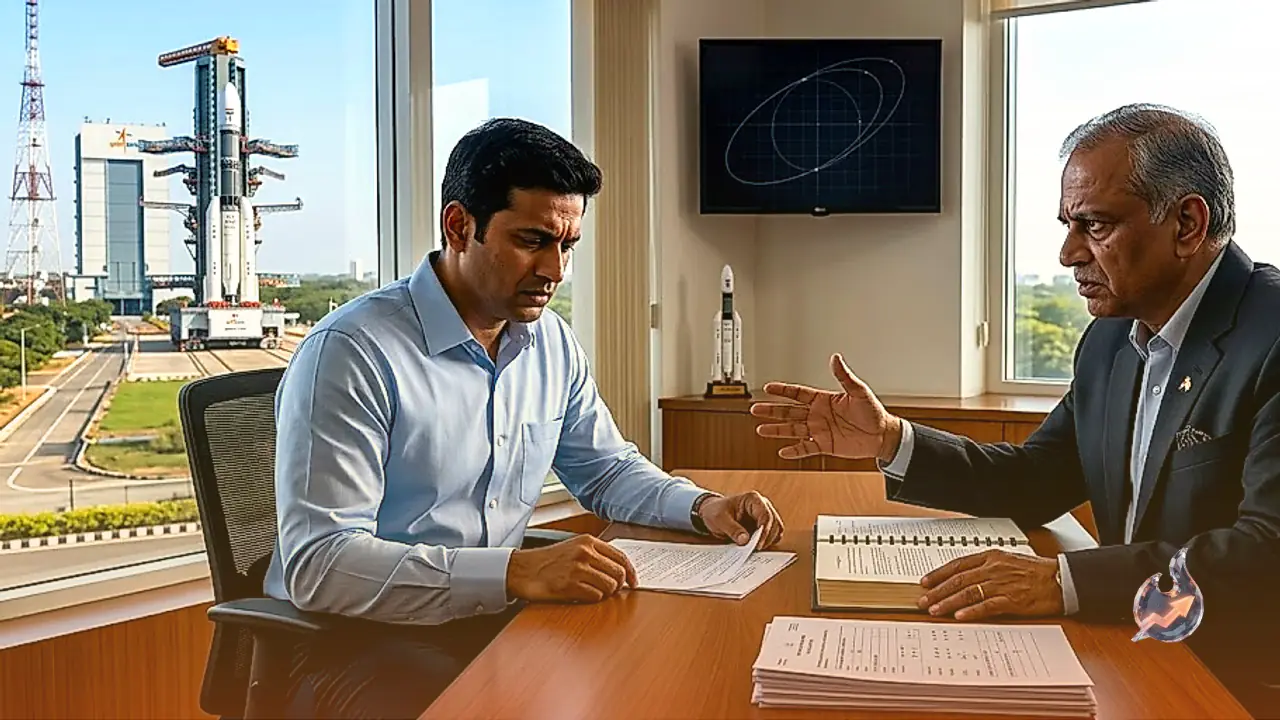

India's most ambitious human spaceflight effort, the Gaganyaan mission, which is meant to send Indian astronauts into orbit, is running into an unexpected obstacle: a steady exodus of the very scientists tasked with delivering it. Several senior scientists and technical experts at the Indian Space Research Organisation, or ISRO, have been resigning in growing numbers to join private space companies, and the trend has alarmed the central government enough to intervene directly. The Department of Space has issued a fresh memorandum that makes it far harder for Group A level officers attached to Gaganyaan and other critical missions to have their resignations or voluntary retirement, commonly called VRS, approved routinely. The government believes that such sudden departures are hurting projects of national importance, and it wants a tighter check placed on how easily senior staff can walk out of ongoing missions.
Why scientists are drifting toward private firms
India's private space sector has expanded rapidly over the past few years, moving from a handful of small startups to a genuine industry with serious funding and serious projects. The government itself has been handing large satellite projects to private consortiums and inviting industry bids for the transfer of launch vehicle technology, effectively opening up work that used to sit only inside ISRO. That shift has sharply pushed up demand for experienced space professionals, and it is pulling ISRO's skilled scientists toward private companies that can now offer them comparable, high-profile work along with the kind of compensation a government organisation usually cannot match. According to the Department of Space, requests for VRS and resignation have risen sharply in recent months, and the impact is being felt directly on projects of national importance such as Gaganyaan, since the departure of experienced hands threatens to slow the pace of work on a mission that has already taken years to prepare.
Resigning from ISRO just got much harder
Under the new order, centre heads or division heads at ISRO will no longer be able to approve an employee's resignation on their own, a power they earlier exercised routinely. Any scientist or technical staff member attached to a critical project like Gaganyaan will not be allowed to leave the organisation until that particular project is complete. If an officer still applies for resignation or VRS, the concerned centre director will first forward the application to the Department of Space along with a formal recommendation, and the final call on whether to accept it will rest entirely with the Department of Space rather than the local centre. This is not the first time ISRO has moved to hold on to its skilled workforce; the organisation has taken several such steps before, and the latest order is being seen as another, tougher attempt in that same direction, showing how seriously the leadership now views the risk of losing experienced people mid mission.
An official's account of the manpower crunch
An ISRO official, speaking on condition of anonymity, expressed deep concern over the situation. The official said the organisation had already frozen inter-centre and mutual transfers of staff even before this latest order, adding, Hiring of new talent has dropped considerably. There is a severe manpower crunch, and despite the staff shortage, work on the shop floor is somehow being carried on. The remark lays bare how difficult conditions have become at the ground level inside ISRO, with the shrinking workforce piling additional pressure on the employees who remain and, in turn, making the jobs on offer at private companies look even more appealing by comparison.
Can stricter rules really stop the talent drain?
The government's tough new order has left several former ISRO officials worried rather than reassured. They argue that administrative restrictions alone cannot fix the underlying problem driving people out the door. A retired senior official said, Circulars like this reflect deeper issues and weaken the organisation. A circular like this should not have been issued this way. There are other ways to stop people from leaving. Perhaps the advisors are not good. The remark was a pointed suggestion that ISRO's leadership needs to focus on motivating its employees and addressing their underlying grievances, rather than simply restricting their ability to exit.
A leadership and work culture reckoning
Another former official said the organisation first needs to understand the real reasons employees are quitting, rather than trying to block their exit purely through administrative orders, calling that approach both wrong and demotivating for the very people ISRO most wants to keep. All of this is unfolding at a critical juncture, with ISRO fully focused on the Gaganyaan mission even as uncertainty lingers over the return to flight of the PSLV following some failed launches. With India's space economy gradually opening up to private players and global competition for space talent intensifying, retaining experienced engineers and scientists within the organisation has become one of the biggest management challenges ISRO now faces, one that a single memorandum may not be enough to solve.