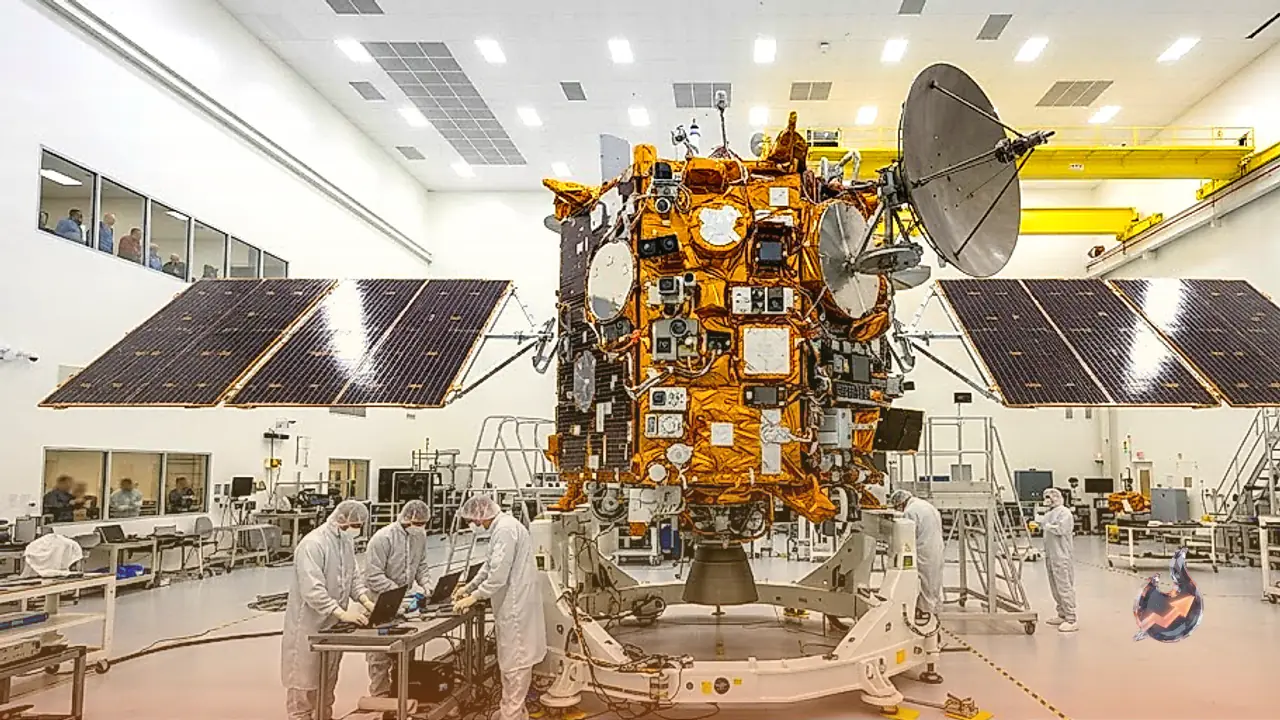























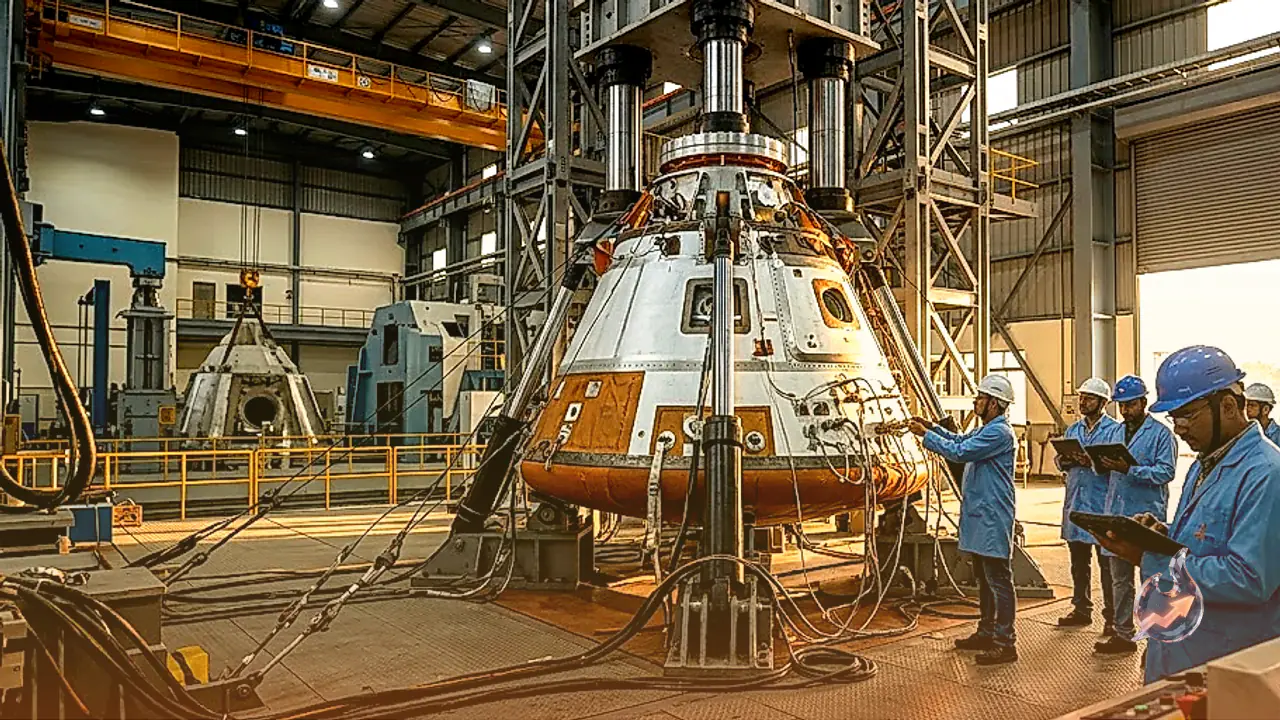

The Indian Space Research Organisation (ISRO) announced on Sunday that it has successfully completed three major tests of the Gaganyaan crew module system. The tests examined critical aspects tied to astronaut safety and the structural strength of the module, marking a significant step in preparations for India's first human spaceflight mission.
What the three tests checked
The first test focused on the scenario where astronauts splash down in the sea after the mission is complete. Ensuring the safety of astronauts after an ocean landing is considered one of the most important requirements of the mission, which is why this stage received special attention. The second test examined the system that connects the crew module, where the astronauts live, with the service module, which supplies the spacecraft with energy and propulsion. Since the two sections must separate cleanly at a designated point during the mission, it was essential to verify that this separation process works smoothly. The third test confirmed how much structural strength the crew module retains while the Apex Cover separates from it.
A major parachute test just days earlier
Just before these three tests, ISRO had also completed an important test of the main parachute of the Gaganyaan crew module. That test was carried out on July 7 at the drop zone of the Aerial Delivery Research and Development Establishment, or ADRDE, in Sheopur, Madhya Pradesh. In a statement issued the very next day, on July 8, ISRO said the purpose of the test was to examine the strength and design of the main parachute under the maximum possible load condition expected during the first uncrewed Gaganyaan G1 mission.
Assembly dropped from a height of 2.5 kilometres
During the test, a simulated assembly consisting of one main parachute and a dummy load was dropped from an Indian Air Force IL-76 aircraft from a height of 2.5 kilometres. As soon as separation occurred, a drogue parachute was deployed first. Parachutes of this kind are known for stabilising the crew module and significantly reducing its speed. The main parachute was then deployed, slowing the payload down to a safe terminal velocity.
Fifth IMAT test builds confidence
According to ISRO, this was the fifth test in the Integrated Main Parachute Airdrop Test, or IMAT, series, which is being conducted to certify the main parachute system that is critical to the Gaganyaan mission. ISRO said the successful IMAT-05 test has further strengthened confidence that the main parachute system will work effectively during Gaganyaan's first uncrewed mission, G-1. The crew module of Gaganyaan is fitted with a total of 10 parachutes across four different types.
How the 10 parachutes work together
In this system, two Apex Cover separation parachutes act first, separating the Apex Cover from the descending spacecraft. This Apex Cover protects the parachute compartment from the extreme heat generated during re-entry. After that, two drogue parachutes and three pilot parachutes come into play, working independently to pull out and deploy the three main parachutes. This staged sequence of deployments gradually slows the crew module down, guiding it toward a safe landing.