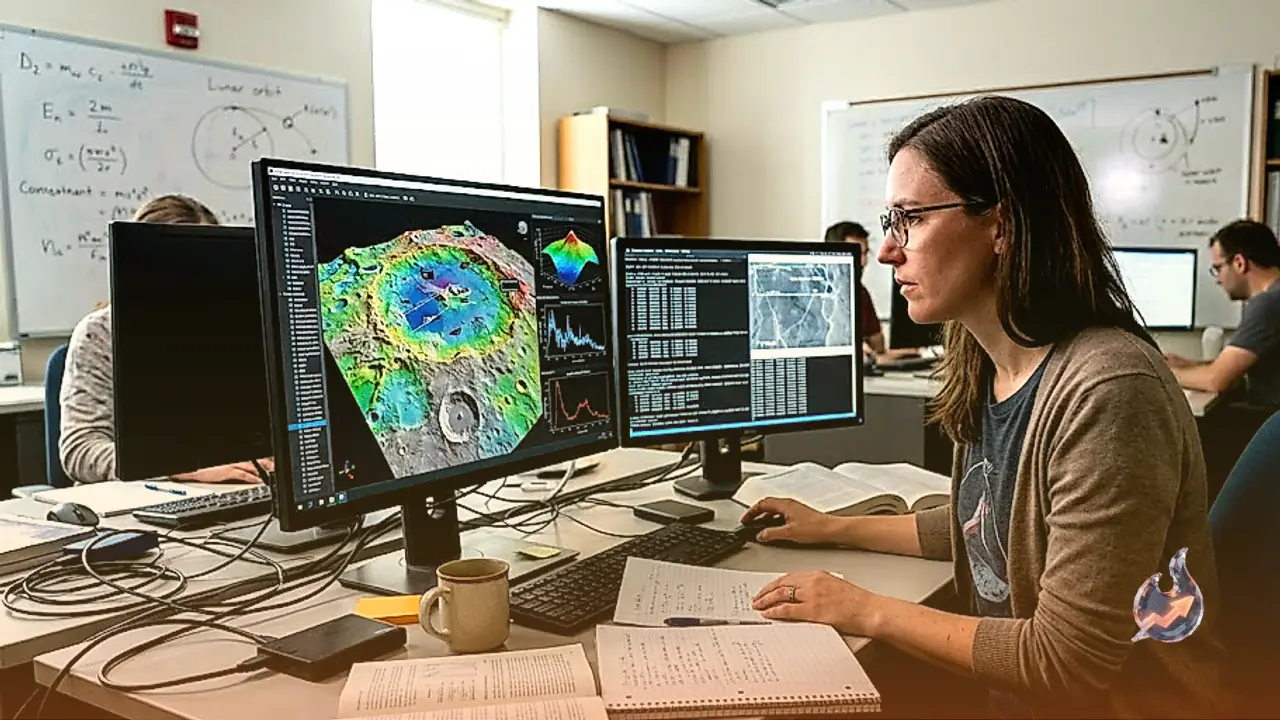























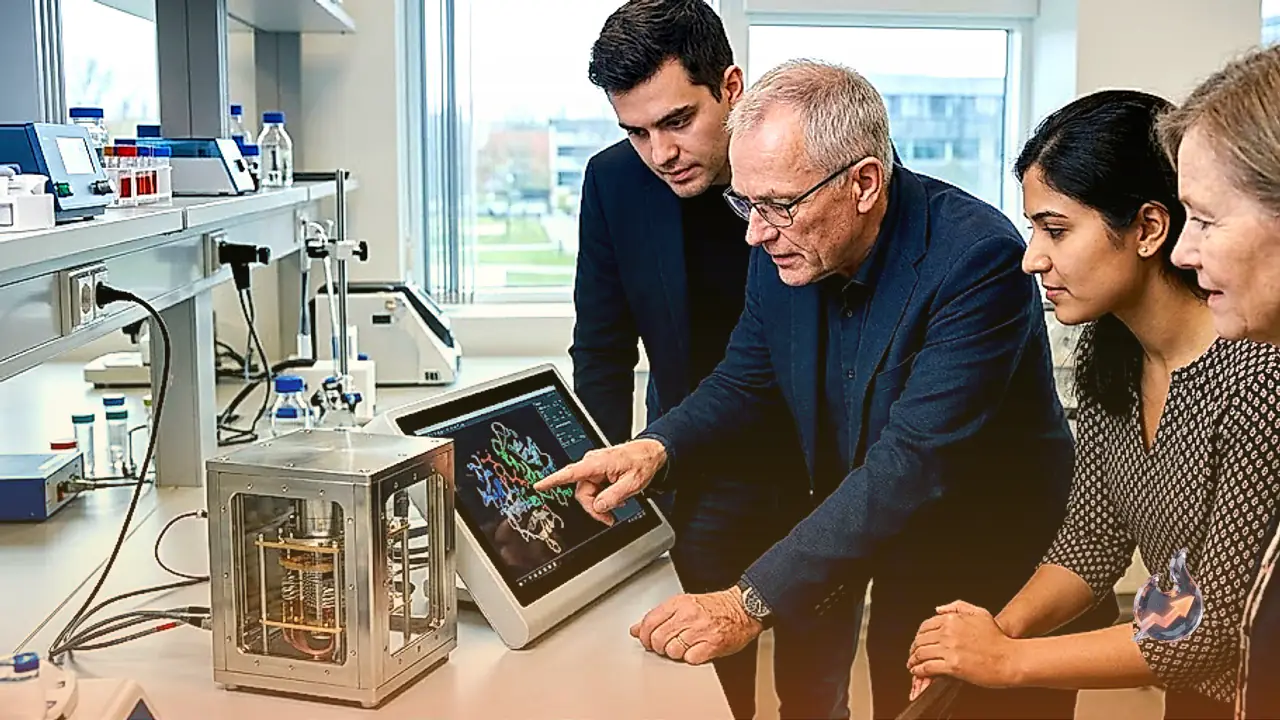

In a significant technological leap, researchers have successfully combined generative artificial intelligence with quantum computing to create entirely new peptides. This hybrid approach, developed by a team at the Technical University of Denmark, utilizes a printer-sized quantum computer designed by the British startup ORCA Computing. By bridging the capabilities of quantum machines with traditional silicon-based processors, the system has demonstrated a unique ability to accelerate the prediction of proteins. Specifically, the researchers generated novel peptides, which are short chains of amino acids that can bind to targeted proteins in the human body. This binding capability is a fundamental and critical phase in the creation of modern vaccines.
An Unconventional Weekend Side Project
The path to this scientific breakthrough was far from traditional. Timothy Patrick Jenkins, a professor at the Technical University of Denmark who headed the research project, explained that the team had to work on weekends and pool leftover funds from various other initiatives. This unusual approach was born out of necessity. Jenkins pointed out that mainstream scientific foundations often find highly innovative and experimental concepts too risky or intimidating to fund through standard channels. To demonstrate that their predictions actually translate into tangible, real-world biology, the team had to take matters into their own hands and build a working proof of concept.
Initially, even the lead researcher was highly skeptical about the readiness of quantum systems. Jenkins admitted that he once viewed quantum computing as a technology that was decades away from practical application in his line of work. However, testing the hybrid system in a physical laboratory environment changed his perspective. When the team physically manufactured the generated peptides and tested their binding strength against specific target proteins, the results were clear. The quantum-enhanced AI model outperformed its purely classical counterparts. Interestingly, the quantum system showed the most dramatic improvements in scenarios where the initial training data was extremely limited or rare.
Addressing Global Healthcare Disparities
This hybrid computing approach could have profound implications for global medicine, particularly in the creation of personalized immunotherapies and vaccines. One of the major challenges in modern biotechnology is the geographical bias in medical databases. Historically, the vast majority of medical and genetic research has focused heavily on Western populations. Consequently, biotechnology models often struggle to design effective treatments for historically understudied populations, such as communities across Asia and Africa, due to a severe lack of representative genetic data.
The research team hypothesized that integrating quantum mechanics into the generative AI workflow could help overcome this data scarcity. Since quantum computers have shown a unique talent for generating highly diverse image outputs in other fields, the researchers believed a similar mechanism could help generate a more diverse set of peptides. By leveraging quantum properties, the system can explore a wider array of molecular combinations even when training data is scarce, potentially leading to more effective medical treatments for neglected populations around the globe.
Navigating the Current Limits of Quantum Hardware
While the study marks a major milestone, it is not an overnight revolution for the pharmaceutical sector. Quantum computers are still in their infancy, lacking the sheer physical scale required to run massive, cutting-edge AI models at full capacity. Because of these hardware limitations, classical supercomputers still outperform quantum machines on many standard, large-scale computing tasks.
Jonathan Funk, a PhD student at the Technical University of Denmark who participated in the research, noted that because current quantum hardware remains relatively weak, they could not encode the complex structure of a full-sized antibody, which is what his lab typically works with. Furthermore, identifying a peptide that successfully binds to a target gene is merely the initial phase of a long, multi-step journey. This discovery alone does not guarantee a successful, market-ready drug, as extensive clinical testing and refining are still required.
Commercial Realities and the Future of Quantum Biology
The broader commercial landscape has historically viewed quantum computing with a degree of hesitation. Richard Murray, the chief executive officer of ORCA Computing, acknowledged that many industrial firms view quantum technology as a vague, distant concept. This skepticism persists largely because the industry has struggled to present clear, short-term examples of practical utility. However, Murray emphasized that this joint project represents a rare, near-term commercial application of quantum hardware.
Beyond biotechnology, ORCA Computing is actively applying its hybrid processors to other industrial sectors. The startup is collaborating with the energy giant BP to solve complex chemistry problems and is working with the automotive manufacturer Toyota to streamline and optimize vehicle design processes. Meanwhile, the academic team in Denmark is planning to scale up their workflow to test more advanced AI models and larger, more complex proteins. Jenkins is particularly enthusiastic about using this quantum-enhanced generative AI method to design synthetic antidotes for snakebite venom, as well as developing treatments for neglected tropical diseases that typically receive very little traditional research funding. Snakebite venom contains a complex cocktail of toxic proteins, and designing synthetic molecules to neutralize them requires exploring astronomical combinations, a task where classical AI models often hit a wall due to processing limits, but where quantum-accelerated systems can excel.