
Sakana AI’s new foundation model, Sawara, is part of a longer effort to put AI to work across Japan’s industrial and manufacturing sectors. Co-founder and CEO David Ha says that remains the company’s central vision, even as cybersecurity needs make domestic AI options more pressing. For sensitive applications, a locally developed alternative could matter if access to foreign models becomes constrained.
The Japanese startup disclosed plans for its own foundation model last month. The announcement drew attention to possible uses in defense and cybersecurity, as well as Japan’s reliance on technology from the United States and China. Ha said Sawara was conceived as part of Sakana’s ambition to use AI to support and strengthen Japanese industry. He also described security-related capabilities as a near-term need for Japan.
Sakana is due to begin work on Sawara this month. Its target is to train and release a smaller model in early 2027, with a larger version to follow. Ha said the company plans to train both sizes next year. The smaller system is expected to be particularly useful for on-premises solutions, which run at a customer’s own site. Ha said Japan needs the ability to deploy AI that way.
How Sawara fits alongside Sakana’s other models
Sawara builds on work Sakana has already done with other AI systems. About five months ago, the company launched Fugu, an orchestration system that draws on multiple large language models, including models from U.S. AI labs, to assemble agents for particular tasks. Fugu coordinates existing systems; Sawara is the company’s effort to create a foundation model of its own.
The Tokyo-based startup has also developed Namazu, a Japanese-focused language model. It fine-tunes existing open-weight models from Meta and DeepSeek so they can better handle Japanese language, culture and business needs. Sakana lists translation, political questions and AI agent tasks among the areas it is designed to support.
Ha said open-weight models cannot simply be used unchanged by Japanese enterprises because they may reflect the priorities of their creators. He said they might decline to answer questions about Japan or Japanese politics, or provide answers that Japanese users do not want. Namazu’s adjustments are intended to make those existing models better suited to Japanese contexts.
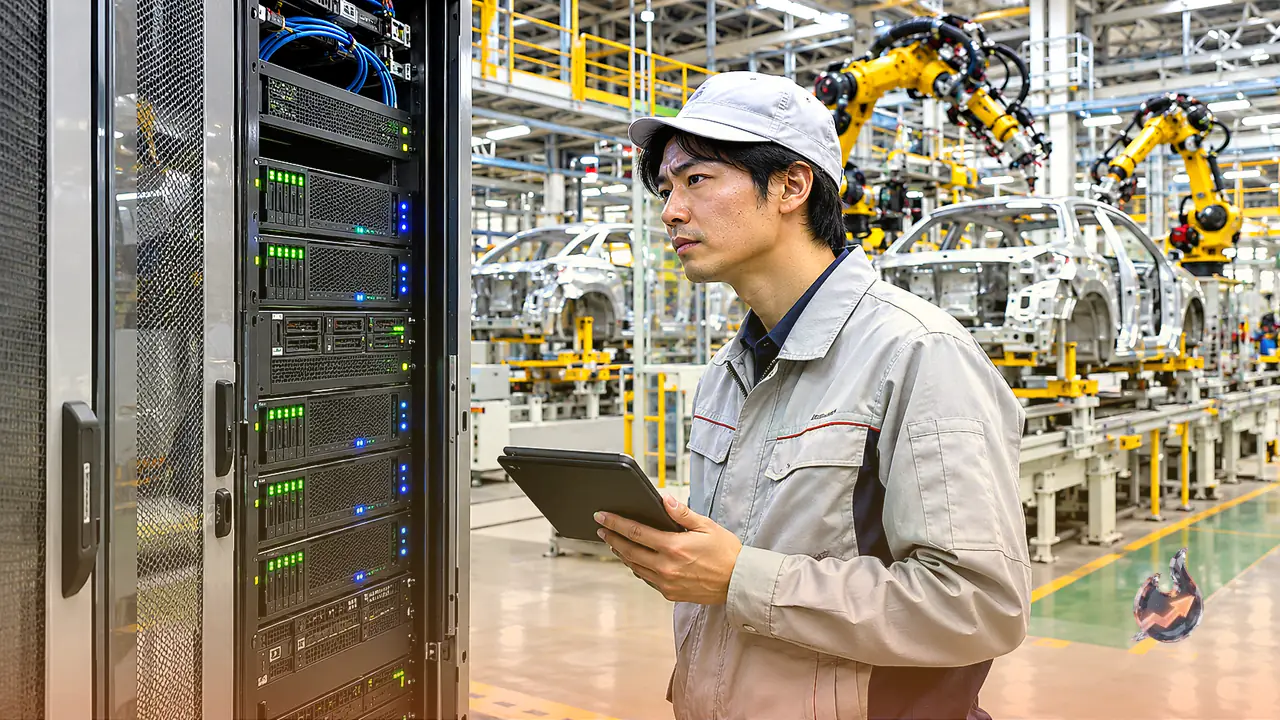
A homegrown foundation model alone will not remove Sakana’s reliance on foreign AI technology, Ha acknowledged. He described Sawara’s pre-training as the remaining piece needed for Sakana to become a full-stack company. The firm intends to apply the technology in manufacturing and industry. While customers can already combine Fugu and Namazu with models developed abroad, Ha said some applications call for capabilities that foreign models alone do not provide.
Government work shapes deployment requirements
Cybersecurity is one such application. Ha said Japan needs customized models in this field that can be deployed on-premises. He expects the country to keep using U.S. systems while also seeking domestic alternatives. Referring to national defense, he expressed respect for companies such as Snowflake, Palantir and Datadog, while saying Japan will want systems of its own.
Sakana’s government work has informed how it is planning Sawara. In July, the company signed a research contract with Japan’s Ministry of Defense to explore how AI could help analyze and combine information drawn from multiple sources. It has also worked with the Ministry of Internal Affairs and Communications on systems to detect disinformation.
Ha said government agencies often set tougher conditions than commercial customers. Those can include the ability to audit the data used in training, customize models and run them on-premises. Sakana’s work with Japanese agencies has helped the company plan how Sawara should be developed and deployed. Ha added that comparable requirements exist in many governments.
At present, Sakana’s government-related work centers on two areas: detecting and analyzing disinformation, and building multimodal systems that bring together information from different government sources. Enterprise customers, by contrast, can use Fugu and Namazu alongside AI models built overseas. The distinction helps explain why Sawara is being developed as a domestic capability while the company continues to work with outside models.
IPO timing remains undecided
Sakana’s move into foundation models comes amid speculation that it could pursue an IPO. Nikkei and Bloomberg stories earlier this month prompted discussion of a possible listing. Ha said the company has no near-term plan to go public. He characterized the reported timing and potential valuation as speculative and said he does not know when Sakana might seek a listing.
Ha expects the startup eventually to list in Japan, but gave no date or timetable. “We have a gravitational pull to eventually IPO in Japan,” he said. For now, the stated work is developing Sawara and collaborating with Japanese industry; when a public offering might happen remains unknown.
Ha sees Sakana’s future growth as connected to Japanese manufacturers expanding internationally. The company is not focused solely on selling models. It wants to help local businesses use AI to compete more effectively around the world. Ha said Sakana aims to work strategically with the government and Japan’s industrial base, then expand abroad alongside the manufacturing and industrial sectors.