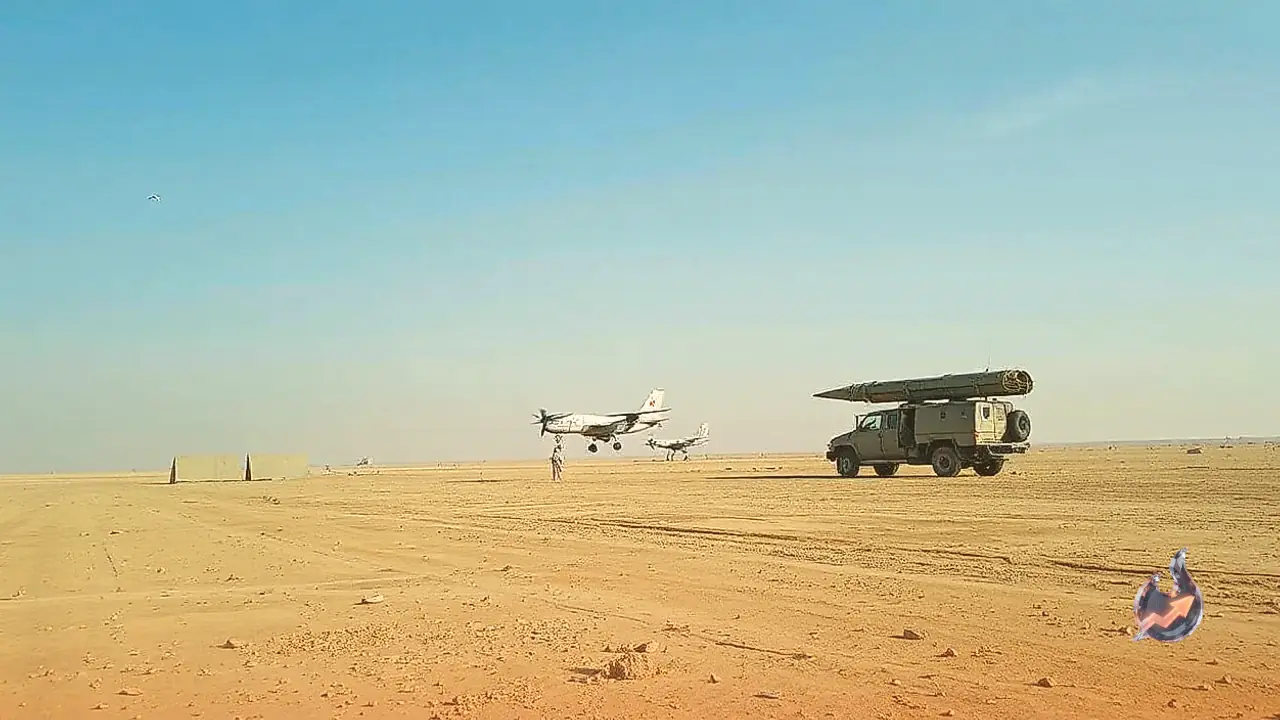

Giving a strong push to the Atmanirbhar Bharat mission, domestic defense manufacturer IG Defence has successfully conducted trials of the Jwala MK-1 at the Pokhran firing range in Rajasthan. According to the company, this weapon stands as India's first autonomous counter-unmanned aircraft system micro-missile setup. This development marks a vital milestone in creating next-generation indigenous counter-drone technology designed to tackle evolving aerial threats. The company stated that the operational range of this defense system reaches up to 5 kilometers.
Advanced Technical Features and Combat Capabilities
The Jwala MK-1 is designed as an indigenous, autonomous, and cost-effective solution capable of handling the rapidly growing dangers posed by unmanned aerial systems. The missile incorporates a dual-pulse solid rocket motor and aerodynamic fin control to provide propulsion and mid-flight trajectory adjustment capabilities. It is also equipped with a pre-fragmented high-explosive warhead and a proximity fuse. Because of this technology, the missile does not require a direct hit on the target, as it can detonate upon coming close to the threat in mid-air.
Cost Disbalance in Modern Warfare
The widespread deployment of unmanned aerial systems is completely transforming modern military operations globally. Recent international conflicts, including the US-Iran confrontations, have highlighted the increased use of relatively inexpensive attack drones alongside the heavy economic challenges of deploying expensive traditional air defense interceptors to counter them. This new battlefield reality has exposed a severe cost imbalance where armed forces are forced to deploy much costlier interception systems against low-cost aerial threats. For India, considering its complex security environment and shifting airspace challenges, building affordable, scalable, and indigenous counter-UAS technology is a vital strategic necessity.
Key Features of Jwala MK-1
- First System: It is India's first autonomous counter-unmanned aircraft system micro-missile platform.
- Operational Range: The system features an operational reach of up to 5 kilometers.
- Technological Leap: It represents a crucial achievement in next-generation indigenous counter-drone technology.
- Mid-Air Interception: The system identifies drones and destroys them directly in the air.
- Cost-Effective: It functions as an entirely indigenous, autonomous, and economical defense setup.
- Threat Mitigation: It is fully capable of tackling the surging dangers posed by modern drone incursions.
- Flight Flexibility: The missile possesses the capability to alter its course dynamically during flight.
- Proximity Detonation: It does not require direct impact with the target to neutralize it.
Strategic Priority for National Defense
According to defense experts, this system identifies potential hostile drone targets, classifies them, and destroys them mid-air through an integrated mission autonomy architecture. Given India's complex security situation and rising drone activity along borders, developing such affordable and scalable counter-drone solutions has become a major strategic priority. The Jwala MK-1 combines micro-missile technology with automated target acquisition to bridge this strategic gap without depending entirely on traditional and costly air defense equipment.