


















Click on the Menu icon of the browser to reveal a list of options. Select the 'Options' item to open the settings page. From here, click on 'Privacy & Security' located on the left side of the screen. Scroll down until you reach the 'Permission' section. Click on the 'Settings' tab next to the Notification option. A pop-up window will appear displaying a list of sites; under the status head, select 'ALLOW' to permit notifications for the respective site. Once configured, click 'Save Changes' to finalize the update.
The Controversy Surrounding Muse Image
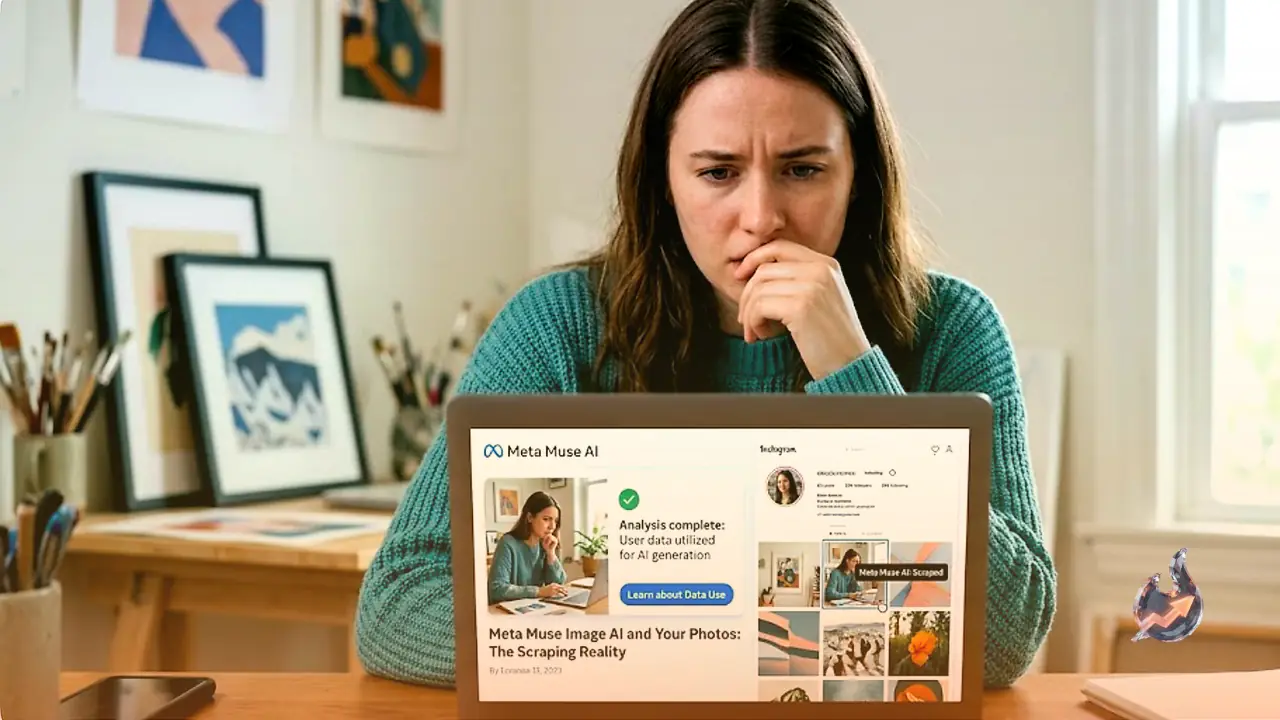
Meta Superintelligence Labs has launched 'Muse Image,' an advanced AI image generator that has immediately sparked criticism regarding data privacy and user consent. The tool's capability to draw from public Instagram photos has raised alarms among users and experts alike. Critics argue that this feature allows for the unauthorized use of a person's likeness in AI-generated imagery, raising fundamental questions about consent and the scraping of public social media data.
Capabilities of the New AI Model
Meta characterizes Muse Image as its most sophisticated model to date. According to the company, the tool is designed to follow complex instructions, perform accurate image edits, and integrate various references using social context derived from Instagram. The model reportedly incorporates agentic tool use and functions in conjunction with Muse Spark, enabling users to generate content based on specific requests.
Expert Warnings on Default Settings
Much of the concern centers on the prompt feature, which can incorporate Instagram usernames. Observers note that this setting is enabled by default for public profiles, potentially allowing the system to extract photos without explicit user awareness. Prachir Singh, a senior analyst at Counterpoint Research, points out that this fundamentally shifts the definition of a public Instagram account. Previously, a public account meant wider visibility; now, it implies that strangers can utilize an individual's face to create new images without their agreement. Singh highlights the significant risks for influencers, creators, and even ordinary users regarding potential online harassment and identity misappropriation.
Legal Liabilities and Reputational Risks
Prachir Singh further warns of the legal and safety ramifications associated with these generated images. If a business utilizes an AI-generated image in an advertisement that accidentally features an identifiable face, the business—rather than Meta—could face litigation or public backlash. Prabhu Ram, Vice President of the Industry Research Group at CyberMedia Research (CMR), echoes these concerns, noting that the design relies on user inertia rather than informed choice. Ram suggests that creators may suffer from fake endorsements, financial loss, and long-term brand dilution if their likeness is repurposed without control.
Meta's Controls and Security Measures
Meta maintains that users retain control over their content and can opt out of AI training or reuse by toggling off specific settings in the Instagram app. The company has updated its settings to explain these reuse controls, which cover features like remixing and AI product development. To address concerns over trust, Meta has introduced a content seal utilizing invisible watermarking to help verify if an image is AI-generated. This signal is designed to persist through cropping or resizing. Meta is also previewing a detection tool to allow individuals to check if content originates from Meta AI, though critics emphasize that these safeguards remain dependent on platform-wide support and user awareness.
Availability and Future Integration
Access to Muse Image is currently available via the Meta AI app and meta.ai. The feature has been rolled out to Instagram Stories in the US, with limited access on WhatsApp and pending availability on Facebook. Additionally, Meta intends to launch Muse Video to creators and the Meta AI platform in the near future. As the rollout continues, the debate surrounding the intersection of social media content and AI development remains a primary focus for analysts and policymakers alike.