













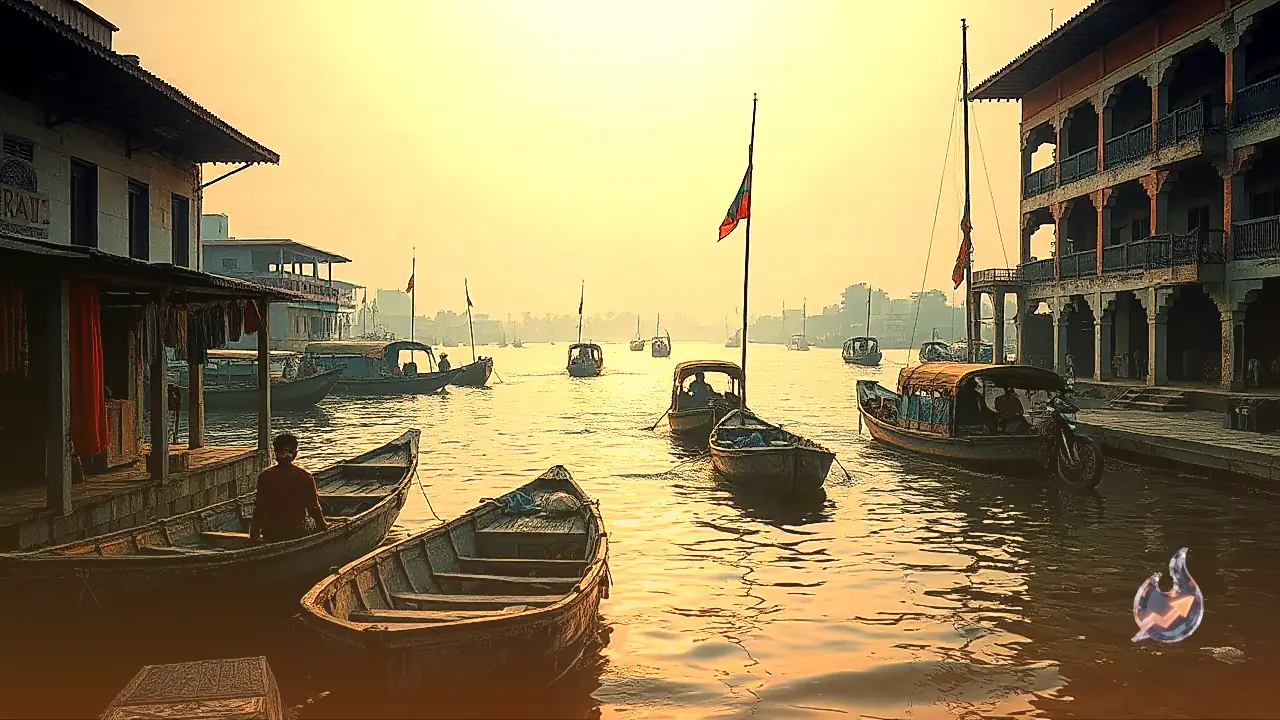

India's geographic diversity offers living environments that challenge conventional perceptions of daily routines. While most urban travel involves traffic, roads, and concrete structures, several communities across the country center their existence almost entirely around water. In these destinations, waterways replace paved streets, while traditional boats, wooden houseboats, and natural floating masses serve as residences, transport, and commercial spaces. For travelers seeking experiences beyond standard sightseeing circuits, exploring these four water-bound locales provides an intimate glimpse into cultures deeply integrated with aquatic ecosystems.
Dal Lake in Kashmir: Floating Markets and Traditional Shikaras
Nestled in the Kashmir valley, Dal Lake is internationally renowned not merely for its mountain vistas, but for the distinct aquatic culture thriving on its waters. The backbone of both daily living and tourism here is the shikara, a handcrafted traditional wooden boat, alongside ornate moored houseboats that provide lodging right on the lake. Visitors frequently glide across the tranquil waters, witness morning floating vegetable markets, and absorb the breathtaking surrounding panorama. For the indigenous population residing on and around the lake, these wooden vessels are far more than a leisure novelty; they represent an essential transit mechanism for attending work, transporting supplies, and carrying out domestic responsibilities.
Loktak Lake in Manipur: The Remarkable Floating World of Phumdis
Located in northeast India, Manipur's Loktak Lake stands out as one of the country's most ecologically singular wetlands. The defining feature of this massive water body is the presence of phumdis, which are naturally occurring floating island-like formations composed of entangled vegetation, soil, and organic debris. These organic masses drift across the water surface, creating a dynamic landscape that changes over time. Local indigenous communities residing along Loktak Lake have anchored their livelihoods, fishing, and residences around this reservoir for generations, making its floating topography a major destination for researchers and tourists alike.
Alappuzha in Kerala: Navigating the Village Backwater Corridors
In southern India, the coastal district of Alappuzha in Kerala draws travelers worldwide due to its labyrinthine backwater network. A vast grid of canals, rivers, and lagoons cuts directly through agricultural fields, rural settlements, and palm groves, serving as the principal transit corridor for many local hamlets. Vacationers typically board converted rice barges known as houseboats to journey through these serene inland waterways. Cruising through the backwaters allows an unhurried, close-up perspective of riverside village routines, where daily chores, commuting, and commerce all unfold right at the water's edge.
Majuli in Assam: Riverine Living and Vaishnavite Traditions on the Brahmaputra
Set within the powerful currents of the Brahmaputra River in Assam, Majuli is celebrated for both its geographical vulnerability and rich cultural heritage. Life on this sprawling river island remains intimately tied to the shifting channels and seasonal flow of the river itself. Because the territory is encircled by broad waters, motorized ferries and small boats remain the primary mode of connection to the mainland and neighboring riverbanks. Beyond its physical setting, Majuli serves as an enduring hub of Neo-Vaishnavite culture, distinguished by its monastic institutions known as Satras, traditional mask-making handicrafts, and peaceful agrarian lifestyles.