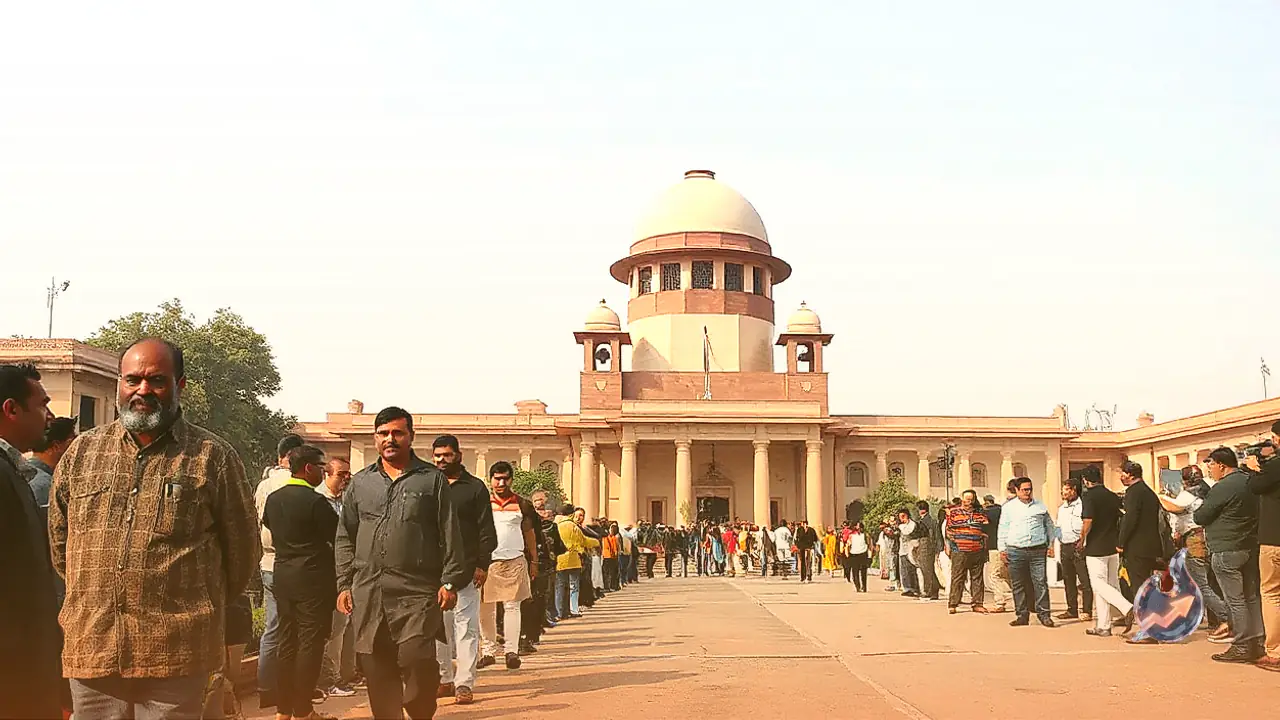

The country highest court has made significant observations regarding a legal plea concerning the reported demolition of an approximately one-hundred-year-old mosque located in Saharanpur, Uttar Pradesh. The matter reached the bench through a contempt petition filed by Imran Ahmed, who alleged that the action violated the landmark 2024 guidelines established by the apex court regarding property demolitions, thereby holding Uttar Pradesh Chief Secretary Shashi Prakash Goyal accountable.
Jurisdiction and the limits of direct petitions
During the court proceedings, the bench led by Chief Justice Surya Kant firmly stated that every single allegation involving the violation of judicial rulings cannot be brought directly before the Supreme Court. The bench advised the petitioner to approach the appropriate High Court instead. The court emphasized that determining whether the established guidelines concerning demolition procedures were breached requires a thorough verification of the underlying facts on the ground.
High Court directed to expedite the matter
The bench specified that investigations into such alleged violations must be conducted by the High Court holding proper territorial jurisdiction. Furthermore, the court instructed the High Court to resolve and decide upon the matter promptly. The apex court also clarified that if the inquiry confirms any transgression of the directives regarding property demolition, appropriate legal consequences and consequential actions will follow accordingly.
Allegations of violating the 2024 guidelines
The petitioner had maintained that the dismantling of the century-old religious structure in Saharanpur directly breached the framework laid down in the 2024 ruling. However, noting the necessity for a factual assessment of the events, the bench directed the petitioner to pursue the matter through the relevant High Court rather than seeking a direct intervention at the national level.