
The seat-sharing negotiations between the Samajwadi Party and Congress for the upcoming assembly elections in Uttar Pradesh have hit a major roadblock. While a formal consensus between the two parties is yet to be reached, the Samajwadi Party has made its strategy clear by officially declaring candidates for five assembly constituencies. These newly announced seats include Behat and Saharanpur Rural in Saharanpur district, both of which were being actively claimed by the Congress party. This decisive step by the SP has left Congress MP Imran Masood deeply agitated, with sources indicating that he is strongly pressing his party leadership to field Congress candidates across all constituencies in Saharanpur.
SP releases first list of five candidates with four incumbents
The Samajwadi Party has officially announced its initial list of five candidates for the Uttar Pradesh assembly elections, retaining four sitting legislators while introducing Jyoti Lodhi as a fresh face from the Lalitpur assembly seat. Under this announcement, the party has fielded Umar Ali Khan from Behat and Ashu Malik from Saharanpur Rural in Saharanpur district. Furthermore, Nahid Hasan has been given another opportunity from Kairana in Shamli, and Mehbub Ali has been re-nominated from Amroha, alongside Jyoti Lodhi who will contest from Lalitpur.
Imran Masood expresses anger over ticket distribution in Saharanpur
The unilateral announcement of candidates in Behat and Saharanpur Rural has triggered an open display of resentment from Congress MP Imran Masood, who was keen on securing these two seats for his party. According to insiders, Masood is actively lobbying within Congress to demand independent candidates on every single seat in Saharanpur district. This sudden move by the SP has significantly heightened political tensions within the alliance. Adding to the friction, Masood's nephew Hamza took to the social media platform X to voice his frustration, writing that the Samajwadi Party must first clarify whether it intends to fight the Bharatiya Janata Party or Imran Masood, adding that they will not bow to any pressure and will contest seven seats with full vigor.
Congress submits two separate seat lists during Delhi meeting
According to reliable sources, a crucial meeting took place in New Delhi between top leaders of the Samajwadi Party and Congress to iron out the seat-sharing arrangement. During these deliberations, the Congress party presented two distinct lists to their allies. The first list contained 36 constituencies, while the second much larger list comprised 95 seats. Out of the 36 seats in the initial list, 10 were constituencies currently represented by sitting Samajwadi Party legislators. The SP firmly drew the line on these incumbent seats, stating unequivocally that seats currently held by their MLAs are non-negotiable and will remain with the Samajwadi Party, leaving only the remaining 26 seats from that list open for discussion with Congress.
SP demands winning equations for 95 seats proposed by Congress
The second list submitted by Congress contained a massive pool of 95 assembly seats. Sources reveal that Samajwadi Party leaders instructed their counterparts to return to the next round of talks equipped with specific candidate names and verified winning equations for each of those constituencies. The Samajwadi Party stated that it would similarly bring its own assessment of candidates and winability factors to evaluate those seats jointly. Notably, the Congress list of 95 seats included sensitive constituencies such as Nakur and Gangoth in Saharanpur, Thanabhawan in Shamli, Mirapur in Muzaffarnagar, and Kundarki in Moradabad. However, the Samajwadi Party has categorically refused to cede these seats to Congress.
Akhilesh Yadav's open letter outlines sharing criteria
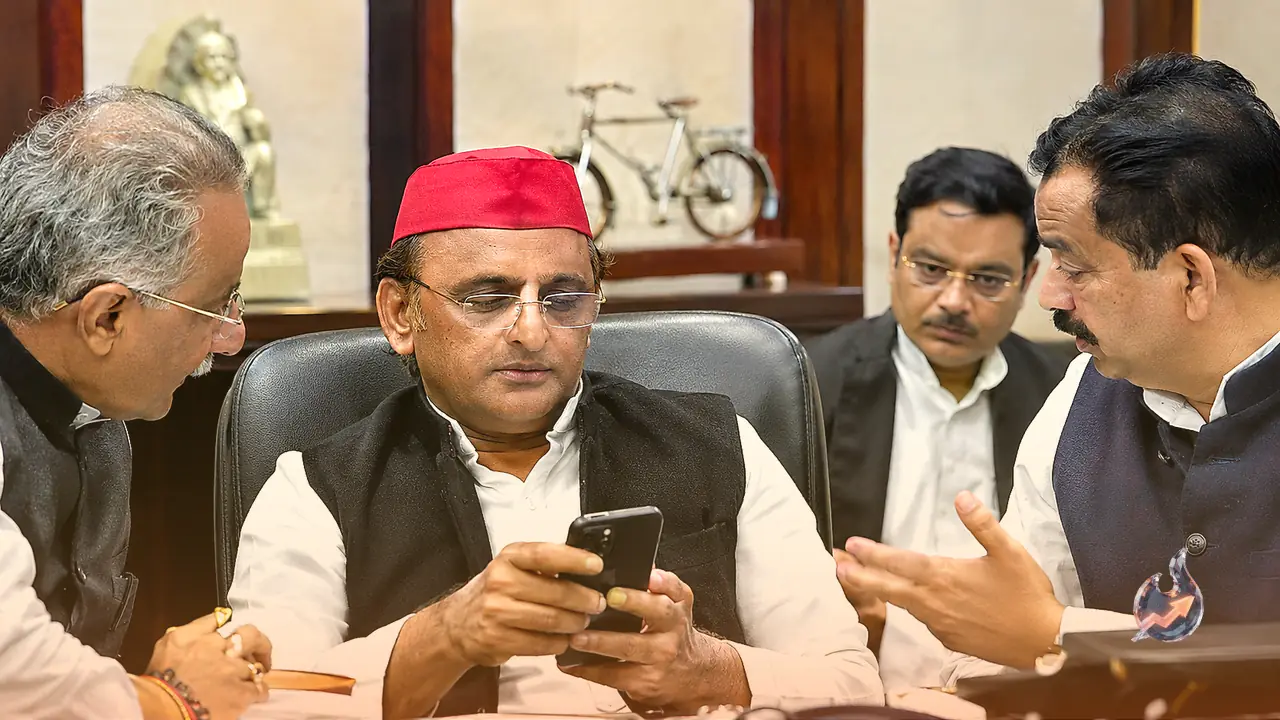
Prior to the official announcement of candidates, Samajwadi Party chief Akhilesh Yadav released an open letter outlining his perspective on the alliance. He emphasized that his primary objective was to ensure that whenever senior leaders of the alliance sit together, discussions on all constituencies should focus strictly on joint candidates of the INDIA bloc. He maintained that regardless of how many seats each party contests, the number of winnable seats must exceed the losing ones, asserting that victory alone brings true dignity to seat-sharing agreements. Yadav urged Congress to forward the remaining prospective constituency lists beyond the initial 26 seats so that both organizations can collaboratively evaluate winability.
Akhilesh Yadav posts on social media amid 26-seat friction
As tensions flared over the allocation of the initial 26 seats, SP supremo Akhilesh Yadav took to social media to soothe frayed nerves. The party chief posted that the journey has begun with the first 26 winning seats, and further discussions will proceed amicably and sensibly. Just before the formal meeting, SP general secretary Ram Gopal Yadav had publicly mentioned the allocation of 26 seats to Congress, causing a considerable stir. Although participants maintained that talks would continue after the meeting, the Samajwadi Party proceeded to unilaterally declare its five candidates late into the night.
Past election results heavily favor SP in Saharanpur seats
Historical data from the 2002 assembly elections highlights the formidable positioning of the Samajwadi Party in both Saharanpur constituencies. Ashu Malik secured approximately 107,000 votes from Saharanpur Rural, whereas the Congress candidate managed a meager 1,217 votes, slipping to the sixth position. Similarly, in Behat, SP candidate Umar Ali Khan garnered nearly 134,000 votes, while Congress nominee Poonam Kamboj received only 1,632 votes, landing the party in fourth place. Backed by these strong electoral margins, the Samajwadi Party views its claim over these specific areas as unassailable.
BJP and regional leaders mock the opposition alliance
The growing friction between the Samajwadi Party and Congress has invited sharp political jibes from the Bharatiya Progressive Party and other regional entities. The ruling BJP asserted that both opposition outfits are solely driven by personal ambitions rather than the welfare of Uttar Pradesh citizens, expressing absolute confidence in returning to power. Meanwhile, Suheldev Bharatiya Samaj Party leader OP Rajbhar ridiculed the alliance, remarking that Congress views the Samajwadi Party out of necessity while the SP treats Congress merely as a compulsion. This ongoing dispute over seat distribution has sent ripples through the political landscape of Uttar Pradesh.