

















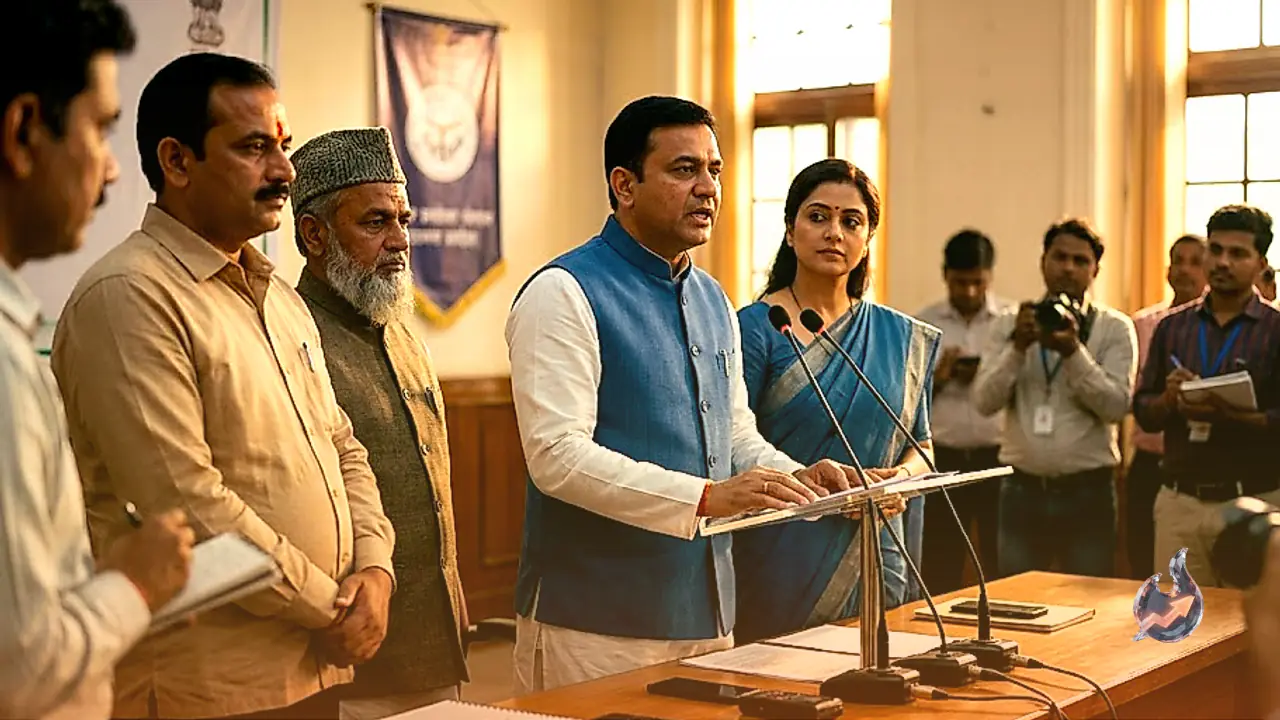

Following the lead set by Madhya Pradesh, the Uttar Pradesh government is preparing for a significant restructuring of its Waqf Board. The state government plans to constitute a new board that will, for the first time, include two non-Muslim members among its ranks. Additionally, the new board structure is set to provide representation to two Muslim women and members of the Pasmanda Muslim community. According to official plans, the Sunni Waqf Board will consist of 11 members in total, comprising one chairman and ten members. The government maintains that these structural changes are intended to bring greater transparency to the operations of the Waqf Board.
Regarding the operational timelines in Uttar Pradesh, the term of the Sunni Waqf Board concluded in March, while the term of the Shia Waqf Board is scheduled to end this October. In view of these deadlines, the administration has initiated the necessary procedures to form the new boards. It is noteworthy that Madhya Pradesh was the first state to appoint two Hindu members to its Waqf Board, a model that Uttar Pradesh is now looking to implement. The state of Uttar Pradesh holds a vast portfolio of 2,32,547 Waqf properties. Out of these, 2,17,161 properties fall under the jurisdiction of the Sunni Waqf Board, while 15,386 are managed by the Shia Waqf Board. Furthermore, more than 92,000 Waqf properties have been registered thus far on the Umeed portal.
Opposition from the Samajwadi Party
The proposed changes have drawn strong criticism from political quarters. Samajwadi Party MLA Ravidas Mehrotra has launched a scathing attack on the government regarding the formation of the new board. Connecting the issue to allegations of misappropriation of donations at the Ram Mandir, he claimed that the government's primary objective is to gain control over Waqf land. Ravidas Mehrotra stated that individuals associated with the Ram Mandir Trust, who have faced accusations of financial irregularities in temple offerings, are unfit to ensure the proper functioning of the Waqf Board. He argued that the inclusion of non-Muslim members is merely a tactic aimed at seizing Waqf land.
Legal challenge against the Madhya Pradesh model
The restructuring of the Waqf Board in Madhya Pradesh, specifically the inclusion of two Hindu members, is now expected to reach the Supreme Court. Congress leaders have termed the move highly inappropriate. Congress MLA Arif Masood stated that the matter related to the Waqf Act is already sub judice in the Supreme Court, with a final verdict still pending. Arif Masood argued that appointments of this nature should not have been made until the apex court delivered its final judgment. He emphasized that the reconstitution of the board by the Madhya Pradesh government and the inclusion of non-Muslim members raise significant legal questions. He confirmed that they intend to approach the Supreme Court to challenge the formation of the board and the specific appointments made.