























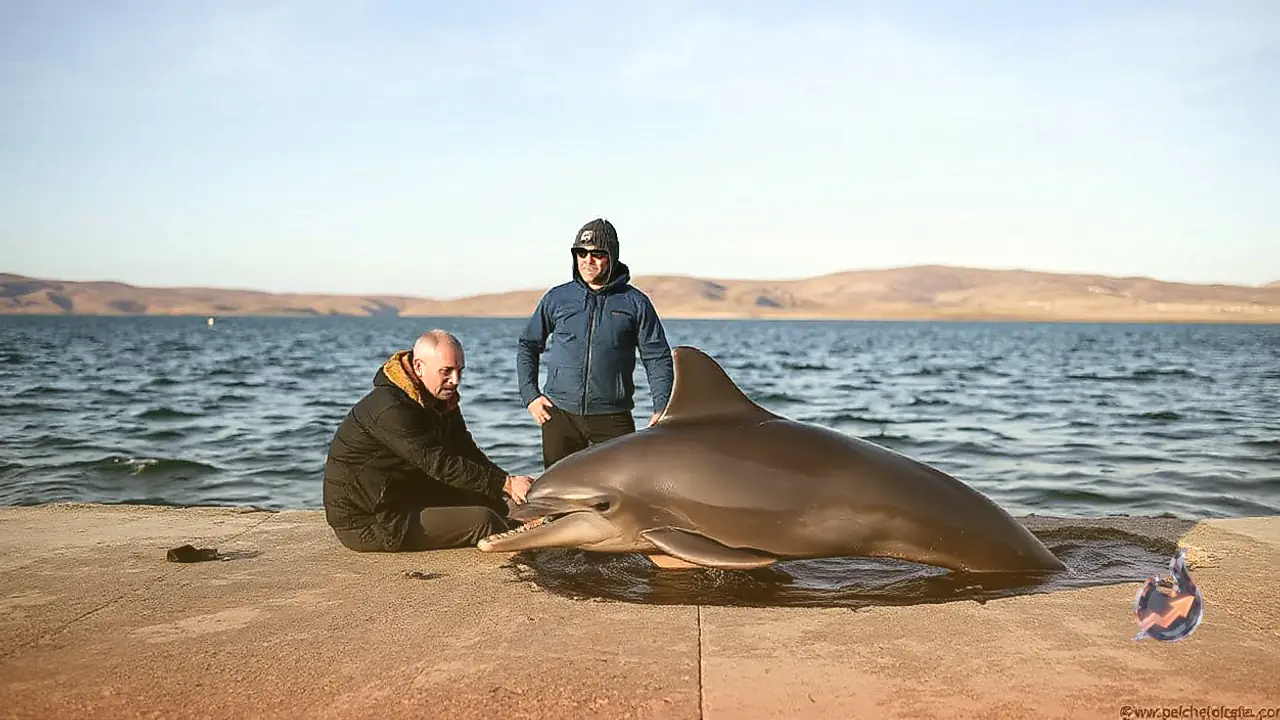

Understanding the communication methods of marine mammals has long fascinated researchers across the globe. Denise Herzing, the founder and director of the Wild Dolphin Project, first began exploring how these creatures interact while on a trip to the Bahamas in 1985 to study Atlantic spotted dolphins after hearing their distinct clicks and whistles.
Decades of Waiting Culminate in AI Breakthroughs
It has been a 40-year wait, but artificial intelligence is finally enabling Herzing to untangle the messages dolphins are trying to convey. Speaking to an audience, she highlighted that her research group has gathered countless hours of video and audio footage of dolphins. They are currently collaborating with scientists at Georgia Tech as well as Google DeepMind to give proper structure to the language of dolphins, even if a full translation is not quite finalized yet.
Finding Hidden Patterns in Marine Audio
The integration of advanced technology has proven to be a game-changer for the field. With AI, researchers can identify subtle patterns that were previously missed. This represents a powerful new tool that has been long anticipated by experts in the field. To test these theories further, the research team has even attempted two-way communication experiments by rigging up an underwater, wearable computer capable of playing specific dolphin sounds.
Interactive Trials Involving Objects and Sounds
These audio tests include using distinct sounds to indicate specific items, such as a scarf, and environmental elements like sargassum, a type of seaweed. During these exercises, two researchers would model specific behaviors; for instance, one researcher would play the scarf sound, and the other would interact with the item, allowing the team to observe how the dolphins responded in real time.
Distinguishing True Understanding from Mimicry
Despite these technological strides, significant obstacles remain. One of the primary challenges involves differentiating genuine communication from mere mimicry. Even though the team has recorded numerous whistles and labeled specific toys, there remains a vast difference between mimicking a sound and understanding its functional purpose, a task that is exceptionally difficult to accomplish in the wild.
Controlled Environments Offer New Hope
Working within a protected sanctuary or a more controlled experimental environment could ultimately help researchers successfully suss out the difference between learned imitation and true comprehension. While the team has made notable progress in isolating recurring patterns, engaging in a fluid two-way conversation with marine life remains some distance away.
Navigating the Complexities of Dolphin Culture
Although humans have made decent headway in understanding dolphin social structures and general behavior, considerable work remains to establish a meaningful dialogue. Possessing the data and the structural framework is only the first step, as deciphering what those communications actually mean within dolphin culture will require an entirely separate and dedicated exploration.
Broader Philosophical Implications for Humanity
The prospect of conversing directly with marine animals naturally captures the imagination, tapping into a universal human dream of talking with creatures in the wild. Ultimately, however, these rigorous scientific attempts to understand dolphins may provide deeper insights into human behavior and our relationship with the planet. When people are asked what they imagine dolphins might say to humanity, the most common response is a variation of asking why humans continue to disrupt and damage the ocean ecosystem.