








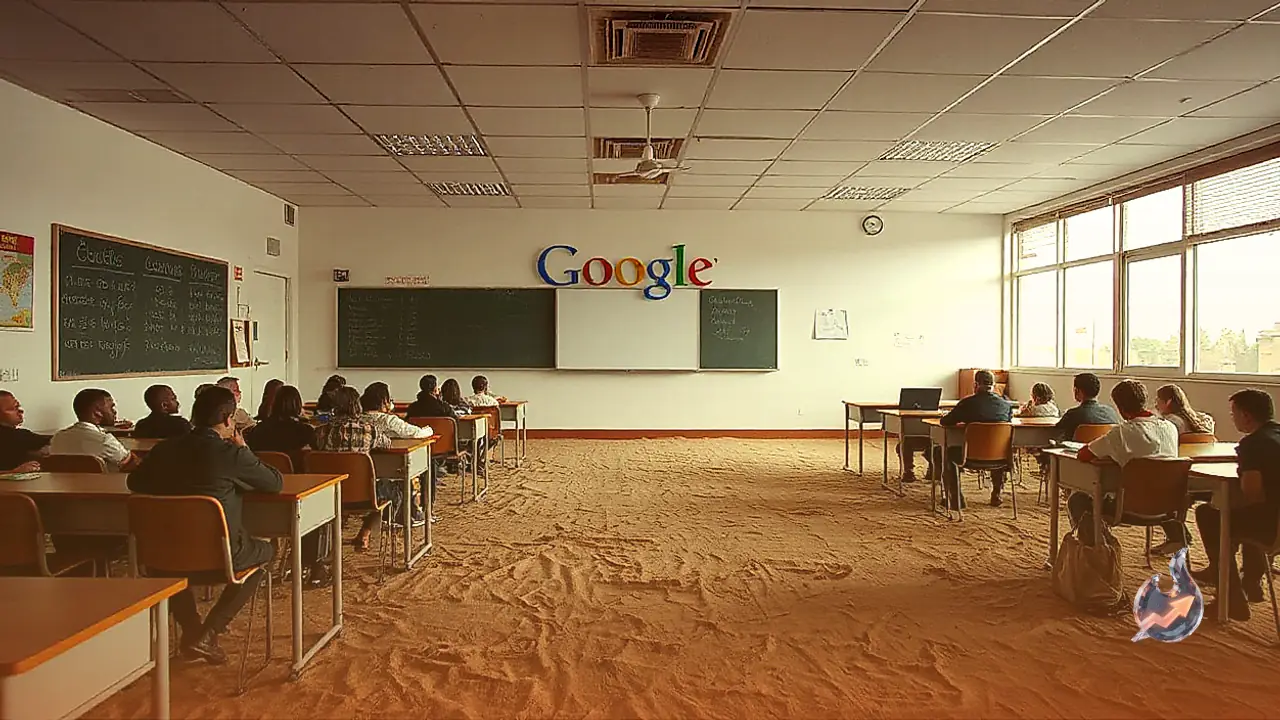















A fresh controversy has erupted over the integration of artificial intelligence in classrooms following Google's announcement regarding its software for K-12 educational institutions. On Tuesday, the technology giant revealed that schools choosing to restrict generative AI tools will simultaneously lose access to Google Search on student accounts. The move quickly sparked severe backlash from lawmakers, educators, and regulatory experts, who argue that conditioning basic web search on the adoption of AI amounts to an unfair exercise of corporate power over public education.
Deep Integration Creates a Digital Dilemma for Classrooms
Addressing the change, Google's vice president for education, Chris Phillips, explained that search functionality and artificial intelligence have become deeply interwoven within the platform's infrastructure. Consequently, if an institution opts out of using tools like Gemini, enrolled students will be completely barred from accessing Search and will instead encounter an administrative message stating that the feature has been disabled by their school. With millions of schoolchildren relying daily on institutional Chromebooks and integrated classroom workspaces, switching immediately to an alternative search provider presents substantial logistical hurdles for school districts.
Elected Officials and Regulators Condemn Monopolistic Tactics
Despite the announcement arriving on a crowded Election Day, prominent political figures wasted no time challenging the policy. Senator Bernie Sanders took to social media to voice his outrage, stating in a post on X that Google was actively threatening schools with the loss of search tools if they blocked AI, calling the tactic extortionate. Similarly, Senator Richard Blumenthal argued in his own post on X that the company appeared far more interested in compelling Gemini adoption than in fostering academic achievement.
Former FTC chair Lina Khan, known for her rigorous stance on corporate consolidation, also condemned the measure as blatantly anti-competitive. In a post on X, Khan underscored that multiple federal courts had already found Google liable for antitrust violations, adding that the latest move demonstrated an unchastened monopolist leveraging control over an essential utility. New York City Mayor Zohran Mamdani also denounced the approach, asserting that corporate entities must not dictate instructional methods for schoolchildren.
Concerns Over Academic Integrity and Problem-Solving Skills
Educators have expressed mounting apprehension that embedded AI overviews inside web results discourage authentic inquiry, tempting students to bypass critical learning stages in favor of instant answers. To mitigate these concerns, Google shared that it is developing a specialised Guided Learning feature for student profiles. Rather than dispensing immediate solutions, this tool is designed to coach students through intermediate steps, such as reminding a learner struggling with an algebra problem about specific mathematical principles before they calculate the final outcome.
Clarification Follows Widespread Public Pushback
Attempting to calm the unrest, Google published an update via a post on X seeking to reframe the initiative as an expansion of administrative flexibility. The company clarified that access to AI services would remain switched off by default for K-12 systems, noting that school managers possess the capability to independently toggle Gemini, Gemini Notebook, and Search. In its formal response, the firm reiterated its commitment to working closely with academic professionals, emphasizing that the adjustments were intended to deliver granular oversight and tailored learning environments.