






















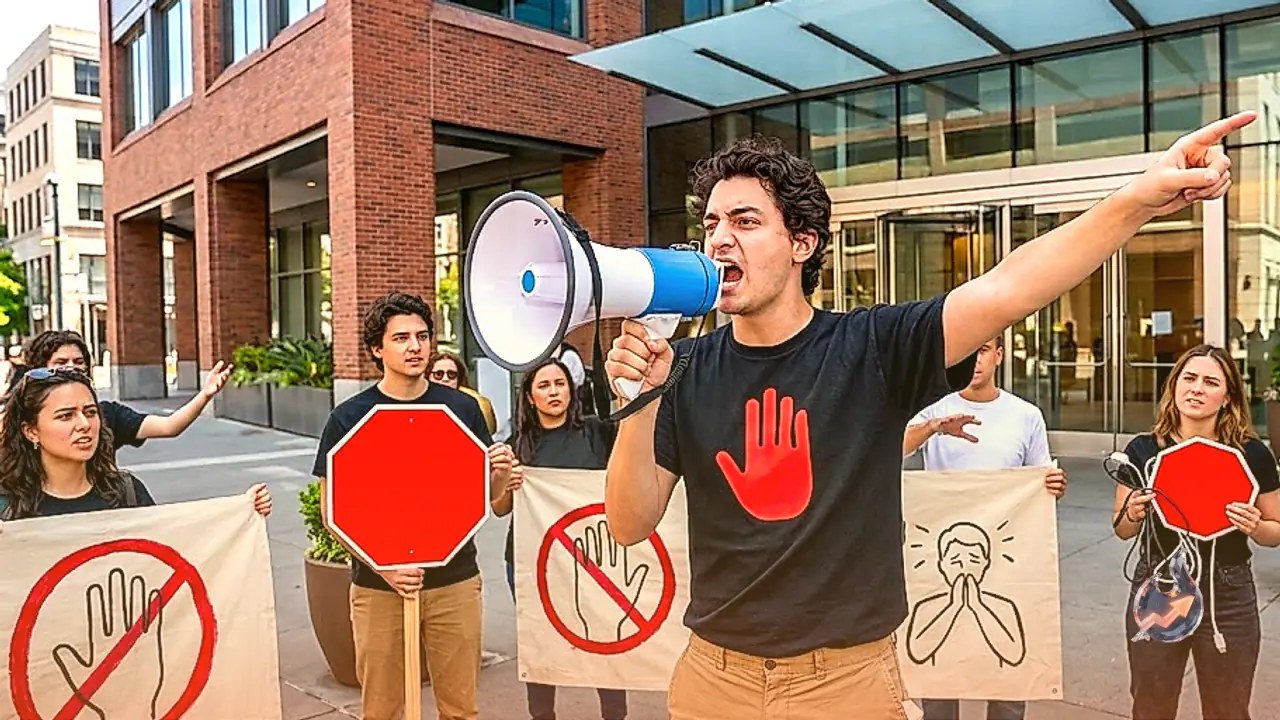

Protesters gathered in San Francisco once again, marching between the offices of OpenAI, Anthropic, and Google DeepMind to demand a pause in the development of increasingly powerful artificial intelligence systems. This demonstration underscores a growing public demand for caution in the rapidly evolving technology sector, arguing that current safeguards are insufficient to mitigate potential societal risks.
Expanding Scope of Concerns
The demonstration, organized by Stop the AI Race, signaled a shift in strategy. While previous efforts focused strictly on technical safety protocols, this protest highlighted a broader range of grievances. Participants expressed deep concerns regarding potential job losses, the significant environmental footprint of AI computing, rising housing costs in San Francisco, and the unchecked influence of major technology conglomerates on public life.
Specific Demands from Organizers
Led by former AI researcher Michaël Trazzi, the organization is calling on industry leaders to halt the training of new frontier AI models while maintaining the operation of current systems. The protesters urge companies to pivot their research focus toward AI safety and alignment until robust safeguards are firmly in place. Furthermore, many participants advocated for more stringent local and state regulations to govern how these technologies are deployed in the real world.
Strategic Shifts in Advocacy
Reflecting on the movement's evolution since its inception in March, Trazzi noted that the group's goals have shifted toward increasing political salience. Initially, the focus was predominantly on persuading CEOs directly. Trazzi stated that he has updated his perspective, believing that CEOs are beginning to listen, supported by recent exchanges and published communications. He emphasized that the physical act of protesting remains a vital tool to demonstrate that the public is actively engaged and concerned about these developments.
Growing Support and Future Outlook
This event follows a previous demonstration in March, which saw approximately 200 participants marching between the offices of Anthropic, OpenAI, and xAI. Since then, the organization has maintained its advocacy efforts. Trazzi expressed appreciation for the widening support base, citing the endorsement from the National Union of Healthcare Workers (NUHW) and the collaborative efforts from groups like AI Action and QuitGPT. Despite these efforts, OpenAI, Anthropic, and Google DeepMind did not immediately provide comments when requested. The organizers remain committed to advocating for an international pause on frontier AI development while pushing lawmakers to implement stricter oversight mechanisms for advanced systems.
Broader Context of AI Scrutiny
The protest coincides with a period of intense global scrutiny regarding AI safety. In May, OpenAI implemented new safety features within ChatGPT to better identify signs of self-harm and violence following legal investigations into how its chatbot managed risky interactions. By June, the Donald Trump administration ordered Anthropic to suspend access to its Claude Fable 5 and Claude Mythos 5 models, citing potential cybersecurity threats. Furthermore, a report released earlier this month by the United Nations' first independent scientific panel on AI warned that scientists cannot definitively rule out the possibility of catastrophic harm if technological development continues to outpace government regulation and scientific understanding.