





















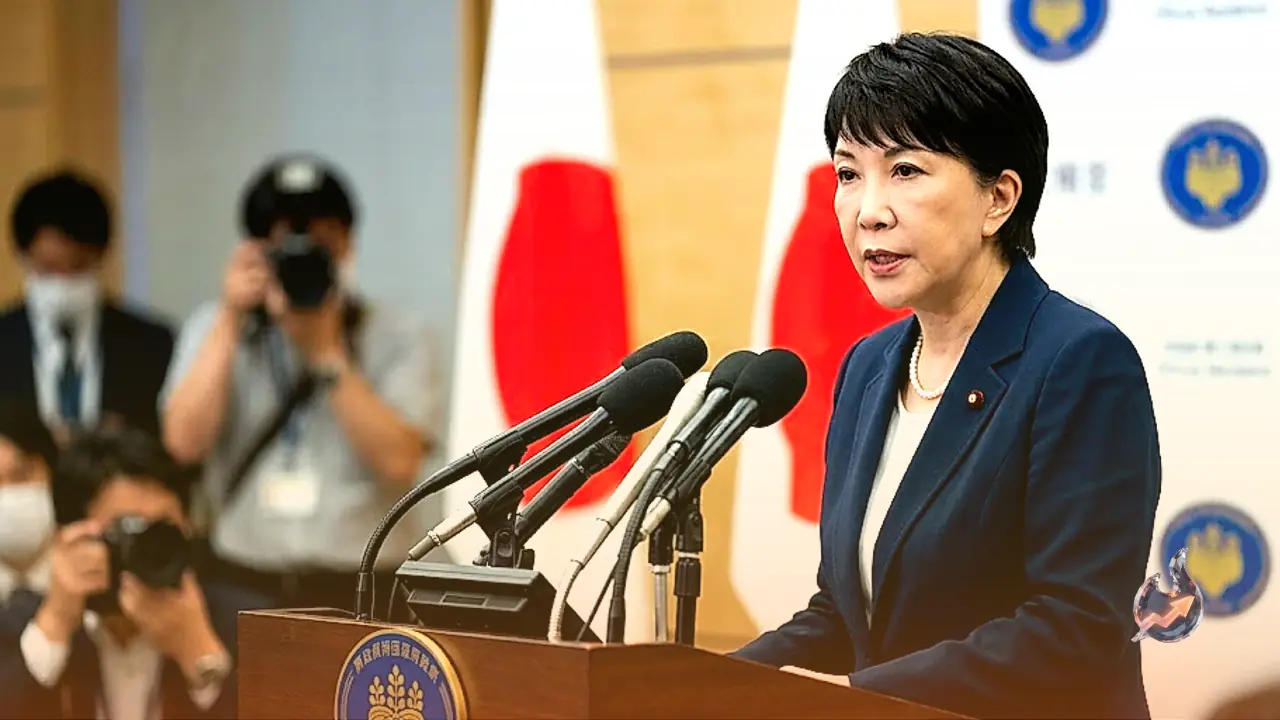

Japanese Prime Minister Sanae Takaichi has strongly condemned Russian President Vladimir Putin's visit to the disputed island of Iturup, describing the move as completely unacceptable. Addressing the diplomatic fallout on Thursday, Takaichi stated that the trip severely damages bilateral relations between Japan and Russia while intensifying anti-Russian sentiment among the Japanese public. Known as Etorofu in Japan, Iturup is one of four disputed islands forming the Southern Kuril chain, which remains under Russian administrative control but is claimed by Tokyo as its inherent territory. Putin's presence on the island has reignited a historical territorial dispute between the two Northern Pacific neighbors amidst an already strained geopolitical climate.
Vladimir Putin's Unprecedented Island Visit and Inspection of Yasny Processing Facility
The visit marks the first time that President Vladimir Putin has set foot on any of the four disputed islands claimed by Japan and held by Russia since the end of the Second World War. According to official Kremlin accounts, Putin inspected the Yasny fish processing plant located on Iturup to examine local industrial operations. Japanese officials disclosed that Tokyo had repeatedly requested Moscow through diplomatic channels to refrain from scheduling presidential visits to the contested islands. Prime Minister Takaichi noted that President Putin had initially signaled his intention to tour the region in January 2024. Following those comments, Tokyo maintained continuous diplomatic pressure on Moscow to halt the plan, though these appeals were ultimately disregarded by the Russian leadership.
Sanae Takaichi's Diplomatic Protest and Impact on Japanese Public Sentiment
Prime Minister Sanae Takaichi reaffirmed Japan's long-standing position under international law, emphasizing that Iturup and the surrounding islands constitute an integral part of Japanese sovereign territory. Condemning the visit, she characterized the Russian president's presence on Iturup as fundamentally incompatible with Tokyo's historical rights. In her official remarks, Prime Minister Takaichi stated, "I strongly protest President Putin's visit to Iturup Island today." She emphasized that the action has deeply wounded the national sentiments of the Japanese people and cannot be tolerated under any circumstances. Takaichi warned that such unilateral moves by Russia will inevitably harden public attitudes in Japan, making medium- and long-term efforts to normalize bilateral ties far more difficult to achieve.
Historical Foundations of the Kuril Islands Dispute and the 1855 Shimoda Treaty
Referred to in Japan as the Northern Territories, the island dispute revolves around four main landmasses: Iturup (Etorofu), Kunashir (Kunashiri), Shikotan, and the Habomai islet group. Geographically positioned between Hokkaido in northern Japan and the Kamchatka Peninsula in eastern Russia, these islands occupy a strategic maritime zone in the Northwest Pacific. Tokyo bases its territorial sovereignty on the 1855 Shimoda Treaty, which formally recognized the islands as Japanese territory. However, in the closing days of World War II in August 1945, Soviet military forces launched an offensive and seized control of the island chain. Following the occupation, approximately 17,000 Japanese residents were forcibly displaced. Japan formally surrendered on August 15, 1945, but maintains that the Soviet Union illegally annexed the Northern Territories immediately following Japan's capitulation.
Russia's Legal Sovereignty Arguments Versus the 1951 San Francisco Peace Treaty
Conversely, Moscow refers to the landmasses as the Southern Kurils and maintains that Russian sovereignty over them is fully legitimate under post-war international agreements. Russian officials frequently point to Allied declarations, including decisions made at the Yalta Conference, as the legal foundation for Soviet acquisition. Tokyo rejects this interpretation, asserting that when it signed the 1951 San Francisco Peace Treaty, it had no intention of renouncing its claim to the four Northern Territories, which had never belonged to any foreign power prior to 1945. Owing to this unresolved territorial deadlock over eight decades, Japan and Russia have been unable to conclude a formal post-World War II peace treaty, leaving bilateral diplomatic frameworks permanently incomplete.
Ukraine War Sanctions and the Long-Term Breakdown of Diplomatic Relations
Bilateral relations between Japan and Russia have deteriorated further following Moscow's full-scale invasion of Ukraine, which has now continued for nearly four and a half years since launching in 2022. In alignment with the United States and other international partners, Japan implemented comprehensive economic and diplomatic sanctions intended to constrain Russia's war effort and economic capabilities. In response, Russia suspended all formal peace treaty negotiations with Japan. Prime Minister Takaichi observed that despite these hostile conditions, Japan had sought to keep diplomatic channels open where possible, but Putin's trip to Iturup effectively undermines those efforts. Analysts view Putin's appearance on Iturup as a firm signal from Moscow that Russia will not concede any territorial ground under external pressure.